

Global Macro Events: The Critical February Week That Will Shape 2025 Financial Markets
BitcoinWorld
Global Macro Events: The Critical February Week That Will Shape 2025 Financial Markets
Financial markets worldwide enter a pivotal stretch in February 2025, with a dense cluster of high-stakes global macro events poised to deliver crucial signals on inflation, employment, and the future path of U.S. monetary policy. The second week of February, specifically from Sunday, February 9th through Thursday, February 13th, presents a consequential sequence of Federal Reserve speeches and top-tier economic data releases. Consequently, traders, investors, and policymakers are preparing for potential volatility and significant repricing across asset classes, from equities and bonds to currencies and cryptocurrencies.
Global Macro Events Calendar: A Week of High-Stakes Data
The provided calendar outlines a tightly packed schedule of events central to global financial analysis. Firstly, the week commences with commentary from key Federal Open Market Committee (FOMC) members. Subsequently, the market’s focus shifts dramatically to two of the most influential U.S. economic reports: the Nonfarm Payrolls and the Consumer Price Index (CPI). These data points serve as primary inputs for the Fed’s dual mandate of maximum employment and price stability. Therefore, their outcomes directly influence interest rate expectations and global capital flows.
To clarify the schedule’s importance, here is a simplified overview of the key global macro events:
- February 9: Speeches by Fed Governor Christopher Waller and FOMC member Raphael Bostic.
- February 10: Remarks from Dallas Fed President Lorie Logan.
- February 11: U.S. January Nonfarm Payrolls & Unemployment Rate; speech by FOMC member Michelle Bowman.
- February 12: Another speech by Dallas Fed President Lorie Logan; U.S. Initial Jobless Claims.
- February 13: U.S. January Consumer Price Index (CPI) data.
Decoding the Federal Reserve’s Communication Strategy
The unusually high frequency of Fed official speeches this week is not coincidental. Following the January FOMC meeting, central bankers often engage in a coordinated communication effort to guide market expectations. Speeches by Governors like Christopher Waller and regional bank presidents such as Lorie Logan and Raphael Bostic provide nuanced insights. They help markets interpret the broader policy direction beyond official statements.
Expert Analysis on Forward Guidance
Historically, markets scrutinize every word from FOMC members for hints about the timing of policy shifts. For instance, discussions around the neutral rate, balance sheet runoff (quantitative tightening), and the sensitivity of the economy to higher rates are common themes. In the current context, analysts will listen intently for any change in tone regarding the persistence of inflation or the resilience of the labor market. This communication serves as critical real-time context for the hard data arriving later in the week.
The Labor Market Under the Microscope: Nonfarm Payrolls
The U.S. Bureau of Labor Statistics will release the January Nonfarm Payrolls report on Tuesday, February 11th, at 1:30 p.m. UTC. This report is a cornerstone global macro event for several reasons. It measures the total number of paid U.S. workers, excluding farm employees, government employees, and a few other categories. A strong report typically suggests economic health but can also fuel concerns about wage-driven inflation. Conversely, a weak report may signal economic cooling, potentially bringing forward expectations for interest rate cuts.
Market participants will analyze three key components:
- Headline Job Creation: The consensus estimate and any deviation from it.
- Unemployment Rate: Whether it holds steady, ticks up, or declines further.
- Average Hourly Earnings: The month-over-month and year-over-year wage growth figures, a direct input into inflation models.
Subsequently, the Initial Jobless Claims data on February 12th will provide a more timely, high-frequency pulse check on layoff trends, complementing the monthly payrolls snapshot.
The Inflation Imperative: January Consumer Price Index
Arguably the most anticipated global macro event of the week, and perhaps the quarter, is the release of the January Consumer Price Index (CPI) on Thursday, February 13th. This report measures the average change over time in prices paid by urban consumers for a market basket of goods and services. The Federal Reserve explicitly targets the Personal Consumption Expenditures (PCE) index, but the CPI report arrives earlier and significantly influences both market sentiment and the PCE calculation.
Analysts will dissect both the headline and core CPI figures, the latter excluding volatile food and energy prices. The trajectory of core services inflation, particularly shelter costs, remains a critical focus for the Fed. A hotter-than-expected print could solidify expectations for a “higher for longer” interest rate environment, triggering sell-offs in bonds and growth-sensitive assets. Alternatively, a continued disinflationary trend would bolster arguments for impending policy easing.
Historical Context and Market Impact
Recent history shows that CPI surprises cause immediate and pronounced market movements. For example, a deviation of just 0.1 or 0.2 percentage points from consensus can move major stock indices by over 1% and trigger substantial repricing in interest rate futures. The January report is also crucial as it incorporates annual price adjustments and can set the tone for inflation expectations for the coming months. Therefore, asset allocators globally use this data point to adjust portfolio risk.
Interconnected Impacts on Global Asset Classes
These global macro events do not occur in a vacuum. Their outcomes create ripple effects across all financial markets. A strong jobs report coupled with sticky CPI data would likely strengthen the U.S. dollar (USD) as rate cut expectations are pushed further into the future. A stronger USD, in turn, creates headwinds for emerging market equities and dollar-denominated commodities like gold and oil.
Furthermore, Treasury yields would be expected to rise in such a scenario, increasing the discount rate for future corporate earnings and potentially pressuring equity valuations, particularly for high-growth technology stocks. Cryptocurrency markets, which have shown increased correlation to traditional risk assets and sensitivity to liquidity expectations, would also likely experience heightened volatility. The collective data from this week will provide a vital stress test for the current “soft landing” narrative prevailing in many market forecasts.
Conclusion
The concentration of critical global macro events in the second week of February 2025 represents a defining moment for the year’s financial landscape. The sequential release of Federal Reserve commentary, labor market data, and the pivotal Consumer Price Index will collectively offer the most comprehensive snapshot yet of the U.S. economy’s trajectory. Markets will synthesize this information to recalibrate expectations for inflation, growth, and the timing of the next monetary policy pivot. Ultimately, the outcomes will have profound implications for investment strategies, currency valuations, and economic policy worldwide, underscoring the enduring importance of these scheduled economic disclosures.
FAQs
Q1: Why are Federal Reserve speeches considered major global macro events?
Fed speeches provide forward guidance and nuance beyond official statements. They offer real-time insight into policymakers’ thinking on inflation, employment, and interest rates, directly influencing bond yields, currency values, and equity market expectations.
Q2: What is the difference between the CPI and the PCE price index, and why does the CPI matter more for markets?
The CPI (Consumer Price Index) and PCE (Personal Consumption Expenditures) both measure inflation but use different formulas and baskets of goods. While the Fed officially targets PCE, the CPI report is released earlier in the month and is highly influential for market sentiment and near-term trading decisions.
Q3: How do strong Nonfarm Payrolls numbers typically affect the stock market?
The reaction is often two-sided. Strong job growth signals a healthy economy, which is positive for corporate earnings. However, it can also imply persistent inflation pressure, leading the Fed to maintain higher interest rates for longer, which increases borrowing costs and can depress equity valuations. The market’s reaction depends on which narrative dominates.
Q4: What is the significance of the “core” CPI reading versus the “headline” reading?
Headline CPI includes all items, including volatile food and energy prices. Core CPI excludes these categories to provide a clearer view of underlying, persistent inflation trends. Policymakers and economists often focus on core CPI as a better indicator of long-term inflationary pressures.
Q5: Can these U.S.-centric global macro events impact economies and markets in other regions?
Absolutely. The U.S. dollar is the world’s primary reserve currency, and U.S. Treasury yields are a global benchmark. Changes in U.S. monetary policy expectations affect global capital flows, exchange rates for other currencies, and borrowing costs for governments and corporations worldwide, making these events globally significant.
This post Global Macro Events: The Critical February Week That Will Shape 2025 Financial Markets first appeared on BitcoinWorld.


You May Also Like
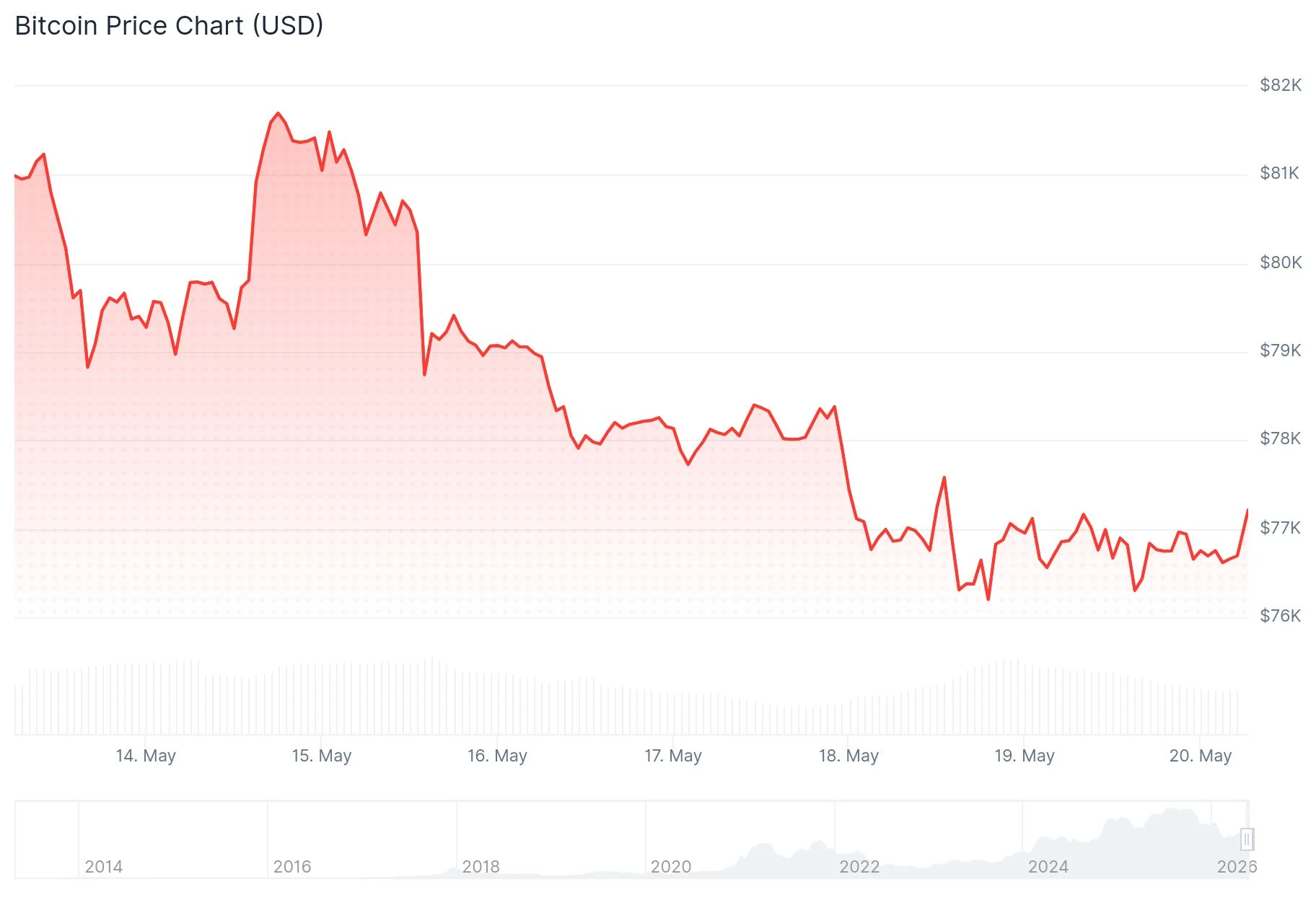
Bitcoin (BTC) Hovers Above $77K Amid Iran Diplomacy and Rising Treasury Yields

Beyond Cleaning: What Else You Must Check Before Moving Out




