

Kaspersky Shares Practical AI Safety Tips for Children on Safer Internet Day
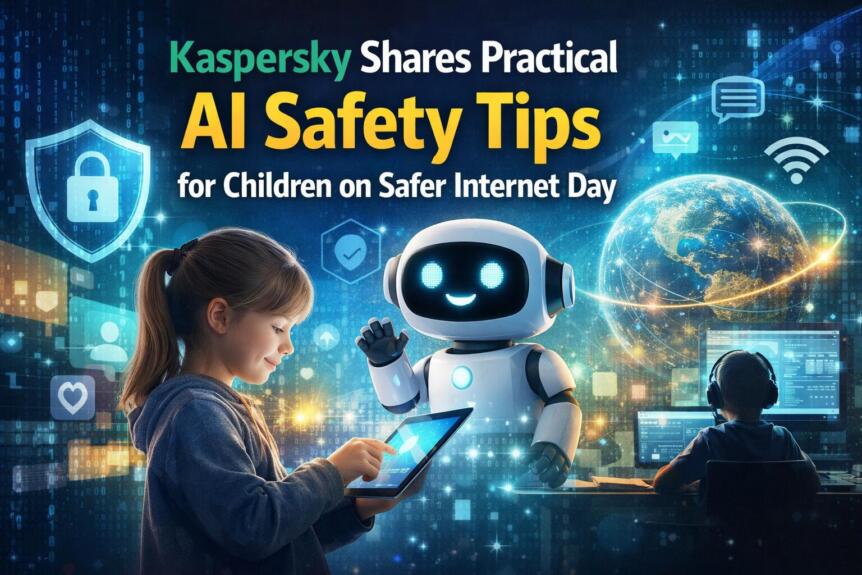
Editor’s note: On Safer Internet Day, cybersecurity firm Kaspersky addresses a growing concern for families navigating the rapid adoption of AI by Generation Alpha. As children increasingly use AI-powered tools for learning, entertainment, and everyday questions, the company outlines practical guidance for parents on how to frame AI as a helpful tool without overlooking its risks. The focus is on education, supervision, and the responsible use of digital assistants, rather than restriction alone. The guidance reflects broader questions around digital literacy, data privacy, and online safety that are becoming central as AI tools enter daily life at an early age.
Key points
- Parents are encouraged to explain what AI tools are and are not, emphasizing their limitations and potential inaccuracies.
- Children should be taught to verify AI-generated information and avoid using it for sensitive topics without adult input.
- Built-in safety settings and content filters on devices and platforms are highlighted as a first layer of protection.
- Verifying the authenticity of AI-powered apps and limiting permissions is presented as essential to reducing privacy risks.
- Ongoing dialogue between parents and children is positioned as key to safe and informed AI use.
Why this matters
As AI tools become embedded in everyday digital experiences, early exposure is shaping how the next generation learns, searches for information, and interacts online. For parents, this raises new challenges around trust, privacy, and digital wellbeing. For the broader tech ecosystem, it underscores the importance of responsible design, clear safeguards, and digital literacy as AI adoption expands beyond adults. Guidance like this reflects how cybersecurity and education are becoming tightly linked as AI use moves into younger age groups.
What to watch next
- How AI platforms continue to develop and communicate child safety and parental control features.
- Adoption of digital literacy practices by families and schools as AI use grows.
- Ongoing discussion around data privacy and age-appropriate AI access.
Disclosure: The content below is a press release provided by the company/PR representative. It is published for informational purposes.
Born between 2010 and 2025, Gen Alpha aren’t just growing up with technology – they’re actively living it. These digital natives are already wielding smartphones, tablets, and AI-powered tools with the confidence of seasoned users, navigating everything from gaming and social media to online learning platforms with remarkable ease. But the question that concerns parents and security experts is whether we are giving our kids too powerful technology, too soon. On Safer Internet Day, Kaspersky security experts are sharing practical tips to help parents turn AI from a potential threat into a trusted ally for the younger generation.
The first line of defence is building AI awareness
Children already discovered that ChatGPT, DeepSeek and other neural networks can answer questions faster than you can find the right answer in Google, and Alexa can play music without pressing a single button.
So, the only solution is to become children’s AI support. Begin by explaining that these digital assistants aren’t friends, pets, or even real people. They’re sophisticated tools that can be helpful, but also potentially misleading, biased, or simply wrong. Then teach them to cross-check information with multiple sources, just like they’d verify facts in a school project.
When discussing AI with children, emphasize that they should never fully trust AI answers, especially for sensitive topics like health, mental wellbeing, or safety concerns. Always encourage them to verify information and never share personal details or documents with AI systems.
Enabling safely filters
Most AI platforms and smart devices come with built-in safety features that are often overlooked or misunderstood. Spend some time to check the privacy settings and content filters and, if possible, tailor them to match your family’s values and your child’s maturity level. This is a basic protection against inappropriate content, privacy breaches, and potentially harmful interactions.
However, not all services and platforms provide an opportunity to set up content filters and fully control children’s online activity. To create safer digital environment for your children consider using parental control tools like Kaspersky Safe Kids. It allows parents to not only to hide inappropriate content and prevent specific apps and websites from being opened, but also helps balance children’s time spent online with screen time management.
Checking the AI-powered app’s authenticity
In a world where AI apps are popping up faster than you can say “chatbot,” verifying app authenticity is essential. Only download apps from official stores and inform your children about the importance of not installing anything from unfamiliar sources. Look up the company behind the app and check whether they have a website and legitimate business presence. Teach your kids to limit their apps’ permissions and do not give access to data unless it’s necessary for the apps to work.
Staying involved and informed
A basic understanding of the range of problems your child is willing to entrust to AI is already significant. By asking simple questions like “What did you ask AI today? Did it give you the right answer?” you’ll be teaching your children to openly discuss with you the use of AI and problems they might face. When they mention using ChatGPT for homework, ask them to show you what they’ve learned. When they talk about their favourite voice assistant, ask about the topics they like to discuss and funny particularities they noted.
About Kaspersky
Kaspersky is a global cybersecurity and digital privacy company founded in 1997. With over a billion devices protected to date from emerging cyberthreats and targeted attacks, Kaspersky’s deep threat intelligence and security expertise is constantly transforming into innovative solutions and services to protect individuals, businesses, critical infrastructure, and governments around the globe. The company’s comprehensive security portfolio includes leading digital life protection for personal devices, specialized security products and services for companies, as well as Cyber Immune solutions to fight sophisticated and evolving digital threats. We help millions of individuals and nearly 200,000 corporate clients protect what matters most to them. Learn more at www.kaspersky.com
This article was originally published as Kaspersky Shares Practical AI Safety Tips for Children on Safer Internet Day on Crypto Breaking News – your trusted source for crypto news, Bitcoin news, and blockchain updates.


You May Also Like

E.l.f. Beauty (ELF) Stock Surges Despite Disappointing Forward Guidance After Q4 Earnings Beat

Deere (DE) Stock Falls After Q2 Beat as Flat Farm Income Spooks Investors

Oman slashes budget deficit on higher hydrocarbon revenues



