

Malaysia’s Central Bank Unveils Stablecoin & Tokenization Sandbox
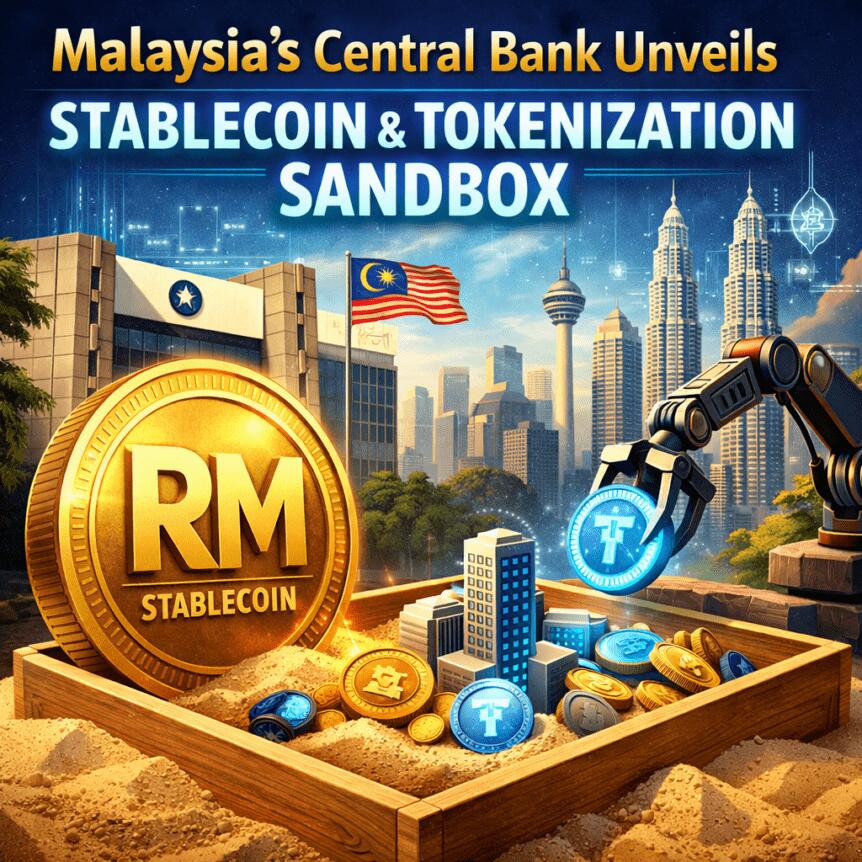
Bank Negara Malaysia’s Digital Asset Innovation Hub (DAIH) is testing the frontier of asset tokenization with three regulatory sandbox programs designed to study stablecoins and tokenized bank deposits. The central bank’s initiative focuses on ringgit-denominated stablecoins for cross-border settlement and the tokenization of real-world assets, a move that could reshape how institutions settle and finance in a digital era. The pilots also examine tokenized bank deposits, aiming to generate research that could feed into a broader wholesale central bank digital currency (CBDC) framework. Shariah considerations will be assessed as part of the evaluation, underscoring Malaysia’s effort to balance innovation with its financial framework. The announcements indicate a structured, policy-oriented approach to asset tokenization within a jurisdiction known for both pragmatic regulation and a robust Islamic-finance ecosystem.
Key takeaways
- Three regulatory sandbox programs under BNM’s Digital Asset Innovation Hub are dedicated to researching stablecoins, tokenized RWAs, and tokenized bank deposits, with a view toward practical policy guidance.
- The initiative centers on ringgit-stablecoins for cross-border settlement and explores tokenized real-world assets, potentially feeding into a wholesale CBDC strategy.
- Partnerships include Standard Chartered Bank, CIMB Group, Maybank, and Capital A, signaling strong institutional engagement in asset tokenization experiments.
- Shariah-related considerations will be evaluated, reflecting Malaysia’s aim to harmonize innovation with Islamic-finance norms.
- A three-year roadmap to test asset tokenization across multiple real-world sectors was published in November 2025, outlining concrete use cases and timelines.
Tickers mentioned: $RMJDT
Market context: The effort sits within a broader global push to tokenize assets and explore digital currencies, highlighting a trend among nations to use regulated sandboxes to assess how tokenized fiat and RWAs could operate in a digital economy.
Why it matters
Malaysia’s move is notable for its deliberate layering of regulatory testing with a clear emphasis on practical applications. By pairing ringgit-denominated stablecoins with cross-border settlement use cases, BNM signals that wholesale digital assets could serve as a bridge between traditional financial rails and a digitized settlement layer. The inclusion of tokenized real-world assets points to a broader ambition: to unlock liquidity and efficiency in sectors ranging from trade finance to supply chain finance. If successful, these pilots could reduce settlement times, mitigate counterparty risk, and provide a blueprint for other central banks contemplating asset tokenization as part of a digital economy strategy.
The program’s attention to Shariah compliance is meaningful in two respects. First, it acknowledges the financial institution’s need to align new instruments with Islamic finance principles. Second, it could broaden the appeal of tokenized assets to a segment of investors and institutions that require explicit compliance frameworks. This dual focus—technological feasibility paired with principled governance—helps set a prudent tone for any future rollout beyond research, should policy directions evolve in a favorable direction.
Involving major domestic financial players—Standard Chartered Bank, CIMB Group, Maybank, and Capital A—adds credible, real-world testing ground for the sandbox. Their participation underscores the likelihood that, if the pilots deliver compelling results, private sector interest could accelerate the path from lab to pilot payments, and eventually to live deployments in wholesale markets. The collaboration also mirrors a broader industry trend in which banks explore tokenization and on-chain equivalents of fiat and assets to reduce settlement risk and expand access to liquidity for businesses and sovereign clients alike.
Additionally, the roadmap published in November 2025 maps out a concrete plan for asset tokenization that spans several real-world use cases. The document highlights supply chain management, Shariah-compliant financial products, access to credit, programmable finance, and 24/7 cross-border settlement as target areas. This breadth signals that the central bank is thinking beyond a single instrument, evaluating how tokenization can support multiple facets of the financial system while scaling through a staged, policy-informed approach. The emphasis on cross-border settlement also aligns with ongoing global discussions about how digital assets could streamline international trade in a compliant, regulated manner.
One of the notable practical elements is the December-era activity surrounding a ringgit-stablecoin tied to RMJDT. Reportedly issued by Bullish Aim, a telecom arm controlled by Ismail Ibrahim (the eldest son of Malaysia’s current king), the instrument entered regulatory sandbox testing and has not yet been opened to public trading. The broader context includes Standard Chartered Bank and Capital A’s plans to explore a ringgit-stablecoin for wholesale settlement, reinforcing that institutions view tokenized fiat as a potential tool for large-scale, non-retail settlements. While RMJDT’s public market status remains uncertain, its progression within the sandbox illustrates how government-backed experiments can intersect with private-sector innovation and family-linked enterprise within Malaysia’s unique economic tapestry.
Taken together, the initiatives reflect a global momentum toward asset tokenization—with central banks, private banks, and financial-services firms exploring how digital representations of fiat, debt, and RWAs could operate at scale. The emphasis on wholesale mechanisms rather than retail access suggests a measured, policy-driven approach intended to test liquidity, settlement efficiency, and regulatory safeguards before broader public adoption.
What to watch next
- Progress updates from the DAIH sandbox pilots on stablecoins, tokenized deposits, and RWAs, including any policy direction issued by BNM.
- Details and milestones from the November 2025 asset-tokenization roadmap, including sector-by-sector pilots and timelines.
- Any regulatory guidance or framework adjustments that emerge as a result of the pilots, particularly around cross-border settlement and Shariah-compliance considerations.
- Further announcements from banks and Capitol A about wholesale ringgit-stablecoins and potential live pilots beyond sandbox testing.
Sources & verification
- Bank Negara Malaysia announcement on the Digital Asset Innovation Hub and DAIH sandbox pilots — daiH-upd page
- BNM Discussion Paper on Asset Tokenisation (BNM documents and citations)
- Malaysia central bank roadmap for asset tokenization — Cointelegraph coverage of the three-year roadmap
- Ismail Ibrahim’s ringgit-stablecoin RMJDT (cited in coverage of the crown prince’s project)
- Standard Chartered Bank and Capital A ringgit-stablecoin exploration — Cointelegraph reporting on wholesale settlement plans
Malaysia’s asset-tokenization push: what it means for the market
BNM’s DAIH sandbox approach illustrates a careful, policy-savvy pathway to asset tokenization. By prioritizing cross-border settlement, RWAs, and on-chain fiat mechanisms within a regulated environment, the central bank aims to balance innovation with financial stability and regulatory clarity. The involvement of major financial institutions signals credible testing grounds that could inform future policy and potentially accelerate the deployment of wholesale digital assets. While retail access remains outside the scope of these pilots, the lessons learned could influence how central banks, banks, and regulators collaborate on tokenized markets and CBDC models in the Asia-Pacific region and beyond.
Why it matters for investors and builders
For investors and builders, the Malaysia program offers a case study in how a national regulator anchors experimental activity in real-world use cases, rather than speculative hype. The focus on Shariah compliance is particularly relevant for fintechs seeking to serve diverse markets with tailored financial products. If the sandbox proves viable, it could unlock new liquidity channels and spur collaboration between traditional financial infrastructure and blockchain-enabled settlement layers. For regional players, Malaysia’s approach could serve as a blueprint for coordinated policy development around asset tokenization, wholesale stablecoins, and potential CBDC ecosystems that prioritize both innovation and risk controls.
This article was originally published as Malaysia’s Central Bank Unveils Stablecoin & Tokenization Sandbox on Crypto Breaking News – your trusted source for crypto news, Bitcoin news, and blockchain updates.


You May Also Like

Biographer predicts a historic end to the Trump administration

Genius Group (GNS) Stock Climbs 8% After Q1 Revenue Soars 171% and Returns to Profit

Crypto Hack: Drift Protocol Drained Over $200M in Private Key Breach



