Bitcoin now sits at the center of Asia’s financial debate. Legislators and regulators—not retail traders—determine how it flows through markets. Their decisions affect liquidity, credibility, and whether Asia joins a global competition for national bitcoin holdings. Hong Kong now anchors digital assets in market infrastructure. ETFs provide compliant exposure, while the Stablecoins Bill created licensing for fiat-referenced issuers. Together, they transform crypto from speculative sidelines into financial plumbing. Hong Kong Writes the Rulebook Background Context – On April 30, 2024, HKEX listed Asia’s first spot bitcoin and ether ETFs, with in-kind creation reducing friction. The ASX followed on June 20, 2024. Korea’s Virtual Asset User Protection Act took effect on July 19, 2024, requiring 80% cold storage and insurance. In January 2025, Indonesia’s OJK assumed oversight, shifting supervision into financial regulation. Behind the Scenes – China has no unified rules for seized bitcoin. Local governments dispose of them inconsistently, prompting calls for central coordination, Reuters noted. In Hong Kong, banks and fintechs prepare applications under the new licensing regime. Japan’s Diet asked in December 2024 whether bitcoin could serve as reserves; the government dismissed the idea in its official record. In Taiwan, a legislator proposed allocating 0.1% of GDP to a national bitcoin reserve, according to CommonWealth Magazine. Wider Impact – Australia’s ETF enabled superannuation funds to allocate legally. Hong Kong’s listings drew custodians and auditors. Korea emphasizes protection, Hong Kong emphasizes access, and Indonesia strengthens supervision—divergent policies shape where capital flows. Latest Update – The US refrained from confiscating bitcoin as a strategic reserve, and plans to include crypto in 401(k)s could expose savers to political and market risks. China is reviewing yuan-backed stablecoins to boost renminbi use in global trade. Hong Kong passed its Stablecoins Bill in May and started licensing for fiat-referenced issuers under the Hong Kong Monetary Authority. Seizures Create Strategic Dilemmas Most state-controlled bitcoin comes from seizures, not reserves. China’s PlusToken case yielded about 195,000 BTC. The CPS announced record seizures in the U.K. in 2024. The U.S. chose retention, while Germany liquidated. Divergent policies inject volatility when states suddenly sell. Bitcoin Holdings of Countries & Governments | BiTBO According to CoinGecko, governments worldwide now hold about 463,741 BTC—2.3% of the supply. These caches reflect enforcement more than strategy. Whether they remain dormant, liquidated, or reclassified remains unsettled. Historical Perspective – Gold ETFs, two decades ago, unlocked institutional flows. Crypto ETFs follow that arc but face AML and custody hurdles. Bitcoin differs: its government balances come mainly from seizures. IMF frameworks exclude crypto from reserves, which is blocking official adoption for now. Possible Risks – Uncoordinated government sales could shake markets. Weak backing risks destabilizing stablecoins. Overregulation drives liquidity offshore. BeInCrypto reported that poorly designed U.S. retirement integration could amplify volatility. Declaring reserves without accounting legitimacy risks credibility loss. Politics Enter the Reserve Debate Legislatures increasingly test the reserve question. Taiwan’s proposal sparked debate. Japan’s Diet raised the issue, but the finance ministry dismissed it. According to the Brazilian Chamber record, Brazil’s Chamber of Deputies held a 2025 hearing on allocating up to 5% of reserves to Bitcoin. In the US, Texas codified a state-level bitcoin reserve. These moves show that politics, not just markets, drive the reserve conversation. Data Breakdown 2.3%: share of bitcoin controlled by governments 195,000: bitcoin seized in China’s PlusToken case 80%: cold-storage requirement in Korea April 30, 2024: Hong Kong ETF launch May 21, 2025: Hong Kong stablecoin law passed Expert Opinion “The introduction of Spot VA ETFs in Hong Kong is the latest exciting addition to HKEX’s diverse and vibrant ETP ecosystem, providing investors with access to a new asset class.” — HKEX “The Government welcomed the passage of the Stablecoins Bill… to establish a licensing regime for fiat-referenced stablecoins issuers in Hong Kong.” — HKMA “The Act… requires virtual asset service providers to safely manage and store their customers’ deposits and virtual assets.” — FSC Korea China’s decisions on seized bitcoin and yuan-backed stablecoins will set the tone. Hong Kong’s licensing regime could bring banks into the issuance process. U.S. reserves and retirement debates may pressure others to adjust. Asia must decide whether to prepare or remain cautious.Bitcoin now sits at the center of Asia’s financial debate. Legislators and regulators—not retail traders—determine how it flows through markets. Their decisions affect liquidity, credibility, and whether Asia joins a global competition for national bitcoin holdings. Hong Kong now anchors digital assets in market infrastructure. ETFs provide compliant exposure, while the Stablecoins Bill created licensing for fiat-referenced issuers. Together, they transform crypto from speculative sidelines into financial plumbing. Hong Kong Writes the Rulebook Background Context – On April 30, 2024, HKEX listed Asia’s first spot bitcoin and ether ETFs, with in-kind creation reducing friction. The ASX followed on June 20, 2024. Korea’s Virtual Asset User Protection Act took effect on July 19, 2024, requiring 80% cold storage and insurance. In January 2025, Indonesia’s OJK assumed oversight, shifting supervision into financial regulation. Behind the Scenes – China has no unified rules for seized bitcoin. Local governments dispose of them inconsistently, prompting calls for central coordination, Reuters noted. In Hong Kong, banks and fintechs prepare applications under the new licensing regime. Japan’s Diet asked in December 2024 whether bitcoin could serve as reserves; the government dismissed the idea in its official record. In Taiwan, a legislator proposed allocating 0.1% of GDP to a national bitcoin reserve, according to CommonWealth Magazine. Wider Impact – Australia’s ETF enabled superannuation funds to allocate legally. Hong Kong’s listings drew custodians and auditors. Korea emphasizes protection, Hong Kong emphasizes access, and Indonesia strengthens supervision—divergent policies shape where capital flows. Latest Update – The US refrained from confiscating bitcoin as a strategic reserve, and plans to include crypto in 401(k)s could expose savers to political and market risks. China is reviewing yuan-backed stablecoins to boost renminbi use in global trade. Hong Kong passed its Stablecoins Bill in May and started licensing for fiat-referenced issuers under the Hong Kong Monetary Authority. Seizures Create Strategic Dilemmas Most state-controlled bitcoin comes from seizures, not reserves. China’s PlusToken case yielded about 195,000 BTC. The CPS announced record seizures in the U.K. in 2024. The U.S. chose retention, while Germany liquidated. Divergent policies inject volatility when states suddenly sell. Bitcoin Holdings of Countries & Governments | BiTBO According to CoinGecko, governments worldwide now hold about 463,741 BTC—2.3% of the supply. These caches reflect enforcement more than strategy. Whether they remain dormant, liquidated, or reclassified remains unsettled. Historical Perspective – Gold ETFs, two decades ago, unlocked institutional flows. Crypto ETFs follow that arc but face AML and custody hurdles. Bitcoin differs: its government balances come mainly from seizures. IMF frameworks exclude crypto from reserves, which is blocking official adoption for now. Possible Risks – Uncoordinated government sales could shake markets. Weak backing risks destabilizing stablecoins. Overregulation drives liquidity offshore. BeInCrypto reported that poorly designed U.S. retirement integration could amplify volatility. Declaring reserves without accounting legitimacy risks credibility loss. Politics Enter the Reserve Debate Legislatures increasingly test the reserve question. Taiwan’s proposal sparked debate. Japan’s Diet raised the issue, but the finance ministry dismissed it. According to the Brazilian Chamber record, Brazil’s Chamber of Deputies held a 2025 hearing on allocating up to 5% of reserves to Bitcoin. In the US, Texas codified a state-level bitcoin reserve. These moves show that politics, not just markets, drive the reserve conversation. Data Breakdown 2.3%: share of bitcoin controlled by governments 195,000: bitcoin seized in China’s PlusToken case 80%: cold-storage requirement in Korea April 30, 2024: Hong Kong ETF launch May 21, 2025: Hong Kong stablecoin law passed Expert Opinion “The introduction of Spot VA ETFs in Hong Kong is the latest exciting addition to HKEX’s diverse and vibrant ETP ecosystem, providing investors with access to a new asset class.” — HKEX “The Government welcomed the passage of the Stablecoins Bill… to establish a licensing regime for fiat-referenced stablecoins issuers in Hong Kong.” — HKMA “The Act… requires virtual asset service providers to safely manage and store their customers’ deposits and virtual assets.” — FSC Korea China’s decisions on seized bitcoin and yuan-backed stablecoins will set the tone. Hong Kong’s licensing regime could bring banks into the issuance process. U.S. reserves and retirement debates may pressure others to adjust. Asia must decide whether to prepare or remain cautious.

National Bitcoin Reserve Strategy: Can It Succeed in Asia?

Bitcoin now sits at the center of Asia’s financial debate. Legislators and regulators—not retail traders—determine how it flows through markets. Their decisions affect liquidity, credibility, and whether Asia joins a global competition for national bitcoin holdings.

Hong Kong now anchors digital assets in market infrastructure. ETFs provide compliant exposure, while the Stablecoins Bill created licensing for fiat-referenced issuers. Together, they transform crypto from speculative sidelines into financial plumbing.

Hong Kong Writes the Rulebook

Background Context – On April 30, 2024, HKEX listed Asia’s first spot bitcoin and ether ETFs, with in-kind creation reducing friction. The ASX followed on June 20, 2024. Korea’s Virtual Asset User Protection Act took effect on July 19, 2024, requiring 80% cold storage and insurance. In January 2025, Indonesia’s OJK assumed oversight, shifting supervision into financial regulation.

Behind the Scenes – China has no unified rules for seized bitcoin. Local governments dispose of them inconsistently, prompting calls for central coordination, Reuters noted. In Hong Kong, banks and fintechs prepare applications under the new licensing regime. Japan’s Diet asked in December 2024 whether bitcoin could serve as reserves; the government dismissed the idea in its official record. In Taiwan, a legislator proposed allocating 0.1% of GDP to a national bitcoin reserve, according to CommonWealth Magazine.

Wider Impact – Australia’s ETF enabled superannuation funds to allocate legally. Hong Kong’s listings drew custodians and auditors. Korea emphasizes protection, Hong Kong emphasizes access, and Indonesia strengthens supervision—divergent policies shape where capital flows.

Latest Update – The US refrained from confiscating bitcoin as a strategic reserve, and plans to include crypto in 401(k)s could expose savers to political and market risks. China is reviewing yuan-backed stablecoins to boost renminbi use in global trade. Hong Kong passed its Stablecoins Bill in May and started licensing for fiat-referenced issuers under the Hong Kong Monetary Authority.

Seizures Create Strategic Dilemmas

Most state-controlled bitcoin comes from seizures, not reserves. China’s PlusToken case yielded about 195,000 BTC. The CPS announced record seizures in the U.K. in 2024. The U.S. chose retention, while Germany liquidated. Divergent policies inject volatility when states suddenly sell.
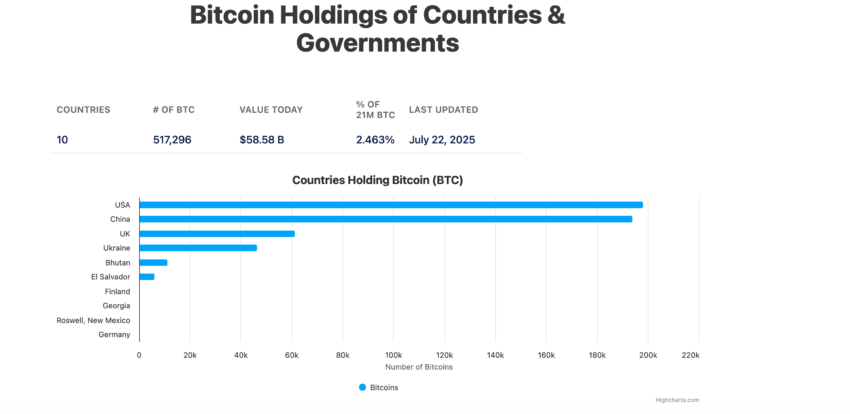
Bitcoin Holdings of Countries & Governments | BiTBO

According to CoinGecko, governments worldwide now hold about 463,741 BTC—2.3% of the supply. These caches reflect enforcement more than strategy. Whether they remain dormant, liquidated, or reclassified remains unsettled.

Historical Perspective – Gold ETFs, two decades ago, unlocked institutional flows. Crypto ETFs follow that arc but face AML and custody hurdles. Bitcoin differs: its government balances come mainly from seizures. IMF frameworks exclude crypto from reserves, which is blocking official adoption for now.

Possible Risks – Uncoordinated government sales could shake markets. Weak backing risks destabilizing stablecoins. Overregulation drives liquidity offshore. BeInCrypto reported that poorly designed U.S. retirement integration could amplify volatility. Declaring reserves without accounting legitimacy risks credibility loss.

Politics Enter the Reserve Debate

Legislatures increasingly test the reserve question. Taiwan’s proposal sparked debate. Japan’s Diet raised the issue, but the finance ministry dismissed it. According to the Brazilian Chamber record, Brazil’s Chamber of Deputies held a 2025 hearing on allocating up to 5% of reserves to Bitcoin. In the US, Texas codified a state-level bitcoin reserve. These moves show that politics, not just markets, drive the reserve conversation.

Data Breakdown

  • 2.3%: share of bitcoin controlled by governments
  • 195,000: bitcoin seized in China’s PlusToken case
  • 80%: cold-storage requirement in Korea
  • April 30, 2024: Hong Kong ETF launch
  • May 21, 2025: Hong Kong stablecoin law passed

Expert Opinion

China’s decisions on seized bitcoin and yuan-backed stablecoins will set the tone. Hong Kong’s licensing regime could bring banks into the issuance process. U.S. reserves and retirement debates may pressure others to adjust. Asia must decide whether to prepare or remain cautious.


Market Opportunity
Humanity Logo
Humanity Price(H)
$0.16486
$0.16486$0.16486
-2.28%
USD
Humanity (H) Live Price Chart
Disclaimer: The articles reposted on this site are sourced from public platforms and are provided for informational purposes only. They do not necessarily reflect the views of MEXC. All rights remain with the original authors. If you believe any content infringes on third-party rights, please contact service@support.mexc.com for removal. MEXC makes no guarantees regarding the accuracy, completeness, or timeliness of the content and is not responsible for any actions taken based on the information provided. The content does not constitute financial, legal, or other professional advice, nor should it be considered a recommendation or endorsement by MEXC.

You May Also Like

Bitcoin Has Taken Gold’s Role In Today’s World, Eric Trump Says

Bitcoin Has Taken Gold’s Role In Today’s World, Eric Trump Says

Eric Trump on Tuesday described Bitcoin as a “modern-day gold,” calling it a liquid store of value that can act as a hedge to real estate and other assets. Related Reading: XRP’s Biggest Rally Yet? Analyst Projects $20+ In October 2025 According to reports, the remark came during a TV appearance on CNBC’s Squawk Box, tied to the launch of American Bitcoin, the mining and treasury firm he helped start. Company Holdings And Strategy Based on public filings and company summaries, American Bitcoin has accumulated 2,443 BTC on its balance sheet. That stash has been valued in the low hundreds of millions of dollars at recent spot prices. The firm mixes large-scale mining with the goal of holding Bitcoin as a strategic reserve, which it says will help it grow both production and asset holdings over time. Eric Trump’s comments were direct. He told viewers that institutions are treating Bitcoin more like a store of value than a fringe idea, and he warned firms that resist blockchain adoption. The tone was strong at times, and the line about Bitcoin being a modern equivalent of gold was used to frame American Bitcoin’s role as both miner and holder.   Eric Trump has said: bitcoin is modern-day gold — unusual_whales (@unusual_whales) September 16, 2025 How The Company Went Public American Bitcoin moved toward a public listing via an all-stock merger with Gryphon Digital Mining earlier this year, a deal that kept most of the original shareholders in control and positioned the new entity for a Nasdaq debut. Reports show that mining partner Hut 8 holds a large ownership stake, leaving the Trump family and other backers with a minority share. The listing brought fresh attention and capital to the firm as it began trading under the ticker ABTC. Market watchers say the firm’s public debut highlights two trends: mining companies are trying to grow by both producing and holding Bitcoin, and political ties are bringing more headlines to crypto firms. Some analysts point out that holding large amounts of Bitcoin on the balance sheet exposes a company to price swings, while supporters argue it aligns incentives between miners and investors. Related Reading: Ethereum Bulls Target $8,500 With Big Money Backing The Move – Details Reaction And Possible Risks Based on coverage of the launch, investors have reacted with both enthusiasm and caution. Supporters praise the prospect of a US-based miner that aims to be transparent and aggressive about building a reserve. Critics point to governance questions, possible conflicts tied to high-profile backers, and the usual risks of a volatile asset being held on corporate balance sheets. Eric Trump’s remark that Bitcoin has taken gold’s role in today’s world reflects both his belief in its value and American Bitcoin’s strategy of mining and holding. Whether that view sticks will depend on how investors and institutions respond in the months ahead. Featured image from Meta, chart from TradingView
Share
NewsBTC2025/09/18 06:00
NZD/USD holds losses below 0.5750 ahead of China trade data

NZD/USD holds losses below 0.5750 ahead of China trade data

The post NZD/USD holds losses below 0.5750 ahead of China trade data appeared on BitcoinEthereumNews.com. NZD/USD extends its losses for the second successive day
Share
BitcoinEthereumNews2026/01/14 09:54
Regulatory Heat and Investor Buzz: Chainlink and Hyperliquid Gain Momentum as BullZilla Leads the Best 1000x Crypto Presales in 2025

Regulatory Heat and Investor Buzz: Chainlink and Hyperliquid Gain Momentum as BullZilla Leads the Best 1000x Crypto Presales in 2025

Could a regulatory crackdown spark the next wave of growth for early-stage tokens? That’s the question traders are asking after New York’s Department of Financial Services (NYDFS) directed banks to implement advanced blockchain analytics to monitor digital asset activity. As traditional banks deepen their involvement in crypto, this move signals a new era of oversight [...] The post Regulatory Heat and Investor Buzz: Chainlink and Hyperliquid Gain Momentum as BullZilla Leads the Best 1000x Crypto Presales in 2025 appeared first on Blockonomi.
Share
Blockonomi2025/09/19 10:15