Bitcoin Cycle Low Signals Flash Despite Market Rally as Miner Capitulation Intensifies
Bitcoin trades at $69,790 this morning, up 4.62% in the past 24 hours, masking deeper structural pressures that suggest the cryptocurrency may be approaching a cyclical bottom earlier than historical patterns would indicate. While traditional markets surge to new highs and recession odds fade to their lowest levels since 2022, Bitcoin’s fundamentals reveal a different narrative—one where institutional outflows and miner distress are creating classic bottom signals two years ahead of schedule.
The disconnect between Bitcoin’s price action and its underlying fundamentals has become increasingly pronounced since the digital asset peaked above $126,000 in late 2025. Despite today’s modest recovery, Bitcoin remains down approximately $56,000 from those highs, representing a correction of over 44% that has exposed critical weaknesses in the network’s economic foundation.
Mining difficulty experienced its largest downward adjustment since May 2021 last week, plummeting 11.16% to 125.86 terahashes as miners capitulated en masse. This represents the most significant exodus of computational power from the Bitcoin network in nearly five years, with inefficient operators shutting down operations as profitability margins collapse under sustained price pressure. The difficulty adjustment mechanism, while designed to maintain network stability, now signals broader economic stress within the mining ecosystem.
The miner capitulation extends beyond simple hash rate declines. Mining companies are pivoting their capital allocation strategies, with several major operators redirecting resources toward AI and hyperscale data center infrastructure where returns exceed traditional Bitcoin mining economics. This structural shift indicates that capital markets view alternative applications of computational resources as more profitable than securing the Bitcoin network at current price levels.
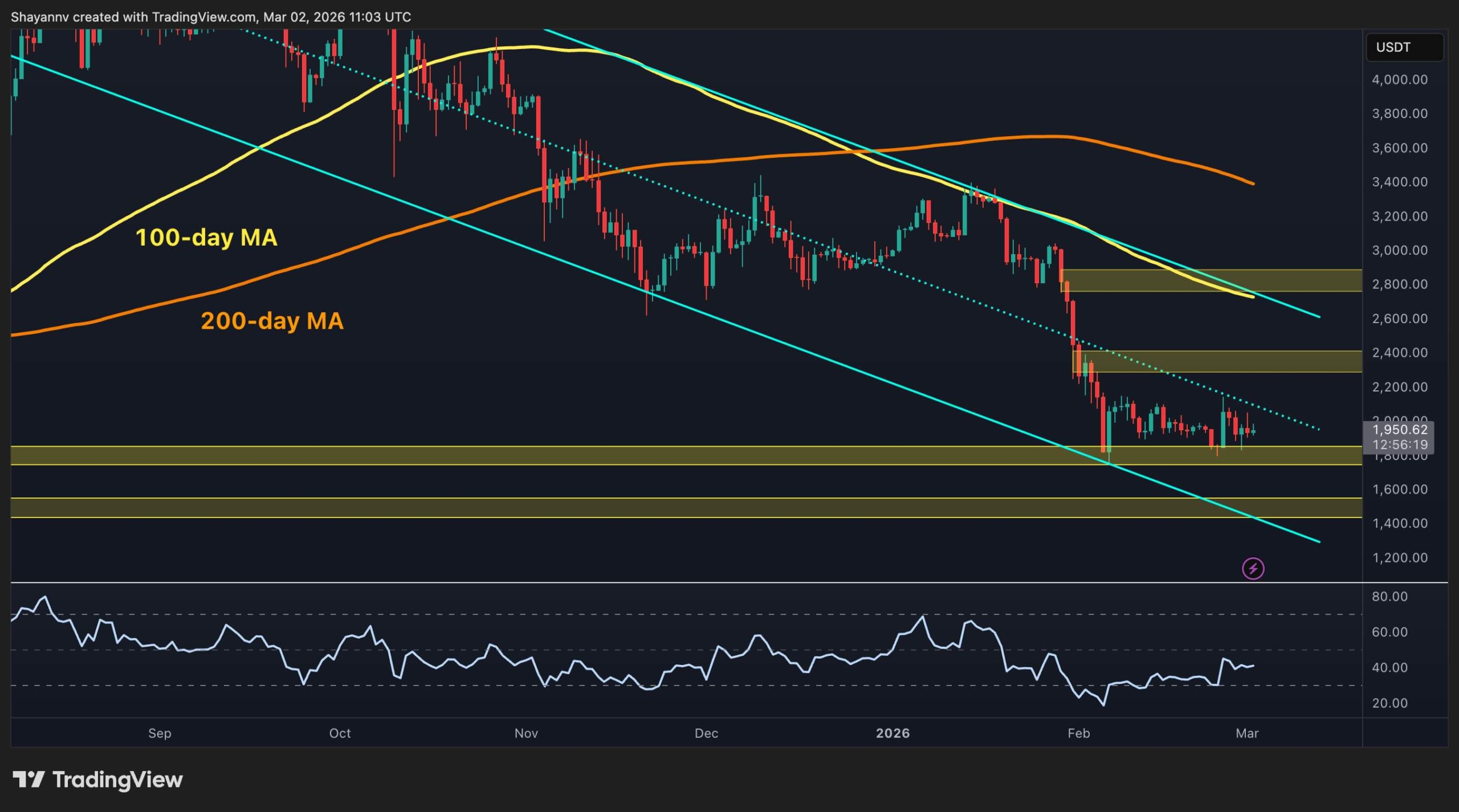
Bitcoin Price Chart (TradingView)
Spot Bitcoin ETF flows continue to leak despite today’s price recovery, with institutional investors reducing exposure through systematic outflows that have persisted for three consecutive weeks. The ETF complex, which initially brought unprecedented institutional legitimacy to Bitcoin markets, now serves as a barometer for sophisticated investors’ reduced conviction in the asset class. Unlike retail-driven selling cycles of previous bear markets, this institutional deleveraging represents a more fundamental shift in professional portfolio allocation.
Strategy Corp, the largest corporate Bitcoin treasury holder with 714,644 bitcoins worth approximately $49 billion, faces mounting leverage pressures despite CEO Michael Saylor’s public confidence. The company’s debt burden exceeds $8 billion, creating potential liquidation risks if Bitcoin falls below critical support levels. However, Saylor maintains that forced selling remains unlikely unless Bitcoin drops to approximately $8,000—a scenario that would represent an additional 88% decline from current levels.
Traditional equity markets present a stark contrast to Bitcoin’s structural challenges. The Dow Jones Industrial Average continues setting new records above 50,000, while Goldman Sachs forecasts a 12% rally for the S&P 500 in 2026, targeting levels between 7,200 and 7,600. This divergence reflects the broader “risk-off” rotation away from speculative assets toward traditional growth stocks, particularly those benefiting from artificial intelligence adoption and disinflationary economic conditions.
The Federal Reserve’s predictable policy stance has eliminated recession fears that dominated 2025 discussions. Economic indicators suggest sustained growth driven by resilient consumer spending and corporate investment in transformative technologies. This stable macroeconomic backdrop typically supports risk asset performance, making Bitcoin’s continued weakness more notable and suggesting asset-specific rather than systemic causes.
Technical analysis reveals Bitcoin testing critical support near $60,000, a level that has attracted buyers during previous selloffs but faces increasing pressure from persistent selling. The cryptocurrency’s failure to sustain rallies above $71,000 indicates institutional resistance at higher levels, with each bounce meeting fresh supply from investors seeking to reduce exposure.
The four-year halving cycle, historically Bitcoin’s most reliable fundamental driver, appears to be compressing timeframes for both peaks and troughs. While previous cycles required 18-24 months to establish definitive bottoms after major peaks, current conditions suggest this cycle may achieve similar capitulation in half that timeframe. The combination of institutional selling, miner stress, and reduced speculative interest creates conditions typically associated with late-stage bear markets.
Network fundamentals beyond mining also show stress. Transaction volumes on major exchanges have declined approximately 30% since late 2025, indicating reduced active trading interest across both institutional and retail segments. This decline in organic network activity, combined with reduced mining economics, suggests Bitcoin may be entering a period of fundamental reset rather than temporary correction.
The cryptocurrency maintains its 58.49% market dominance within the broader digital asset ecosystem, but this metric masks the overall contraction in total crypto market capitalization to $2.38 trillion. Bitcoin’s relative strength versus alternative cryptocurrencies provides little comfort when the entire sector faces systematic institutional withdrawal.
Looking forward, Bitcoin’s ability to hold support above $60,000 becomes critical for determining whether current conditions represent a tradable bottom or the beginning of a more extended period of price discovery. Historical precedent suggests that genuine cycle lows require sustained periods of low volatility and reduced market interest—conditions that have not yet materialized despite recent selling pressure.
The convergence of miner capitulation, institutional outflows, and reduced network activity creates a compelling case for cyclical bottom formation, even as traditional markets surge on economic optimism. Whether Bitcoin can establish a sustainable base at current levels depends largely on the cryptocurrency’s ability to attract fresh capital despite competing opportunities in traditional growth assets and emerging AI technologies.
You May Also Like

XRPL Sidechain Proposal Targets Options Trading and Leverage

Polygon Tops RWA Rankings With $1.1B in Tokenized Assets