Crypto Trading 101: How to Spot High-Probability Setups During Volatility
The Power of Volatility in Crypto Trading
In the world of digital assets, volatility is often misunderstood. While mainstream media portrays price swings as a risk, professional traders recognize that without movement, there is no profit. Crypto trading 101 starts with a simple mindset shift: volatility is not your enemy; it is your edge.
When the market moves aggressively, it creates inefficiencies and price gaps. Learning how to trade Bitcoin during these periods allows you to enter positions at "discounted" prices before the next major trend begins. To keep your finger on the pulse of these movements, ensure you follow our latest crypto news.
How to Trade Bitcoin: Identifying High-Probability Setups
A "high-probability setup" is a market condition where the odds of a specific price movement are significantly higher than average. In bitcoin trading, these setups usually occur at the edges of volatility.
- The Mean Reversion Setup: Prices rarely move in a straight line. When Bitcoin ($BTC) stretches too far from its Daily Moving Average, it creates a "rubber band" effect, often snapping back to the mean.
- Support and Resistance Flips: During high volatility, old resistance levels often become new support. Identifying these "flips" provides a low-risk entry point for a continuation trade.
- Liquidity Hunts: Markets often "hunt" for stop-loss orders located just above or below previous highs/lows. Spotting a fake-out followed by a quick reversal is a classic professional setup.
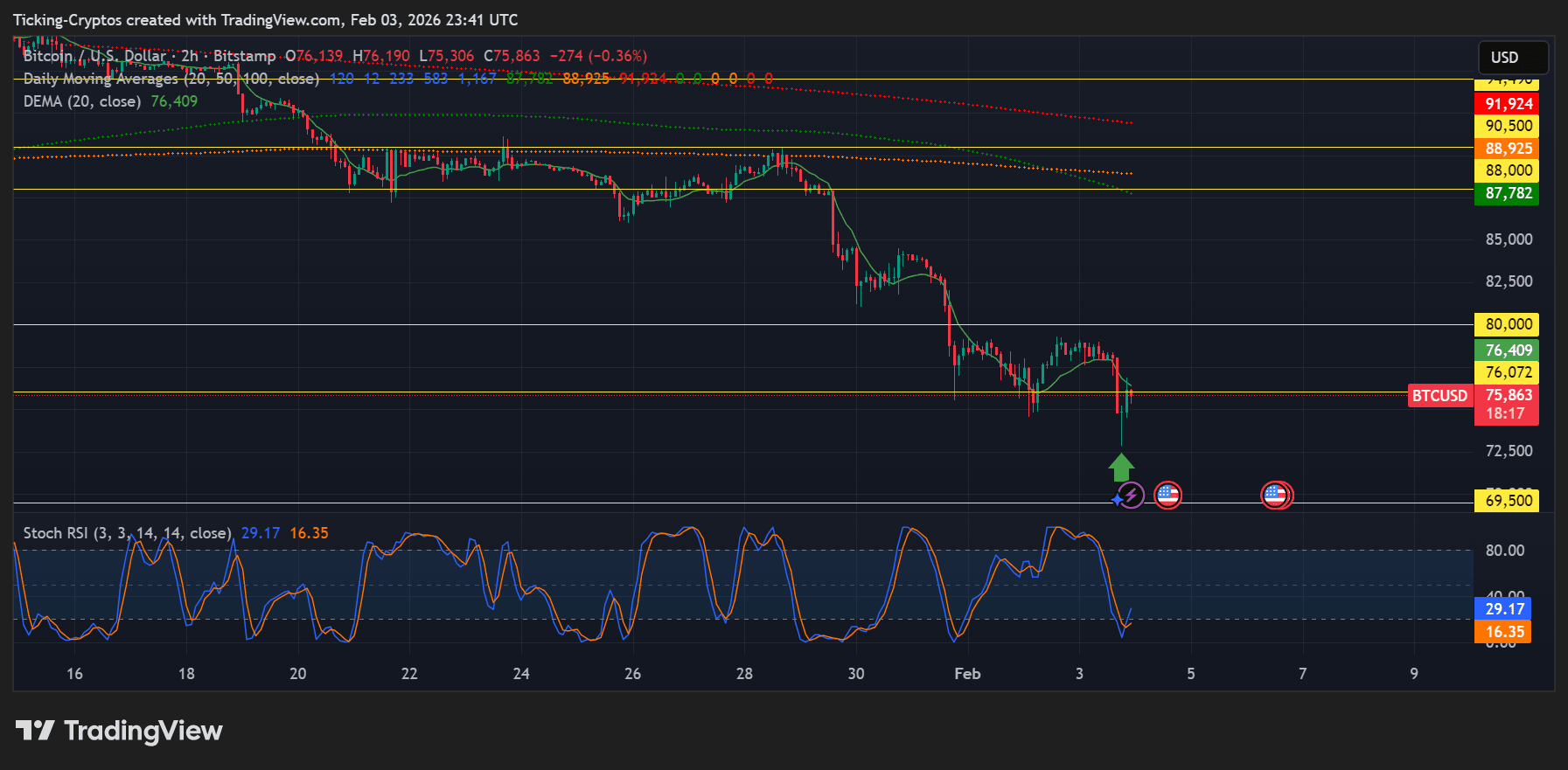 BTC/USD 2H - TradingView
Essential Crypto Trading Tips for Volatile Markets
Success in crypto trading requires more than just knowing where to click "buy." You need a systematic approach to survive the noise of the market. Here are our top crypto trading tips for 2026:
1. Volume is Your Confirmation
Never trust a price move that isn't backed by volume. If Bitcoin's price is rising but trading volume is falling, the move is likely a "bull trap." High-authority resources like CoinGecko or CoinMarketCap can help you track real-time volume across multiple exchanges.
2. Master the RSI and Bollinger Bands
In a crypto trading 101 framework, these two indicators are vital. Bollinger Bands expand during volatility; a "tag" of the outer band followed by a reversal candle is often a high-probability signal. Use the RSI (Relative Strength Index) to confirm if the asset is overextended.
3. Manage Your Emotions
Volatility triggers two main emotions: Greed (FOMO) and Fear. A professional trader ignores the "hype" and waits for the price to reach their predetermined entry zone. If you miss a trade, wait for the next setup—the market always provides another opportunity.
Infrastructure: Security and Execution
Spotting a setup is only half the battle; you must execute it on a platform that won't fail you during peak traffic. High volatility can cause lag on inferior platforms, leading to poor execution prices.
- Exchange Reliability: Compare platforms to ensure you are using a provider with high liquidity and low downtime. See our exchange comparison for 2026's top picks.
- Asset Security: While trading requires keeping some funds on an exchange, always move your profits to a secure environment. We recommend reviewing our hardware wallets comparison to protect your capital from online threats.


You May Also Like

Goldman Sachs to offer low-risk, low-reward Bitcoin ETF

Kraken Eyes Public Listing After Navigating Turbulent Waters