Crypto Bill Stalled: TD Cowen Exposes the Shocking Political Hurdle Blocking the CLARITY Act
BitcoinWorld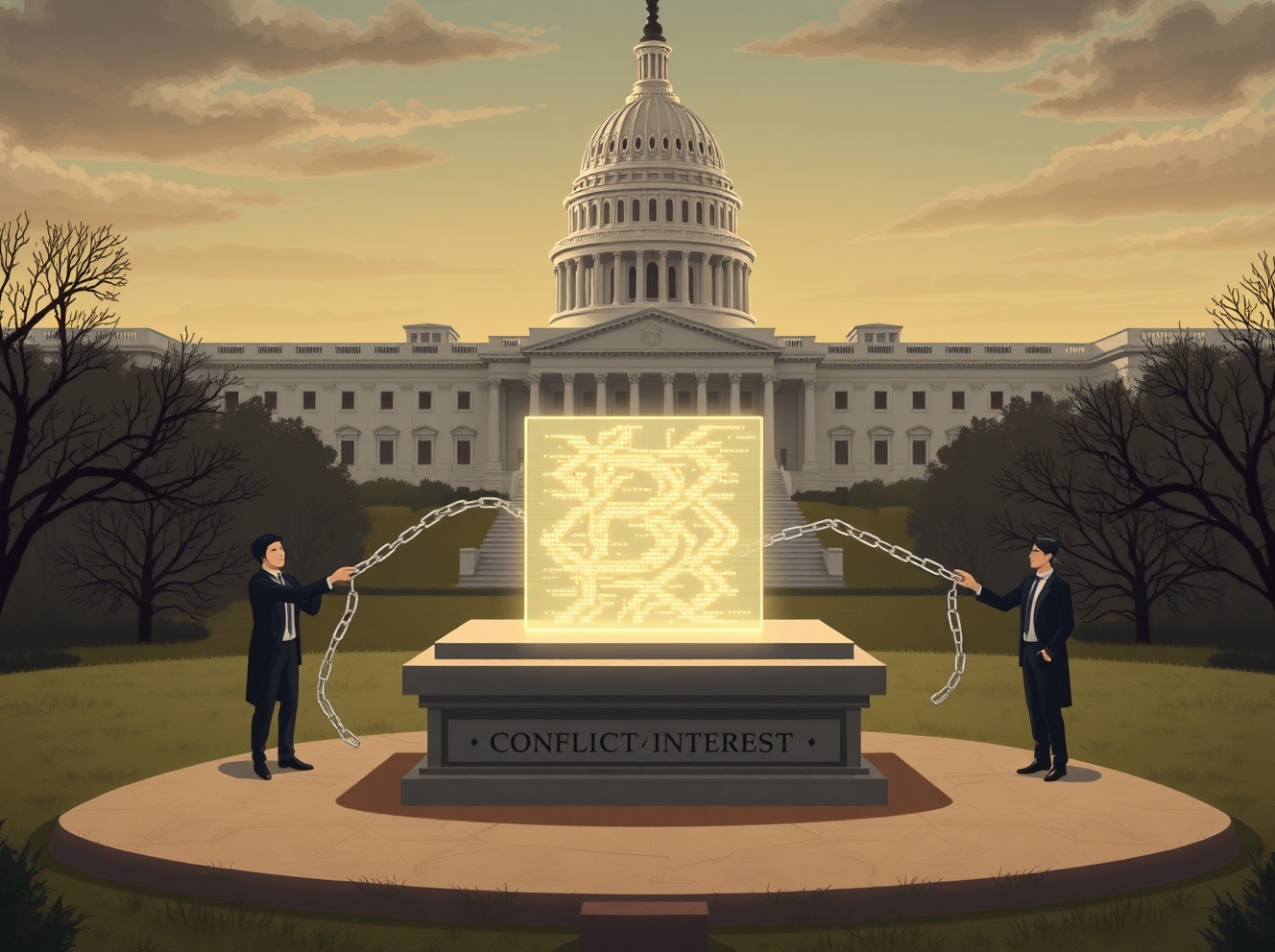
Crypto Bill Stalled: TD Cowen Exposes the Shocking Political Hurdle Blocking the CLARITY Act
In Washington D.C., a critical analysis from financial giant TD Cowen has shifted the narrative around landmark cryptocurrency legislation, revealing that a deeply political provision—not a technical regulatory debate—poses the most significant barrier to passage of the long-awaited crypto market structure bill known as the CLARITY Act.
Crypto Bill Faces Unexpected Political Roadblock
For months, industry observers focused on the jurisdictional battle between the Securities and Exchange Commission (SEC) and the Commodity Futures Trading Commission (CFTC). However, TD Cowen’s Washington Research Group, led by policy analyst Jaret Seiberg, identified a more contentious obstacle. The core issue centers on Section 307 of the proposed CLARITY Act. This section would explicitly ban the President, Vice President, and all members of Congress from trading cryptocurrencies during their terms. Consequently, this creates a direct conflict with campaign strategies in a heated election cycle.
The Democratic Party has reportedly made former President Donald Trump’s cryptocurrency holdings a central campaign theme. Therefore, abandoning a provision that highlights ethical concerns around crypto trading by officials becomes politically untenable. This political calculus, according to the analysis, overshadows the substantive debate over whether digital assets are securities or commodities. The report, initially cited by The Block, suggests the bill’s fate is now tied to electoral politics rather than regulatory philosophy.
Deconstructing the CLARITY Act’s Core Conflict
The Crypto-Asset Linked Accountability and Responsibility in Transactions (CLARITY) Act aims to create a comprehensive regulatory framework. Its primary goals include defining regulatory jurisdiction and establishing consumer protections. A key comparative table illustrates the central tension:
| Provision | Intent | Political Consequence |
|---|---|---|
| Jurisdictional Clarification | Assigns assets as securities (SEC) or commodities (CFTC) | Technical debate; potential for compromise |
| Section 307: Trading Ban | Prevents conflicts of interest for federal officials | Creates a potent campaign issue; limits political flexibility |
This trading ban represents a significant escalation in government ethics rules. Historically, lawmakers have faced restrictions on trading stocks and bonds in certain companies. Extending this to the highly volatile and opaque cryptocurrency market, however, introduces new complexities. Proponents argue it is necessary to prevent insider information advantages. Opponents view it as an overreach that could deter public service.
Expert Analysis on Legislative Gridlock
Policy analysts emphasize that midterm elections amplify partisan tensions. “Legislation with clear campaign implications rarely passes in an election year,” notes Dr. Eleanor Vance, a Georgetown University professor specializing in financial policy. “The CLARITY Act’s trading ban has been weaponized. It is no longer just a policy item; it is a campaign advertisement.” This sentiment echoes TD Cowen’s conclusion that the Democratic leadership is unlikely to compromise on the provision. The analysis points to a strategic decision to maintain a clear ethical contrast with political opponents.
Furthermore, the timing creates a procedural nightmare. The legislative calendar shortens as elections near. Lawmakers prioritize constituent events and fundraising. Complex, controversial bills like the CLARITY Act require lengthy markups and floor debates—a luxury not available in a truncated session. This reality effectively pushes any realistic chance for passage into the next congressional term, regardless of election outcomes.
The Ripple Effects on Crypto Market Structure
The ongoing delay has tangible consequences for the United States cryptocurrency industry. Market participants operate under a cloud of regulatory uncertainty. This uncertainty affects several key areas:
- Innovation and Investment: Startups and venture capital firms hesitate to deploy resources without clear rules.
- Consumer Protection: The absence of a federal framework leaves gaps that can be exploited by bad actors.
- Global Competitiveness: Other jurisdictions, like the EU with its MiCA framework, are advancing clear regulations, potentially drawing business away from the U.S.
Major exchanges and custodians continue to navigate a patchwork of state regulations and evolving SEC enforcement actions. This environment increases compliance costs and legal risks. Many industry leaders have publicly called for the clarity that the bill’s namesake promises. However, the political stalemate described by TD Cowen suggests relief is not imminent.
The Historical Context of Financial Ethics Reforms
Attempts to restrict trading by federal officials are not new. The STOCK Act of 2012 aimed to combat congressional insider trading. Its implementation, however, faced criticism and loopholes. The proposed crypto trading ban within the CLARITY Act is a natural, albeit controversial, extension of this principle into a new asset class. It reflects growing public skepticism about lawmakers’ financial dealings. A 2023 Pew Research Center survey indicated that over 70% of Americans believe members of Congress have too much access to investment information that benefits them personally.
This public sentiment provides the political fuel for Section 307. Legislators supporting the ban can frame it as a strong anti-corruption measure. Conversely, removing it could be portrayed as weakening ethics standards. In the high-stakes environment of a presidential election year, neither party wants to be on the wrong side of that narrative. This dynamic essentially locks the provision in place, creating the very impasse TD Cowen identified.
Conclusion
The TD Cowen analysis provides a crucial reality check for the cryptocurrency industry and policymakers. The path forward for the crypto bill, the CLARITY Act, is currently blocked not by lawyers debating jurisdictional nuances but by politicians navigating a fierce election landscape. The provision banning crypto trades by high-level officials has become a symbolic political tool. Until the electoral pressure subsides, the deep analysis needed for a functional crypto market structure will likely remain secondary to campaign strategy. The report underscores that in Washington, policy and politics are often inseparable, and the future of cryptocurrency regulation now hinges on the latter.
FAQs
Q1: What is the CLARITY Act?
The Crypto-Asset Linked Accountability and Responsibility in Transactions (CLARITY) Act is proposed U.S. legislation designed to create a comprehensive regulatory framework for digital assets. It aims to clarify whether cryptocurrencies are securities or commodities and establish corresponding rules for exchanges and consumer protection.
Q2: Why does TD Cowen say politics is the main hurdle?
TD Cowen’s analysis highlights that a specific provision (Section 307) banning the President, Vice President, and Congress from trading crypto has become a central campaign issue. This makes it politically difficult for lawmakers to compromise on or remove the provision, stalling the entire bill’s progress.
Q3: How does this affect the average cryptocurrency investor?
The continued delay means ongoing regulatory uncertainty. Investors may face a lack of uniform consumer protections, and the U.S. market may see slower innovation as businesses await clear rules, potentially impacting investment options and security.
Q4: Could the bill pass after the elections?
Yes, the political dynamics could shift significantly after the midterm elections. A new Congress may have different priorities and less immediate campaign pressure, potentially allowing for a reconsideration of the bill’s most contentious elements.
Q5: What are the arguments for and against the trading ban for officials?
Proponents argue it prevents conflicts of interest and insider trading based on non-public regulatory knowledge. Opponents contend it is overly broad, could deter qualified individuals from public service, and represents government overreach into personal finances.
This post Crypto Bill Stalled: TD Cowen Exposes the Shocking Political Hurdle Blocking the CLARITY Act first appeared on BitcoinWorld.


You May Also Like

Why Is XRP Down Today? Will It End April on a Positive Note?

Watching Hyperliquid (HYPE) Candles From the Sidelines Sucks: BlockchainFX ($BFX) Is the Top Crypto to Buy Now