BitcoinWorld Microsoft Protest: Activists Dramatically Disrupt Headquarters Over Azure Contracts In a striking display of dissent that has sent ripples through the tech world, activists recently escalated their campaign against Microsoft, culminating in a dramatic Microsoft protest at the company’s Redmond headquarters. This bold action saw protesters enter the office of Microsoft President Brad Smith, forcing a temporary lockdown and drawing significant attention to the contentious ‘No Azure for Apartheid’ movement. For those in the cryptocurrency and broader tech community, this event highlights the growing intersection of corporate power, ethical responsibility, and digital platforms in shaping global narratives and actions. The Escalation: A Bold Stance Against Azure for Apartheid The recent sit-in, orchestrated by the ‘No Azure for Apartheid’ group, marked a significant escalation in their ongoing campaign. On Monday, protesters managed to gain entry into Microsoft President Brad Smith’s office in Building 34. This unprecedented access led to a temporary lockdown of the facility, underscoring the seriousness of the activists’ intent and the security breach involved. The group’s tactics were meticulously planned and executed, mirroring modern digital activism strategies: Live-Streamed Protest: The entire sit-in was reportedly live-streamed on Twitch, leveraging digital platforms to amplify their message to a global audience. This approach ensures maximum visibility and circumvents traditional media gatekeepers. Direct Messaging: Banners were hoisted, prominently displaying their core message. Chants like ‘Brad Smith, you can’t hide, you’re supporting genocide!’ were used to directly address the company’s leadership and articulate their grievances. Symbolic Legal Action: A mock legal summons was posted, charging Smith with ‘crimes against humanity.’ This symbolic gesture aimed to underscore the perceived moral and ethical implications of Microsoft’s business dealings. Bitcoin World has reached out to Microsoft for more information regarding the incident, as the full implications of such a high-profile disruption continue to unfold. Reports indicate that the protest involved a mix of current Microsoft employees and former staff, some of whom had previously faced termination due to their activism. This suggests a deeply rooted internal concern within the company regarding its ethical commitments. Understanding the ‘No Azure for Apartheid’ Campaign The core of the ‘No Azure for Apartheid’ campaign revolves around Microsoft’s cloud contracts with Israel. For months, activists have been protesting these agreements, asserting that Microsoft’s Azure cloud services are being utilized in ways that contribute to human rights violations against Palestinians. A recent investigation by The Guardian shed light on these concerns, revealing that Israel reportedly uses Microsoft’s services to store data from millions of daily calls made by Palestinians in Gaza and the West Bank. This alleged use of technology raises profound questions about tech company ethics and the responsibility of global corporations operating in conflict zones. Why is this contract controversial? The controversy stems from the perception that providing advanced cloud infrastructure and AI tools to a government involved in a long-standing conflict can indirectly, or even directly, facilitate actions deemed oppressive by human rights organizations. For the activists, providing such critical infrastructure to Israel, particularly for data storage related to its surveillance activities over Palestinians, makes Microsoft complicit in what they term ‘apartheid.’ This situation forces a critical examination of: Due Diligence: What level of ethical due diligence should tech companies undertake when signing contracts with governments, especially those in conflict areas? Data Sovereignty and Privacy: The storage of sensitive personal data, such as call records, raises concerns about privacy, surveillance, and potential misuse. Corporate Responsibility: How far does a company’s responsibility extend beyond its immediate business operations to the broader societal and political impacts of its products and services? Echoes of the Past: Google’s Project Nimbus and Corporate Activism Monday’s dramatic takeover at Microsoft headquarters is not an isolated incident; it mirrors similar tactics employed by Google employees over a year ago. In April 2024, nine Google workers orchestrated coordinated protests across their New York and California offices. Five of these employees went as far as occupying Google Cloud CEO Thomas Kurian’s office for nine hours, writing their demands on his whiteboard and wearing ‘Googler against genocide’ shirts. The Google protesters targeted ‘Project Nimbus,’ a substantial $1.2 billion contract with Amazon and Google that provides Israel’s government and military with cloud computing and AI tools. Like the Microsoft protest, these sit-ins and arrests were live-streamed on Twitch, amplifying their message. The aftermath for Google employees was severe: three days later, 28 employees involved in those protests were fired. This precedent sets a stark warning for employee activism within major tech firms, highlighting the personal and professional risks involved. Comparing the Tech Giants’ Predicaments: The similarities between the Microsoft and Google protests are striking, indicating a broader trend in corporate activism: Aspect Microsoft Protest Google Project Nimbus Protest Targeted Company Microsoft Google (and Amazon) Specific Contract Azure cloud contracts with Israel (data storage) Project Nimbus ($1.2B cloud/AI contract with Israel) Location of Protest Redmond HQ, Brad Smith’s office NY and CA offices, Thomas Kurian’s office Protest Tactics Sit-in, live-stream on Twitch, banners, chanting, mock summons Sit-in, office occupation, demands on whiteboard, live-stream on Twitch Outcome for Employees Involved current and former employees; potential disciplinary action ongoing 28 employees fired shortly after protests The Broader Implications for Tech Company Ethics These protests underscore a growing demand from employees and the public for greater ethical accountability from technology giants. As tech companies like Microsoft become integral to global infrastructure and national security, their decisions carry significant weight beyond quarterly earnings reports. The lines between business operations and political implications are increasingly blurred. The challenges for these companies are multifaceted: Balancing Profit with Principles: How do companies navigate lucrative government contracts that conflict with the ethical stances of their workforce and segments of their user base? Maintaining Employee Morale: High-profile internal dissent can impact company culture, recruitment, and retention, particularly among younger generations who prioritize ethical workplaces. Public Perception and Brand Image: Protests like the Microsoft protest can damage a company’s reputation, affecting customer trust and potentially leading to boycotts or regulatory scrutiny. The debate around tech company ethics extends beyond just government contracts to areas like AI development, data privacy, and content moderation. Companies are under pressure to not only innovate but also to demonstrate a commitment to social responsibility and human rights. The Future of Employee Activism in Tech The incidents at Microsoft and Google signal a new era of employee activism within the tech industry. Employees, often highly skilled and passionate, are increasingly willing to use their positions to advocate for change, even at the risk of their careers. This shift empowers workers to hold their employers accountable for their ethical footprint. This trend has several key characteristics: Moral Imperative: Activism is often driven by a deep moral conviction rather than purely economic demands. Digital Amplification: Social media and live-streaming platforms are crucial tools for organizing, communicating, and publicizing protests. Cross-Company Solidarity: Activists at different tech companies are increasingly aware of and inspired by each other’s actions, fostering a sense of collective movement. For tech companies, ignoring or simply suppressing such activism may prove counterproductive. Engaging with employee concerns, fostering open dialogue, and transparently addressing ethical dilemmas could be crucial for long-term sustainability and maintaining a positive corporate image. Conclusion: A Defining Moment for Microsoft and Beyond The recent Microsoft protest at its Redmond headquarters marks a significant moment in the ongoing battle over corporate ethics and responsibility in the tech sector. The ‘No Azure for Apartheid’ campaign, mirroring the ‘Project Nimbus’ protests at Google, highlights the growing power of activists and employees to challenge the moral implications of their companies’ business dealings. As technology becomes more deeply intertwined with global politics and human rights, the pressure on tech giants to align their operations with ethical principles will only intensify. This event serves as a potent reminder that in the digital age, where information travels instantly and corporate actions are scrutinized globally, companies like Microsoft face an imperative to not only innovate but also to operate with a clear and demonstrable commitment to ethical conduct. The outcomes of these protests, both for the activists and the corporations involved, will undoubtedly shape the future landscape of corporate activism and the evolving standards of tech company ethics. To learn more about the latest AI market trends and how ethical considerations are shaping the industry, explore our article on key developments shaping AI features and institutional adoption. This post Microsoft Protest: Activists Dramatically Disrupt Headquarters Over Azure Contracts first appeared on BitcoinWorld and is written by Editorial TeamBitcoinWorld Microsoft Protest: Activists Dramatically Disrupt Headquarters Over Azure Contracts In a striking display of dissent that has sent ripples through the tech world, activists recently escalated their campaign against Microsoft, culminating in a dramatic Microsoft protest at the company’s Redmond headquarters. This bold action saw protesters enter the office of Microsoft President Brad Smith, forcing a temporary lockdown and drawing significant attention to the contentious ‘No Azure for Apartheid’ movement. For those in the cryptocurrency and broader tech community, this event highlights the growing intersection of corporate power, ethical responsibility, and digital platforms in shaping global narratives and actions. The Escalation: A Bold Stance Against Azure for Apartheid The recent sit-in, orchestrated by the ‘No Azure for Apartheid’ group, marked a significant escalation in their ongoing campaign. On Monday, protesters managed to gain entry into Microsoft President Brad Smith’s office in Building 34. This unprecedented access led to a temporary lockdown of the facility, underscoring the seriousness of the activists’ intent and the security breach involved. The group’s tactics were meticulously planned and executed, mirroring modern digital activism strategies: Live-Streamed Protest: The entire sit-in was reportedly live-streamed on Twitch, leveraging digital platforms to amplify their message to a global audience. This approach ensures maximum visibility and circumvents traditional media gatekeepers. Direct Messaging: Banners were hoisted, prominently displaying their core message. Chants like ‘Brad Smith, you can’t hide, you’re supporting genocide!’ were used to directly address the company’s leadership and articulate their grievances. Symbolic Legal Action: A mock legal summons was posted, charging Smith with ‘crimes against humanity.’ This symbolic gesture aimed to underscore the perceived moral and ethical implications of Microsoft’s business dealings. Bitcoin World has reached out to Microsoft for more information regarding the incident, as the full implications of such a high-profile disruption continue to unfold. Reports indicate that the protest involved a mix of current Microsoft employees and former staff, some of whom had previously faced termination due to their activism. This suggests a deeply rooted internal concern within the company regarding its ethical commitments. Understanding the ‘No Azure for Apartheid’ Campaign The core of the ‘No Azure for Apartheid’ campaign revolves around Microsoft’s cloud contracts with Israel. For months, activists have been protesting these agreements, asserting that Microsoft’s Azure cloud services are being utilized in ways that contribute to human rights violations against Palestinians. A recent investigation by The Guardian shed light on these concerns, revealing that Israel reportedly uses Microsoft’s services to store data from millions of daily calls made by Palestinians in Gaza and the West Bank. This alleged use of technology raises profound questions about tech company ethics and the responsibility of global corporations operating in conflict zones. Why is this contract controversial? The controversy stems from the perception that providing advanced cloud infrastructure and AI tools to a government involved in a long-standing conflict can indirectly, or even directly, facilitate actions deemed oppressive by human rights organizations. For the activists, providing such critical infrastructure to Israel, particularly for data storage related to its surveillance activities over Palestinians, makes Microsoft complicit in what they term ‘apartheid.’ This situation forces a critical examination of: Due Diligence: What level of ethical due diligence should tech companies undertake when signing contracts with governments, especially those in conflict areas? Data Sovereignty and Privacy: The storage of sensitive personal data, such as call records, raises concerns about privacy, surveillance, and potential misuse. Corporate Responsibility: How far does a company’s responsibility extend beyond its immediate business operations to the broader societal and political impacts of its products and services? Echoes of the Past: Google’s Project Nimbus and Corporate Activism Monday’s dramatic takeover at Microsoft headquarters is not an isolated incident; it mirrors similar tactics employed by Google employees over a year ago. In April 2024, nine Google workers orchestrated coordinated protests across their New York and California offices. Five of these employees went as far as occupying Google Cloud CEO Thomas Kurian’s office for nine hours, writing their demands on his whiteboard and wearing ‘Googler against genocide’ shirts. The Google protesters targeted ‘Project Nimbus,’ a substantial $1.2 billion contract with Amazon and Google that provides Israel’s government and military with cloud computing and AI tools. Like the Microsoft protest, these sit-ins and arrests were live-streamed on Twitch, amplifying their message. The aftermath for Google employees was severe: three days later, 28 employees involved in those protests were fired. This precedent sets a stark warning for employee activism within major tech firms, highlighting the personal and professional risks involved. Comparing the Tech Giants’ Predicaments: The similarities between the Microsoft and Google protests are striking, indicating a broader trend in corporate activism: Aspect Microsoft Protest Google Project Nimbus Protest Targeted Company Microsoft Google (and Amazon) Specific Contract Azure cloud contracts with Israel (data storage) Project Nimbus ($1.2B cloud/AI contract with Israel) Location of Protest Redmond HQ, Brad Smith’s office NY and CA offices, Thomas Kurian’s office Protest Tactics Sit-in, live-stream on Twitch, banners, chanting, mock summons Sit-in, office occupation, demands on whiteboard, live-stream on Twitch Outcome for Employees Involved current and former employees; potential disciplinary action ongoing 28 employees fired shortly after protests The Broader Implications for Tech Company Ethics These protests underscore a growing demand from employees and the public for greater ethical accountability from technology giants. As tech companies like Microsoft become integral to global infrastructure and national security, their decisions carry significant weight beyond quarterly earnings reports. The lines between business operations and political implications are increasingly blurred. The challenges for these companies are multifaceted: Balancing Profit with Principles: How do companies navigate lucrative government contracts that conflict with the ethical stances of their workforce and segments of their user base? Maintaining Employee Morale: High-profile internal dissent can impact company culture, recruitment, and retention, particularly among younger generations who prioritize ethical workplaces. Public Perception and Brand Image: Protests like the Microsoft protest can damage a company’s reputation, affecting customer trust and potentially leading to boycotts or regulatory scrutiny. The debate around tech company ethics extends beyond just government contracts to areas like AI development, data privacy, and content moderation. Companies are under pressure to not only innovate but also to demonstrate a commitment to social responsibility and human rights. The Future of Employee Activism in Tech The incidents at Microsoft and Google signal a new era of employee activism within the tech industry. Employees, often highly skilled and passionate, are increasingly willing to use their positions to advocate for change, even at the risk of their careers. This shift empowers workers to hold their employers accountable for their ethical footprint. This trend has several key characteristics: Moral Imperative: Activism is often driven by a deep moral conviction rather than purely economic demands. Digital Amplification: Social media and live-streaming platforms are crucial tools for organizing, communicating, and publicizing protests. Cross-Company Solidarity: Activists at different tech companies are increasingly aware of and inspired by each other’s actions, fostering a sense of collective movement. For tech companies, ignoring or simply suppressing such activism may prove counterproductive. Engaging with employee concerns, fostering open dialogue, and transparently addressing ethical dilemmas could be crucial for long-term sustainability and maintaining a positive corporate image. Conclusion: A Defining Moment for Microsoft and Beyond The recent Microsoft protest at its Redmond headquarters marks a significant moment in the ongoing battle over corporate ethics and responsibility in the tech sector. The ‘No Azure for Apartheid’ campaign, mirroring the ‘Project Nimbus’ protests at Google, highlights the growing power of activists and employees to challenge the moral implications of their companies’ business dealings. As technology becomes more deeply intertwined with global politics and human rights, the pressure on tech giants to align their operations with ethical principles will only intensify. This event serves as a potent reminder that in the digital age, where information travels instantly and corporate actions are scrutinized globally, companies like Microsoft face an imperative to not only innovate but also to operate with a clear and demonstrable commitment to ethical conduct. The outcomes of these protests, both for the activists and the corporations involved, will undoubtedly shape the future landscape of corporate activism and the evolving standards of tech company ethics. To learn more about the latest AI market trends and how ethical considerations are shaping the industry, explore our article on key developments shaping AI features and institutional adoption. This post Microsoft Protest: Activists Dramatically Disrupt Headquarters Over Azure Contracts first appeared on BitcoinWorld and is written by Editorial Team

Microsoft Protest: Activists Dramatically Disrupt Headquarters Over Azure Contracts

BitcoinWorld
Microsoft Protest: Activists Dramatically Disrupt Headquarters Over Azure Contracts

In a striking display of dissent that has sent ripples through the tech world, activists recently escalated their campaign against Microsoft, culminating in a dramatic Microsoft protest at the company’s Redmond headquarters. This bold action saw protesters enter the office of Microsoft President Brad Smith, forcing a temporary lockdown and drawing significant attention to the contentious ‘No Azure for Apartheid’ movement. For those in the cryptocurrency and broader tech community, this event highlights the growing intersection of corporate power, ethical responsibility, and digital platforms in shaping global narratives and actions.

The Escalation: A Bold Stance Against Azure for Apartheid

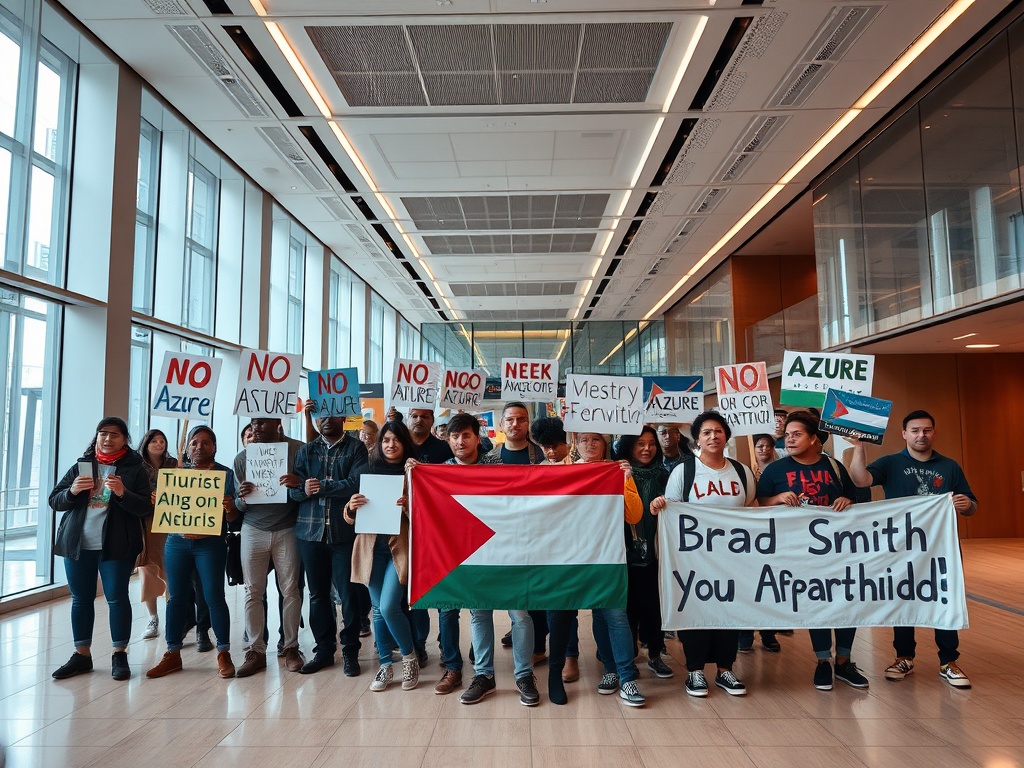
The recent sit-in, orchestrated by the ‘No Azure for Apartheid’ group, marked a significant escalation in their ongoing campaign. On Monday, protesters managed to gain entry into Microsoft President Brad Smith’s office in Building 34. This unprecedented access led to a temporary lockdown of the facility, underscoring the seriousness of the activists’ intent and the security breach involved.

The group’s tactics were meticulously planned and executed, mirroring modern digital activism strategies:

  • Live-Streamed Protest: The entire sit-in was reportedly live-streamed on Twitch, leveraging digital platforms to amplify their message to a global audience. This approach ensures maximum visibility and circumvents traditional media gatekeepers.
  • Direct Messaging: Banners were hoisted, prominently displaying their core message. Chants like ‘Brad Smith, you can’t hide, you’re supporting genocide!’ were used to directly address the company’s leadership and articulate their grievances.
  • Symbolic Legal Action: A mock legal summons was posted, charging Smith with ‘crimes against humanity.’ This symbolic gesture aimed to underscore the perceived moral and ethical implications of Microsoft’s business dealings.

Bitcoin World has reached out to Microsoft for more information regarding the incident, as the full implications of such a high-profile disruption continue to unfold. Reports indicate that the protest involved a mix of current Microsoft employees and former staff, some of whom had previously faced termination due to their activism. This suggests a deeply rooted internal concern within the company regarding its ethical commitments.

Understanding the ‘No Azure for Apartheid’ Campaign

The core of the ‘No Azure for Apartheid’ campaign revolves around Microsoft’s cloud contracts with Israel. For months, activists have been protesting these agreements, asserting that Microsoft’s Azure cloud services are being utilized in ways that contribute to human rights violations against Palestinians. A recent investigation by The Guardian shed light on these concerns, revealing that Israel reportedly uses Microsoft’s services to store data from millions of daily calls made by Palestinians in Gaza and the West Bank. This alleged use of technology raises profound questions about tech company ethics and the responsibility of global corporations operating in conflict zones.

Why is this contract controversial?

The controversy stems from the perception that providing advanced cloud infrastructure and AI tools to a government involved in a long-standing conflict can indirectly, or even directly, facilitate actions deemed oppressive by human rights organizations. For the activists, providing such critical infrastructure to Israel, particularly for data storage related to its surveillance activities over Palestinians, makes Microsoft complicit in what they term ‘apartheid.’

This situation forces a critical examination of:

  • Due Diligence: What level of ethical due diligence should tech companies undertake when signing contracts with governments, especially those in conflict areas?
  • Data Sovereignty and Privacy: The storage of sensitive personal data, such as call records, raises concerns about privacy, surveillance, and potential misuse.
  • Corporate Responsibility: How far does a company’s responsibility extend beyond its immediate business operations to the broader societal and political impacts of its products and services?

Echoes of the Past: Google’s Project Nimbus and Corporate Activism

Monday’s dramatic takeover at Microsoft headquarters is not an isolated incident; it mirrors similar tactics employed by Google employees over a year ago. In April 2024, nine Google workers orchestrated coordinated protests across their New York and California offices. Five of these employees went as far as occupying Google Cloud CEO Thomas Kurian’s office for nine hours, writing their demands on his whiteboard and wearing ‘Googler against genocide’ shirts.

The Google protesters targeted ‘Project Nimbus,’ a substantial $1.2 billion contract with Amazon and Google that provides Israel’s government and military with cloud computing and AI tools. Like the Microsoft protest, these sit-ins and arrests were live-streamed on Twitch, amplifying their message. The aftermath for Google employees was severe: three days later, 28 employees involved in those protests were fired. This precedent sets a stark warning for employee activism within major tech firms, highlighting the personal and professional risks involved.

Comparing the Tech Giants’ Predicaments:

The similarities between the Microsoft and Google protests are striking, indicating a broader trend in corporate activism:

AspectMicrosoft ProtestGoogle Project Nimbus Protest
Targeted CompanyMicrosoftGoogle (and Amazon)
Specific ContractAzure cloud contracts with Israel (data storage)Project Nimbus ($1.2B cloud/AI contract with Israel)
Location of ProtestRedmond HQ, Brad Smith’s officeNY and CA offices, Thomas Kurian’s office
Protest TacticsSit-in, live-stream on Twitch, banners, chanting, mock summonsSit-in, office occupation, demands on whiteboard, live-stream on Twitch
Outcome for EmployeesInvolved current and former employees; potential disciplinary action ongoing28 employees fired shortly after protests

The Broader Implications for Tech Company Ethics

These protests underscore a growing demand from employees and the public for greater ethical accountability from technology giants. As tech companies like Microsoft become integral to global infrastructure and national security, their decisions carry significant weight beyond quarterly earnings reports. The lines between business operations and political implications are increasingly blurred.

The challenges for these companies are multifaceted:

  • Balancing Profit with Principles: How do companies navigate lucrative government contracts that conflict with the ethical stances of their workforce and segments of their user base?
  • Maintaining Employee Morale: High-profile internal dissent can impact company culture, recruitment, and retention, particularly among younger generations who prioritize ethical workplaces.
  • Public Perception and Brand Image: Protests like the Microsoft protest can damage a company’s reputation, affecting customer trust and potentially leading to boycotts or regulatory scrutiny.

The debate around tech company ethics extends beyond just government contracts to areas like AI development, data privacy, and content moderation. Companies are under pressure to not only innovate but also to demonstrate a commitment to social responsibility and human rights.

The Future of Employee Activism in Tech

The incidents at Microsoft and Google signal a new era of employee activism within the tech industry. Employees, often highly skilled and passionate, are increasingly willing to use their positions to advocate for change, even at the risk of their careers. This shift empowers workers to hold their employers accountable for their ethical footprint.

This trend has several key characteristics:

  • Moral Imperative: Activism is often driven by a deep moral conviction rather than purely economic demands.
  • Digital Amplification: Social media and live-streaming platforms are crucial tools for organizing, communicating, and publicizing protests.
  • Cross-Company Solidarity: Activists at different tech companies are increasingly aware of and inspired by each other’s actions, fostering a sense of collective movement.

For tech companies, ignoring or simply suppressing such activism may prove counterproductive. Engaging with employee concerns, fostering open dialogue, and transparently addressing ethical dilemmas could be crucial for long-term sustainability and maintaining a positive corporate image.

Conclusion: A Defining Moment for Microsoft and Beyond

The recent Microsoft protest at its Redmond headquarters marks a significant moment in the ongoing battle over corporate ethics and responsibility in the tech sector. The ‘No Azure for Apartheid’ campaign, mirroring the ‘Project Nimbus’ protests at Google, highlights the growing power of activists and employees to challenge the moral implications of their companies’ business dealings. As technology becomes more deeply intertwined with global politics and human rights, the pressure on tech giants to align their operations with ethical principles will only intensify.

This event serves as a potent reminder that in the digital age, where information travels instantly and corporate actions are scrutinized globally, companies like Microsoft face an imperative to not only innovate but also to operate with a clear and demonstrable commitment to ethical conduct. The outcomes of these protests, both for the activists and the corporations involved, will undoubtedly shape the future landscape of corporate activism and the evolving standards of tech company ethics.

To learn more about the latest AI market trends and how ethical considerations are shaping the industry, explore our article on key developments shaping AI features and institutional adoption.

This post Microsoft Protest: Activists Dramatically Disrupt Headquarters Over Azure Contracts first appeared on BitcoinWorld and is written by Editorial Team


Market Opportunity
Threshold Logo
Threshold Price(T)
$0.009821
$0.009821$0.009821
-3.59%
USD
Threshold (T) Live Price Chart
Disclaimer: The articles reposted on this site are sourced from public platforms and are provided for informational purposes only. They do not necessarily reflect the views of MEXC. All rights remain with the original authors. If you believe any content infringes on third-party rights, please contact service@support.mexc.com for removal. MEXC makes no guarantees regarding the accuracy, completeness, or timeliness of the content and is not responsible for any actions taken based on the information provided. The content does not constitute financial, legal, or other professional advice, nor should it be considered a recommendation or endorsement by MEXC.

You May Also Like

CME Group to launch options on XRP and SOL futures

CME Group to launch options on XRP and SOL futures

The post CME Group to launch options on XRP and SOL futures appeared on BitcoinEthereumNews.com. CME Group will offer options based on the derivative markets on Solana (SOL) and XRP. The new markets will open on October 13, after regulatory approval.  CME Group will expand its crypto products with options on the futures markets of Solana (SOL) and XRP. The futures market will start on October 13, after regulatory review and approval.  The options will allow the trading of MicroSol, XRP, and MicroXRP futures, with expiry dates available every business day, monthly, and quarterly. The new products will be added to the existing BTC and ETH options markets. ‘The launch of these options contracts builds on the significant growth and increasing liquidity we have seen across our suite of Solana and XRP futures,’ said Giovanni Vicioso, CME Group Global Head of Cryptocurrency Products. The options contracts will have two main sizes, tracking the futures contracts. The new market will be suitable for sophisticated institutional traders, as well as active individual traders. The addition of options markets singles out XRP and SOL as liquid enough to offer the potential to bet on a market direction.  The options on futures arrive a few months after the launch of SOL futures. Both SOL and XRP had peak volumes in August, though XRP activity has slowed down in September. XRP and SOL options to tap both institutions and active traders Crypto options are one of the indicators of market attitudes, with XRP and SOL receiving a new way to gauge sentiment. The contracts will be supported by the Cumberland team.  ‘As one of the biggest liquidity providers in the ecosystem, the Cumberland team is excited to support CME Group’s continued expansion of crypto offerings,’ said Roman Makarov, Head of Cumberland Options Trading at DRW. ‘The launch of options on Solana and XRP futures is the latest example of the…
Share
BitcoinEthereumNews2025/09/18 00:56
Adam Wainwright Takes The Mound Again Honor Darryl Kile

Adam Wainwright Takes The Mound Again Honor Darryl Kile

The post Adam Wainwright Takes The Mound Again Honor Darryl Kile appeared on BitcoinEthereumNews.com. Adam Wainwright of the St. Louis Cardinals in the dugout during the second inning against the Miami Marlins at Busch Stadium on July 18, 2023 in St. Louis, Missouri. (Photo by Brandon Sloter/Image Of Sport/Getty Images) Getty Images St. Louis Cardinals lifer Adam Wainwright is a pretty easygoing guy, and not unlikely to talk with you about baseball traditions and barbecue, or even share a joke. That personality came out last week during our Zoom call when I mentioned for the first time that I’m a Chicago Cubs fan. He responded to the mention of my fandom, “So far, I don’t think this interview is going very well.” Yet, Wainwright will return to Busch Stadium on September 19 on a more serious note, this time to honor another former Cardinal and friend, the late Darryl Kile. Wainwright will take the mound not as a starting pitcher, but to throw out the game’s ceremonial first pitch. Joining him on the mound will be Kile’s daughter, Sierra, as the two help launch a new program called Playing with Heart. “Darryl’s passing was a reminder that heart disease doesn’t discriminate, even against elite athletes in peak physical shape,” Wainwright said. “This program is about helping people recognize the risks, take action, and hopefully save lives.” Wainwright, who played for the St. Louis Cardinals as a starting pitcher from 2005 to 2023, aims to merge the essence of baseball tradition with a crucial message about heart health. Kile, a beloved pitcher for the Cardinals, tragically passed away in 2002 at the age of 33 as a result of early-onset heart disease. His sudden death shook the baseball world and left a lasting impact on teammates, fans, and especially his family. Now, more than two decades later, Sierra Kile is stepping forward with Wainwright to…
Share
BitcoinEthereumNews2025/09/18 02:08
XLM Price Prediction: Stellar Targets $0.26-$0.27 Range by February 2026

XLM Price Prediction: Stellar Targets $0.26-$0.27 Range by February 2026

The post XLM Price Prediction: Stellar Targets $0.26-$0.27 Range by February 2026 appeared on BitcoinEthereumNews.com. Zach Anderson Jan 14, 2026 13:31 XLM
Share
BitcoinEthereumNews2026/01/15 10:06