

Elizabeth Warren Warns Fed and Treasury Not to Bail Out Crypto Markets
Highlights:
- Elizabeth Warren warns federal agencies not to deploy taxpayer funds to stabilize digital asset markets.
- Lawmakers have questioned the Treasury’s authority after a hearing on seized digital assets.
- Lawmakers have raised conflict concerns tied to World Liberty Financial and market exposure.
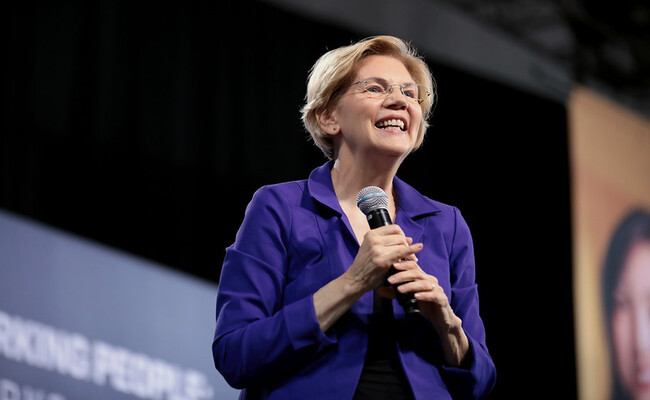
U.S. Senator Elizabeth Warren has sent a letter to Treasury Secretary Scott Bessent and Federal Reserve Chair Jerome Powell, warning them not to use taxpayer funds to support digital asset markets during the current downturn. She sent the letter on February 18 as prices continued to fall across major tokens. She asked both officials to confirm in writing that they will not deploy public money to bail out the sector.
Bitcoin has declined roughly 50% from its October peak. Sharp price swings have triggered liquidations of leveraged positions across trading platforms. Warren referenced those forced sales in her letter.
She wrote that it remains unclear whether federal agencies are considering intervention. “It’s deeply unclear what, if any, plans the US government currently has to intervene in the current Bitcoin sell-off,” she wrote. She argued that uncertainty over potential action has fueled speculation in the market.
Warren warned that federal support during the downturn would benefit large investors. She stated that government purchases, guarantees, or liquidity tools could shift losses from major token holders to taxpayers. Warren opposed direct federal involvement in price stabilization. She also urged regulators to focus on enforcement and investor protection instead of market support.
Warren cited billions of dollars in losses tied to fraud and platform failures this year. She argued that regulators should strengthen oversight rather than shield speculative markets from risk. She asked both agencies to provide a clear public commitment against intervention.
Congressional Hearing Exchange Deepens Questions Over Executive Authority
Warren mentioned a congressional hearing with Treasury officials on February 4. In that meeting, Congressman Brad Sherman inquired whether or not the department has the power to bail out digital asset markets. He further questioned whether regulators could ask banks to buy certain tokens.
Sherman also raised concerns about the chance of spending state funds on speculative investments. He questioned Treasury officials regarding the limits of their authority. His questions were centered on the possibility of executive agencies interfering in the situation when there was a sudden decline in the market.
Bessent replied that the government holds digital property that has been obtained in the course of law enforcement. He wrote that such holdings are government property and not taxpayer funds. However, he did not clearly reject the possibility of broader stabilization measures.
Warren later described that exchange as incomplete. She wrote that the response did not settle the question of intervention authority. She requested written assurances from both agencies to eliminate doubt. The Federal Reserve confirmed receipt of her letter but declined to comment further.
Elizabeth Warren Warns Over Political Risks and Financial Conflicts
Elizabeth Warren has warned that intervention during the downturn could create political conflicts of interest. She referenced World Liberty Financial, a company linked to President Donald Trump and his family. She argued that federal support could benefit politically connected ventures.
Her letter arrived on the same day that World Liberty Financial hosted its first forum at Mar-a-Lago. The event brought together digital asset executives and policy advocates. The timing drew attention from lawmakers already examining the company’s activities.
Warren and Senator Andy Kim recently urged Treasury to review a reported $500 million investment from the United Arab Emirates into the company. They cited potential national security concerns in that request.
Warren also referenced a recent transaction involving the firm. World Liberty Financial auctioned wrapped Bitcoin to settle USDC debt when prices fell. The sale enabled the firm to evade liquidation pressure in the downturn. She has provided these illustrations to point out that concentrated exposure among large holders is a weakness in the markets.
eToro Platform
Best Crypto Exchange
- Over 90 top cryptos to trade
- Regulated by top-tier entities
- User-friendly trading app
- 30+ million users
eToro is a multi-asset investment platform. The value of your investments may go up or down. Your capital is at risk. Don’t invest unless you’re prepared to lose all the money you invest. This is a high-risk investment, and you should not expect to be protected if something goes wrong.


You May Also Like

Top 3 Crypto Presales 2026: Solo Miner Bags $210K BTC Reward While Pepeto Hints Explosive Potential and Outpaces Every Competitor

Critical Security Upgrade Halts Cardano Transactions




