BitcoinWorld Hyperliquid Short Squeeze: Explosive 200% Surge Creates Million-Dollar Opportunity The cryptocurrency world is no stranger to dramatic market movements, but recent events on Hyperliquid have truly captivated traders. Imagine a scenario where two tokens, XPL and WLFI, suddenly skyrocket over 200% in mere minutes. This wasn’t just a random pump; it was the direct result of a massive Hyperliquid short squeeze, an event that saw a single whale address trigger an unprecedented wave of liquidations and multi-million dollar profits. Understanding the Hyperliquid Short Squeeze Phenomenon What exactly is a Hyperliquid short squeeze, and why does it lead to such explosive price action? In simple terms, a short squeeze occurs when the price of an asset suddenly increases, forcing traders who bet against it (short sellers) to buy it back to cover their positions. This frantic buying further drives the price up, creating a vicious cycle. On platforms like Hyperliquid, with its perpetual futures trading, these events can be particularly intense due to high leverage. Short Selling: Traders borrow an asset, sell it, and hope to buy it back at a lower price to profit from the difference. Liquidation: If the price moves against a short seller significantly, their position is automatically closed by the exchange to prevent further losses, often at a substantial loss. Thin Order Book: A limited number of buy and sell orders available at various price points, making it easier for large orders to move the price dramatically. The Anatomy of XPL and WLFI’s Explosive Surge The recent incident on Hyperliquid unfolded rapidly overnight. A single, savvy whale address initiated a multi-million dollar long position in XPL. This means they were betting on the price to go up. Crucially, they exploited a “thin order book,” meaning there weren’t many sellers willing to offload XPL at current prices. As the whale’s large buy orders hit the market, the price of XPL had nowhere to go but up. This rapid price increase immediately put immense pressure on existing short sellers. Their positions began to bleed, and many were forced into liquidation. This forced buying from liquidations acted as fuel, propelling XPL’s price over 200% in just two minutes. The whale then strategically began to partially close their position, locking in an astonishing $16 million in profit. Industry observers, including mlmabc, described this as one of the most extreme and unusual liquidation incidents ever seen on the platform. Remarkably, a similar dramatic event, also involving a significant Hyperliquid short squeeze, reportedly impacted WLFI around the same time. This suggests a broader vulnerability or a coordinated strategy targeting illiquid assets on the platform. What Lessons Can We Learn from this Hyperliquid Short Squeeze? Such extreme market events offer valuable insights for all participants in the crypto space. They highlight both the immense opportunities and the significant risks involved in leveraged trading, especially on platforms with deep liquidity challenges. What can traders take away from the XPL and WLFI surges? Market Volatility is Real: Even established platforms can experience sudden, dramatic price swings. Order Book Awareness: Understanding the depth and liquidity of an asset’s order book is crucial, particularly for altcoins. Thin order books are ripe for manipulation or large-scale market impact. Risk Management: Leveraged trading amplifies both gains and losses. Setting stop-loss orders and managing position sizes are paramount to surviving a sudden Hyperliquid short squeeze. Whale Activity: Monitoring significant whale movements can sometimes provide early indicators of potential market shifts, though predicting their exact impact remains challenging. This incident serves as a stark reminder that while the crypto market offers incredible potential for profit, it also demands vigilance and a robust understanding of market dynamics. The speed and scale of the XPL and WLFI surges underscore the unique challenges and opportunities present in decentralized finance. In conclusion, the recent Hyperliquid short squeeze involving XPL and WLFI was a truly spectacular event, showcasing the power of concentrated capital against a thin order book. A single whale’s calculated move led to a 200% price surge, multi-million dollar profits, and widespread liquidations. This dramatic episode provides a powerful lesson in market mechanics, risk management, and the inherent volatility of the crypto landscape. It underscores the need for traders to be acutely aware of liquidity, leverage, and the potential for rapid market shifts. Frequently Asked Questions (FAQs) 1. What is a short squeeze in crypto? A short squeeze happens when the price of a cryptocurrency rapidly increases, forcing short sellers (who bet on price drops) to buy back the asset to limit losses, which further drives the price up. 2. How did the whale profit from the Hyperliquid short squeeze? The whale opened a large ‘long’ position, betting on the price to rise. By exploiting a thin order book, their massive buy orders quickly pushed the price up, leading to short sellers’ liquidations and allowing the whale to sell for a significant profit. 3. What is a “thin order book” and why does it matter? A thin order book means there are few buy or sell orders at various price levels. This lack of liquidity makes an asset’s price highly susceptible to large trades, allowing a single large order to cause significant price movements. 4. How can traders protect themselves from a sudden short squeeze? Traders can protect themselves by using stop-loss orders, managing their leverage carefully, diversifying their portfolios, and being aware of the liquidity of the assets they are trading. 5. Is Hyperliquid a safe platform for trading? Hyperliquid, like other decentralized perpetual exchanges, offers high leverage and unique market dynamics. While it provides opportunities, traders must understand its risks, including the potential for rapid liquidations due to events like a Hyperliquid short squeeze. Did this article shed light on the incredible volatility and potential profits in crypto trading? Share this insight with your fellow traders and crypto enthusiasts on social media! Let’s keep the conversation going about market dynamics and smart trading strategies. To learn more about the latest crypto market trends, explore our article on key developments shaping cryptocurrency price action. This post Hyperliquid Short Squeeze: Explosive 200% Surge Creates Million-Dollar Opportunity first appeared on BitcoinWorld and is written by Editorial TeamBitcoinWorld Hyperliquid Short Squeeze: Explosive 200% Surge Creates Million-Dollar Opportunity The cryptocurrency world is no stranger to dramatic market movements, but recent events on Hyperliquid have truly captivated traders. Imagine a scenario where two tokens, XPL and WLFI, suddenly skyrocket over 200% in mere minutes. This wasn’t just a random pump; it was the direct result of a massive Hyperliquid short squeeze, an event that saw a single whale address trigger an unprecedented wave of liquidations and multi-million dollar profits. Understanding the Hyperliquid Short Squeeze Phenomenon What exactly is a Hyperliquid short squeeze, and why does it lead to such explosive price action? In simple terms, a short squeeze occurs when the price of an asset suddenly increases, forcing traders who bet against it (short sellers) to buy it back to cover their positions. This frantic buying further drives the price up, creating a vicious cycle. On platforms like Hyperliquid, with its perpetual futures trading, these events can be particularly intense due to high leverage. Short Selling: Traders borrow an asset, sell it, and hope to buy it back at a lower price to profit from the difference. Liquidation: If the price moves against a short seller significantly, their position is automatically closed by the exchange to prevent further losses, often at a substantial loss. Thin Order Book: A limited number of buy and sell orders available at various price points, making it easier for large orders to move the price dramatically. The Anatomy of XPL and WLFI’s Explosive Surge The recent incident on Hyperliquid unfolded rapidly overnight. A single, savvy whale address initiated a multi-million dollar long position in XPL. This means they were betting on the price to go up. Crucially, they exploited a “thin order book,” meaning there weren’t many sellers willing to offload XPL at current prices. As the whale’s large buy orders hit the market, the price of XPL had nowhere to go but up. This rapid price increase immediately put immense pressure on existing short sellers. Their positions began to bleed, and many were forced into liquidation. This forced buying from liquidations acted as fuel, propelling XPL’s price over 200% in just two minutes. The whale then strategically began to partially close their position, locking in an astonishing $16 million in profit. Industry observers, including mlmabc, described this as one of the most extreme and unusual liquidation incidents ever seen on the platform. Remarkably, a similar dramatic event, also involving a significant Hyperliquid short squeeze, reportedly impacted WLFI around the same time. This suggests a broader vulnerability or a coordinated strategy targeting illiquid assets on the platform. What Lessons Can We Learn from this Hyperliquid Short Squeeze? Such extreme market events offer valuable insights for all participants in the crypto space. They highlight both the immense opportunities and the significant risks involved in leveraged trading, especially on platforms with deep liquidity challenges. What can traders take away from the XPL and WLFI surges? Market Volatility is Real: Even established platforms can experience sudden, dramatic price swings. Order Book Awareness: Understanding the depth and liquidity of an asset’s order book is crucial, particularly for altcoins. Thin order books are ripe for manipulation or large-scale market impact. Risk Management: Leveraged trading amplifies both gains and losses. Setting stop-loss orders and managing position sizes are paramount to surviving a sudden Hyperliquid short squeeze. Whale Activity: Monitoring significant whale movements can sometimes provide early indicators of potential market shifts, though predicting their exact impact remains challenging. This incident serves as a stark reminder that while the crypto market offers incredible potential for profit, it also demands vigilance and a robust understanding of market dynamics. The speed and scale of the XPL and WLFI surges underscore the unique challenges and opportunities present in decentralized finance. In conclusion, the recent Hyperliquid short squeeze involving XPL and WLFI was a truly spectacular event, showcasing the power of concentrated capital against a thin order book. A single whale’s calculated move led to a 200% price surge, multi-million dollar profits, and widespread liquidations. This dramatic episode provides a powerful lesson in market mechanics, risk management, and the inherent volatility of the crypto landscape. It underscores the need for traders to be acutely aware of liquidity, leverage, and the potential for rapid market shifts. Frequently Asked Questions (FAQs) 1. What is a short squeeze in crypto? A short squeeze happens when the price of a cryptocurrency rapidly increases, forcing short sellers (who bet on price drops) to buy back the asset to limit losses, which further drives the price up. 2. How did the whale profit from the Hyperliquid short squeeze? The whale opened a large ‘long’ position, betting on the price to rise. By exploiting a thin order book, their massive buy orders quickly pushed the price up, leading to short sellers’ liquidations and allowing the whale to sell for a significant profit. 3. What is a “thin order book” and why does it matter? A thin order book means there are few buy or sell orders at various price levels. This lack of liquidity makes an asset’s price highly susceptible to large trades, allowing a single large order to cause significant price movements. 4. How can traders protect themselves from a sudden short squeeze? Traders can protect themselves by using stop-loss orders, managing their leverage carefully, diversifying their portfolios, and being aware of the liquidity of the assets they are trading. 5. Is Hyperliquid a safe platform for trading? Hyperliquid, like other decentralized perpetual exchanges, offers high leverage and unique market dynamics. While it provides opportunities, traders must understand its risks, including the potential for rapid liquidations due to events like a Hyperliquid short squeeze. Did this article shed light on the incredible volatility and potential profits in crypto trading? Share this insight with your fellow traders and crypto enthusiasts on social media! Let’s keep the conversation going about market dynamics and smart trading strategies. To learn more about the latest crypto market trends, explore our article on key developments shaping cryptocurrency price action. This post Hyperliquid Short Squeeze: Explosive 200% Surge Creates Million-Dollar Opportunity first appeared on BitcoinWorld and is written by Editorial Team

Hyperliquid Short Squeeze: Explosive 200% Surge Creates Million-Dollar Opportunity

BitcoinWorld
Hyperliquid Short Squeeze: Explosive 200% Surge Creates Million-Dollar Opportunity

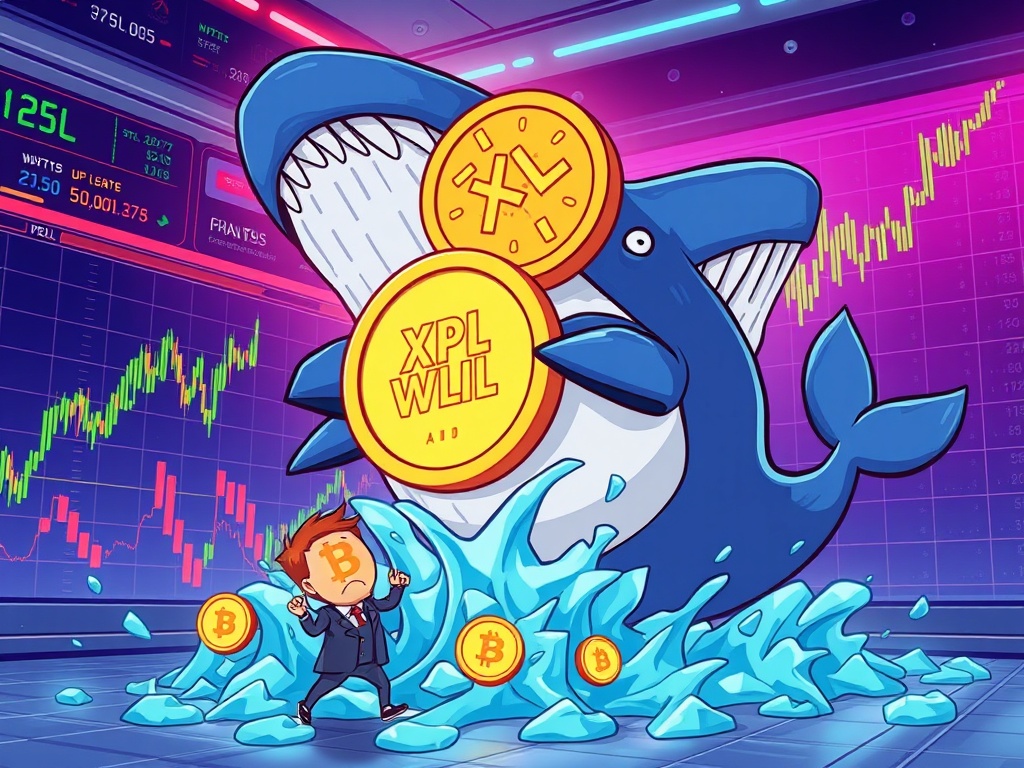
The cryptocurrency world is no stranger to dramatic market movements, but recent events on Hyperliquid have truly captivated traders. Imagine a scenario where two tokens, XPL and WLFI, suddenly skyrocket over 200% in mere minutes. This wasn’t just a random pump; it was the direct result of a massive Hyperliquid short squeeze, an event that saw a single whale address trigger an unprecedented wave of liquidations and multi-million dollar profits.

Understanding the Hyperliquid Short Squeeze Phenomenon

What exactly is a Hyperliquid short squeeze, and why does it lead to such explosive price action? In simple terms, a short squeeze occurs when the price of an asset suddenly increases, forcing traders who bet against it (short sellers) to buy it back to cover their positions. This frantic buying further drives the price up, creating a vicious cycle. On platforms like Hyperliquid, with its perpetual futures trading, these events can be particularly intense due to high leverage.

  • Short Selling: Traders borrow an asset, sell it, and hope to buy it back at a lower price to profit from the difference.
  • Liquidation: If the price moves against a short seller significantly, their position is automatically closed by the exchange to prevent further losses, often at a substantial loss.
  • Thin Order Book: A limited number of buy and sell orders available at various price points, making it easier for large orders to move the price dramatically.

The Anatomy of XPL and WLFI’s Explosive Surge

The recent incident on Hyperliquid unfolded rapidly overnight. A single, savvy whale address initiated a multi-million dollar long position in XPL. This means they were betting on the price to go up. Crucially, they exploited a “thin order book,” meaning there weren’t many sellers willing to offload XPL at current prices. As the whale’s large buy orders hit the market, the price of XPL had nowhere to go but up.

This rapid price increase immediately put immense pressure on existing short sellers. Their positions began to bleed, and many were forced into liquidation. This forced buying from liquidations acted as fuel, propelling XPL’s price over 200% in just two minutes. The whale then strategically began to partially close their position, locking in an astonishing $16 million in profit. Industry observers, including mlmabc, described this as one of the most extreme and unusual liquidation incidents ever seen on the platform.

Remarkably, a similar dramatic event, also involving a significant Hyperliquid short squeeze, reportedly impacted WLFI around the same time. This suggests a broader vulnerability or a coordinated strategy targeting illiquid assets on the platform.

What Lessons Can We Learn from this Hyperliquid Short Squeeze?

Such extreme market events offer valuable insights for all participants in the crypto space. They highlight both the immense opportunities and the significant risks involved in leveraged trading, especially on platforms with deep liquidity challenges. What can traders take away from the XPL and WLFI surges?

  • Market Volatility is Real: Even established platforms can experience sudden, dramatic price swings.
  • Order Book Awareness: Understanding the depth and liquidity of an asset’s order book is crucial, particularly for altcoins. Thin order books are ripe for manipulation or large-scale market impact.
  • Risk Management: Leveraged trading amplifies both gains and losses. Setting stop-loss orders and managing position sizes are paramount to surviving a sudden Hyperliquid short squeeze.
  • Whale Activity: Monitoring significant whale movements can sometimes provide early indicators of potential market shifts, though predicting their exact impact remains challenging.

This incident serves as a stark reminder that while the crypto market offers incredible potential for profit, it also demands vigilance and a robust understanding of market dynamics. The speed and scale of the XPL and WLFI surges underscore the unique challenges and opportunities present in decentralized finance.

In conclusion, the recent Hyperliquid short squeeze involving XPL and WLFI was a truly spectacular event, showcasing the power of concentrated capital against a thin order book. A single whale’s calculated move led to a 200% price surge, multi-million dollar profits, and widespread liquidations. This dramatic episode provides a powerful lesson in market mechanics, risk management, and the inherent volatility of the crypto landscape. It underscores the need for traders to be acutely aware of liquidity, leverage, and the potential for rapid market shifts.

Frequently Asked Questions (FAQs)

1. What is a short squeeze in crypto?
A short squeeze happens when the price of a cryptocurrency rapidly increases, forcing short sellers (who bet on price drops) to buy back the asset to limit losses, which further drives the price up.

2. How did the whale profit from the Hyperliquid short squeeze?
The whale opened a large ‘long’ position, betting on the price to rise. By exploiting a thin order book, their massive buy orders quickly pushed the price up, leading to short sellers’ liquidations and allowing the whale to sell for a significant profit.

3. What is a “thin order book” and why does it matter?
A thin order book means there are few buy or sell orders at various price levels. This lack of liquidity makes an asset’s price highly susceptible to large trades, allowing a single large order to cause significant price movements.

4. How can traders protect themselves from a sudden short squeeze?
Traders can protect themselves by using stop-loss orders, managing their leverage carefully, diversifying their portfolios, and being aware of the liquidity of the assets they are trading.

5. Is Hyperliquid a safe platform for trading?
Hyperliquid, like other decentralized perpetual exchanges, offers high leverage and unique market dynamics. While it provides opportunities, traders must understand its risks, including the potential for rapid liquidations due to events like a Hyperliquid short squeeze.

Did this article shed light on the incredible volatility and potential profits in crypto trading? Share this insight with your fellow traders and crypto enthusiasts on social media! Let’s keep the conversation going about market dynamics and smart trading strategies.

To learn more about the latest crypto market trends, explore our article on key developments shaping cryptocurrency price action.

This post Hyperliquid Short Squeeze: Explosive 200% Surge Creates Million-Dollar Opportunity first appeared on BitcoinWorld and is written by Editorial Team


Market Opportunity
LETSTOP Logo
LETSTOP Price(STOP)
$0.01426
$0.01426$0.01426
-6.97%
USD
LETSTOP (STOP) Live Price Chart
Disclaimer: The articles reposted on this site are sourced from public platforms and are provided for informational purposes only. They do not necessarily reflect the views of MEXC. All rights remain with the original authors. If you believe any content infringes on third-party rights, please contact service@support.mexc.com for removal. MEXC makes no guarantees regarding the accuracy, completeness, or timeliness of the content and is not responsible for any actions taken based on the information provided. The content does not constitute financial, legal, or other professional advice, nor should it be considered a recommendation or endorsement by MEXC.

You May Also Like

CME Group to launch options on XRP and SOL futures

CME Group to launch options on XRP and SOL futures

The post CME Group to launch options on XRP and SOL futures appeared on BitcoinEthereumNews.com. CME Group will offer options based on the derivative markets on Solana (SOL) and XRP. The new markets will open on October 13, after regulatory approval.  CME Group will expand its crypto products with options on the futures markets of Solana (SOL) and XRP. The futures market will start on October 13, after regulatory review and approval.  The options will allow the trading of MicroSol, XRP, and MicroXRP futures, with expiry dates available every business day, monthly, and quarterly. The new products will be added to the existing BTC and ETH options markets. ‘The launch of these options contracts builds on the significant growth and increasing liquidity we have seen across our suite of Solana and XRP futures,’ said Giovanni Vicioso, CME Group Global Head of Cryptocurrency Products. The options contracts will have two main sizes, tracking the futures contracts. The new market will be suitable for sophisticated institutional traders, as well as active individual traders. The addition of options markets singles out XRP and SOL as liquid enough to offer the potential to bet on a market direction.  The options on futures arrive a few months after the launch of SOL futures. Both SOL and XRP had peak volumes in August, though XRP activity has slowed down in September. XRP and SOL options to tap both institutions and active traders Crypto options are one of the indicators of market attitudes, with XRP and SOL receiving a new way to gauge sentiment. The contracts will be supported by the Cumberland team.  ‘As one of the biggest liquidity providers in the ecosystem, the Cumberland team is excited to support CME Group’s continued expansion of crypto offerings,’ said Roman Makarov, Head of Cumberland Options Trading at DRW. ‘The launch of options on Solana and XRP futures is the latest example of the…
Share
BitcoinEthereumNews2025/09/18 00:56
XLM Price Prediction: Stellar Targets $0.26-$0.27 Range by February 2026

XLM Price Prediction: Stellar Targets $0.26-$0.27 Range by February 2026

The post XLM Price Prediction: Stellar Targets $0.26-$0.27 Range by February 2026 appeared on BitcoinEthereumNews.com. Zach Anderson Jan 14, 2026 13:31 XLM
Share
BitcoinEthereumNews2026/01/15 10:06
Adoption Leads Traders to Snorter Token

Adoption Leads Traders to Snorter Token

The post Adoption Leads Traders to Snorter Token appeared on BitcoinEthereumNews.com. Largest Bank in Spain Launches Crypto Service: Adoption Leads Traders to Snorter Token Sign Up for Our Newsletter! For updates and exclusive offers enter your email. Leah is a British journalist with a BA in Journalism, Media, and Communications and nearly a decade of content writing experience. Over the last four years, her focus has primarily been on Web3 technologies, driven by her genuine enthusiasm for decentralization and the latest technological advancements. She has contributed to leading crypto and NFT publications – Cointelegraph, Coinbound, Crypto News, NFT Plazas, Bitcolumnist, Techreport, and NFT Lately – which has elevated her to a senior role in crypto journalism. Whether crafting breaking news or in-depth reviews, she strives to engage her readers with the latest insights and information. Her articles often span the hottest cryptos, exchanges, and evolving regulations. As part of her ploy to attract crypto newbies into Web3, she explains even the most complex topics in an easily understandable and engaging way. Further underscoring her dynamic journalism background, she has written for various sectors, including software testing (TEST Magazine), travel (Travel Off Path), and music (Mixmag). When she’s not deep into a crypto rabbit hole, she’s probably island-hopping (with the Galapagos and Hainan being her go-to’s). Or perhaps sketching chalk pencil drawings while listening to the Pixies, her all-time favorite band. This website uses cookies. By continuing to use this website you are giving consent to cookies being used. Visit our Privacy Center or Cookie Policy. I Agree Source: https://bitcoinist.com/banco-santander-and-snorter-token-crypto-services/
Share
BitcoinEthereumNews2025/09/17 23:45