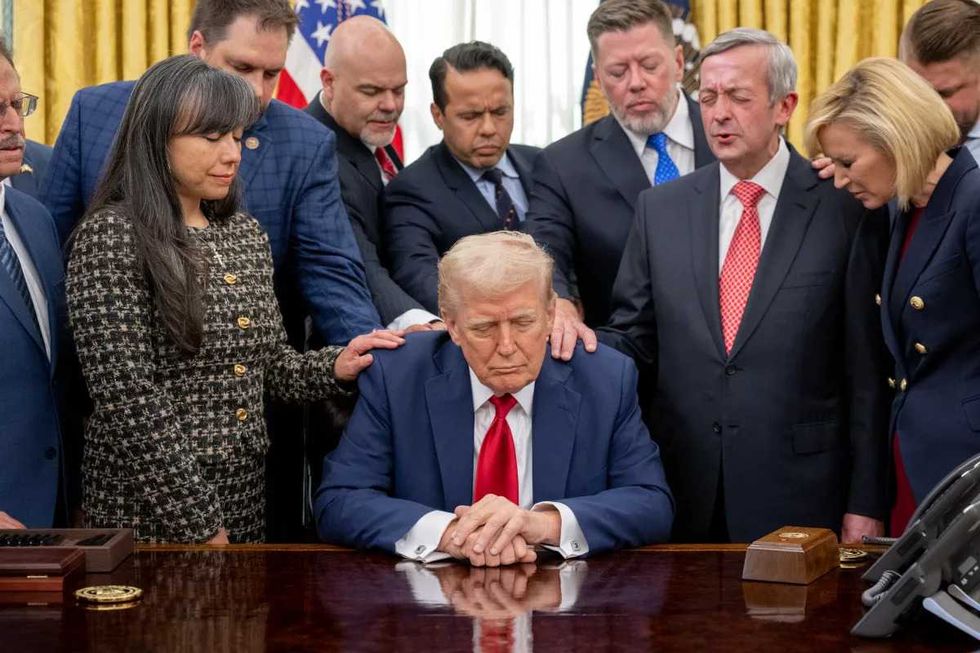
Trump Tariffs 2026: 10% Global Import Tax for 150 Days Sparks Trade War Fears
Section 122 Trade Act Activated: Trump Announces 150-Day 10 Percent Global Tariff Plan
President Donald Trump announced a sweeping 10 percent global tariff on imports from all countries, invoking Section 122 of the Trade Act of 1974 just hours after the Supreme Court struck down his previous emergency-based tariff authority. The move marks a renewed escalation in U.S. trade policy and signals the beginning of what the administration describes as a broader recalibration of America’s global trade relationships.
The executive order, signed from the Oval Office, imposes a baseline 10 percent tariff on a wide range of imported goods. According to the president, the measure will take effect almost immediately and remain in place for up to 150 days, the maximum duration permitted under Section 122.
The announcement follows a 6 to 3 Supreme Court decision that invalidated Trump’s earlier reliance on emergency powers to impose broad tariffs without explicit congressional authorization. While the ruling represents a legal setback, the administration quickly pivoted to a statutory authority that trade analysts say is narrower but legally more durable.
Why the White House Announced the New Global Tariffs
In a statement shared on Truth Social, President Trump framed the tariffs as necessary to address long-standing trade imbalances and unfair practices by foreign governments. He argued that the United States has tolerated structural disadvantages in global trade for decades and that immediate corrective action is required.
The president emphasized that the 10 percent tariff would be applied across the board, affecting imports from allies and competitors alike. Unlike targeted trade actions aimed at specific countries, this measure establishes a uniform baseline.
The timing of the announcement was notable. It came just hours after the Supreme Court ruled that the administration had overstepped its authority under the International Emergency Economic Powers Act, commonly known as IEEPA. The court concluded that the emergency justification used to impose broad tariffs lacked sufficient congressional backing.
 |
| Source: Official X |
In response, the administration cited Section 122 of the Trade Act of 1974 as an alternative legal foundation. This provision allows the president to impose temporary tariffs of up to 15 percent for a period not exceeding 150 days to address balance-of-payments concerns and trade imbalances.
What Section 122 of the Trade Act Allows
Section 122 was originally designed to provide the executive branch with short-term tools to stabilize trade deficits and currency pressures. It grants the president authority to implement temporary import restrictions without prior congressional approval, provided the measures remain within specified limits.
Under the statute, tariffs cannot exceed 15 percent and must expire within 150 days unless extended or replaced through other legislative mechanisms. During this period, the administration is expected to conduct investigations and consult with lawmakers regarding longer-term trade solutions.
President Trump stated that the 10 percent global tariff would remain in effect for five months, aligning with the statutory maximum. He also indicated that additional investigations under Section 301 and Section 232 of U.S. trade law are being initiated.
Section 301 allows the United States to respond to unfair trade practices by foreign countries, while Section 232 authorizes tariffs based on national security concerns. The administration signaled that these authorities could be used to escalate or refine trade actions depending on the findings of ongoing reviews.
What the Supreme Court Ruled
The Supreme Court’s 6 to 3 decision invalidated the administration’s prior tariff framework under IEEPA. The court held that the president had exceeded statutory limits by using emergency economic powers to impose broad import taxes without clear congressional direction.
Legal scholars note that IEEPA was historically intended for targeted economic sanctions rather than comprehensive trade restructuring. The court’s majority opinion emphasized the need for congressional involvement when implementing measures with wide-ranging economic consequences.
Although the ruling curtailed one avenue of executive authority, it did not eliminate the president’s ability to act under other trade statutes. The administration’s swift pivot to Section 122 reflects an effort to preserve its broader trade agenda within the boundaries outlined by the court.
President Trump criticized the ruling, calling it deeply disappointing. However, he maintained that the decision does not restrict his authority under alternative trade laws.
Could Tariffs Increase Beyond 10 Percent
When asked whether tariff rates could rise beyond the 10 percent baseline, the president did not rule out that possibility. He indicated that the outcome of Section 301 investigations into unfair trade practices could justify higher tariffs in specific cases.
In addition, Section 232 national security reviews remain under consideration. These reviews examine whether certain imports threaten domestic industries deemed critical to national security.
Trade analysts suggest that the 10 percent baseline could function as an interim measure while the administration builds a case for more targeted and potentially higher tariffs.
The administration also hinted that some countries may receive differentiated treatment depending on their trade practices, compliance levels, and willingness to negotiate revised agreements.
What Happens to Existing Tariff Revenue
The Supreme Court decision introduces uncertainty regarding approximately 175 billion dollars in tariff revenue collected under the previous emergency authority. Economic analysts have noted that refund litigation could take months or even years to resolve.
Treasury officials have acknowledged that the refund process, if mandated, may involve complex administrative and judicial proceedings. However, they argue that the newly imposed Section 122 tariffs are expected to stabilize projected trade-related revenue in 2026.
By transitioning to a legally grounded temporary framework, the administration aims to prevent disruptions in federal revenue streams while pursuing longer-term trade reforms.
How Markets Are Reacting
Financial markets responded cautiously to the announcement. Investors are closely monitoring potential ripple effects across global supply chains, manufacturing sectors, and commodity markets.
A universal 10 percent tariff could increase import costs for consumer goods, electronics, automotive components, and industrial materials. Companies reliant on global supply networks may face higher input prices, potentially passing costs on to consumers.
Economists warn that retaliatory tariffs from major trading partners could amplify volatility. China, the European Union, and India are among the economies expected to evaluate countermeasures.
Stock markets may experience short-term fluctuations as investors reassess earnings projections for multinational corporations. Currency markets could also react to shifting trade flows and investor sentiment.
In addition, analysts note that cryptocurrency markets, which often respond to macroeconomic uncertainty, may reflect increased volatility amid renewed trade tensions.
Potential Impact on Global Supply Chains
Modern supply chains are deeply interconnected. A uniform 10 percent tariff on all imports introduces cost adjustments at multiple stages of production.
Manufacturers that rely on foreign components may encounter immediate price pressures. Retailers importing finished goods could see margins compressed. Technology firms sourcing semiconductors or hardware components may reassess procurement strategies.
Some domestic industries may benefit from reduced foreign competition, at least temporarily. However, the overall economic impact will depend on the duration of the tariffs and the scale of potential retaliation.
Trade experts emphasize that Section 122 limits the duration of the current measure. The 150-day window provides a defined timeline, but uncertainty regarding follow-up actions may influence corporate decision-making.
Is This a Broader Trade Reset
President Trump described the tariff as the beginning of an adjustment process. The administration argues that decades of trade imbalances require structural reform rather than incremental negotiation.
While Section 122 restricts the measure to 150 days, ongoing investigations under Sections 301 and 232 suggest that additional actions may follow.
Trade policy analysts interpret the move as a signal that the administration intends to pursue a more assertive posture in global trade negotiations. Whether this approach results in renegotiated agreements, retaliatory disputes, or temporary compromise remains uncertain.
The next several weeks will likely reveal how major trading partners respond and whether diplomatic channels mitigate escalating tensions.
What to Watch in the Coming Weeks
Key developments to monitor include:
Responses from China, the European Union, and other major trading partners.
Outcomes of Section 301 investigations into alleged unfair trade practices.
Potential Section 232 national security findings.
Market reactions in equities, commodities, and currencies.
Legislative responses from Congress regarding trade authority.
As the 150-day period unfolds, policymakers will face decisions about extending, modifying, or replacing the tariff framework.
Conclusion
The activation of Section 122 of the Trade Act of 1974 marks a significant shift in U.S. trade policy following the Supreme Court’s rejection of emergency-based tariff authority. By imposing a 10 percent global tariff for up to 150 days, the administration seeks to address trade imbalances while operating within statutory limits.
Markets are preparing for potential volatility as businesses evaluate supply chain adjustments and foreign governments consider countermeasures. Whether the move strengthens domestic industries or intensifies global friction will depend on diplomatic negotiations, legal developments, and economic outcomes in the months ahead.
For now, the 10 percent global tariff stands as a decisive step in what may become a broader recalibration of American trade strategy.
For continued updates on global trade policy and economic developments, follow coverage at hokanews.


You May Also Like
Goldman Sachs to offer low-risk, low-reward Bitcoin ETF

Kraken Eyes Public Listing After Navigating Turbulent Waters