At ICC pre-trial, lawyers detail how drug war victims could barely fight back
THE HAGUE, Netherlands – Stories of drug war victims framed as “nanlaban” (fought back) reached the International Criminal Court (ICC) on Tuesday, February 24, though human rights activists and lawyers say the social context of the killings made it unlikely the victims’ families could legally fight back in the Philippines, their representatives said.
Day 2 of former president Rodrigo Duterte’s confirmation of charges hearing at the ICC was a listening day for the defense. Tuesday was a day for the victims’ families, with the prosecution and the common legal representatives of the victims (CLRV) having the whole day to describe their submissions on the merits.
While the prosecution detailed how Duterte was allegedly at the top of the command line in enforcing a state policy of killing for alleged drug users and peddlers, the CLRV zeroed in on the effects of Duterte’s harsh governance.
The CLRV highlighted how most of the killings involved victims of impoverished backgrounds. “Nanlaban,” which translates to fighting back or resisting arrest, refers to the justification used by cops in the drug war for killing suspects, because they had supposedly fought back in an encounter.
But apart from its doubts that fighting back actually occurred in the encounters, the CLRV noted how the targeting of the marginalized created an environment that made it difficult to file complaints in the domestic justice system.
ICC prosecutors earlier charged Duterte with three counts of widespread murder as crimes against humanity. The Pre-Trial Chamber is set to confirm or not confirm these charges within 60 days of the week-long hearing.
Social inequality
Paolina Massidda, lead counsel for the CLRV, situated her submission in the social inequality of Duterte’s drug war.
“As the evidence on the record unequivocally shows, individuals targeted by Mr. Duterte’s anti-drug operations overwhelmingly came from impoverished communities where social mobility is limited and opportunities are scarce,” said Massidda.
Massidda gave additional context on illegal drug use in impoverished communities in the Philippines, and how turning to methamphetamine or shabu was a “coping mechanism” for difficult living conditions. Duterte’s illegal drug campaign, she said, disproportionately affected the poor.
Filipino lawyer Gilbert Andres, who also spoke from the CLRV team, went into more details of the poor who were targeted. He described how the crimes occurred in high-density communities, comparing the usual size of a house to two tables in the ICC courtroom.
He said the victims’ marginalized and vulnerable conditions “exponentially multiplied” the harm they experienced when their families were targeted by the drug war.
“Mr. Duterte’s drug war campaign targeted the very humanity of the victims, of their families, and of their communities. In Filipino, the indirect victims expressed this in one sentence: ‘Inalisan kami ng dangal (We were stripped of our dignity),’” said Andres.
Andres said that as victims were killed in front of their families, often in their homes and neighborhoods, their shelters became crime scenes. Following the killings, the families continued to live with lasting trauma and stigma from the tightly knit communities they lived in.
“The proceedings before this chamber are being watched intently by the victims because they see it as their first step towards the truth, and towards justice,” he said.
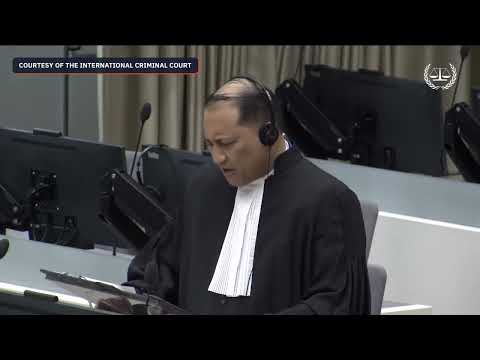
Asked why the emphasis on the background on marginalization was important to the case, human rights lawyer Kristina Conti, after the hearing on Tuesday, told reporters that this showed how the targets are those who would “not be able to file cases.”
“[One of] the elements of the crime is that it should be an attack on a civilian population. And when you say an attack on a civilian population, it emphasizes that this civilian population, unlike in a real war… are defenseless. The point is, these people are unable to fight back,” said Conti.
“Those who are unable to fight back and file cases are precisely targeted to ensure that nobody is held accountable,” she added in Filipino.
Conti is also an ICC-accredited assistant to counsel.
Heavy day
Llore Pasco and Sheerah Escudero, relatives of drug war victims who traveled to The Hague to watch the proceedings, were visibly emotional in the public gallery as the CLRV spoke about the lasting effects the killings had on surviving family members.
In an interview after the hearing, Pasco said she had been suppressing her emotions, “overwhelmed” knowing that the proceedings of the day were “for them.”
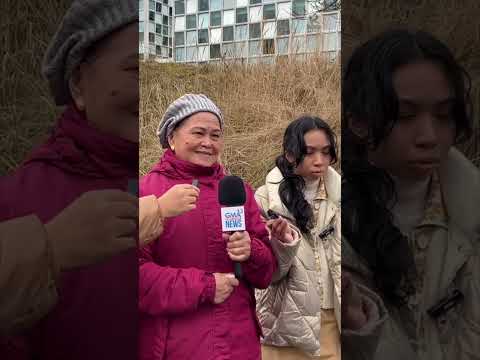
Escudero’s brother, Ephraim, was killed in 2017 as a teenager, his head wrapped in packing tape as his body was found in a village in Pampanga. Other victims of the drug war suffered a similar fate, and the prosecution described this style of killing in the hearing.
“Duterte’s policies were the reason why this happened to our loved ones,” Escudero said in a mix of English and Filipino. “It’s also frustrating for us how difficult it is to put into words the amount of pain, suffering, and frustration we are going through. We are the ones calling for justice, but we are also the ones vilified.”
The two expressed hope in the confirmation of the charges and the proceeding of the trial. – Rappler.com


You May Also Like

RAVE Price Surges by 85% as Liquidations Spike Across Crypto Markets

The Bitcoin Price Prediction That Could Change Everything as Pepeto Presale Fills Before Listing