

Best Crypto Cards for 2026

What Are Crypto Cards?
Crypto cards are payment cards — including debit, credit, and prepaid cards — that allow users to spend cryptocurrency in everyday life, just like traditional bank cards. Instead of relying solely on fiat balances, crypto cards draw value from digital assets such as Bitcoin, Ethereum, or stablecoins.
These cards are typically issued by cryptocurrency exchanges, Web3 wallet providers, or licensed financial institutions, and are backed by major payment networks like Visa or Mastercard. As a result, they can be used for:
- In-store and online purchases
- Subscription payments
- ATM cash withdrawals
- Mobile payments via Apple Pay or Google Pay
By instantly converting crypto to fiat at the point of sale, crypto cards bridge the gap between digital assets and traditional finance, making crypto practical for real-world spending.
How Do Crypto Cards Work?
Crypto cards function much like traditional debit or credit cards, with cryptocurrency handling happening in the background.
First, users sign up with a crypto card provider and complete identity verification (KYC), as required by financial regulations. Once approved, the card is funded by linking an exchange balance, connecting a custodial or non-custodial wallet, or transferring crypto to a built-in wallet. Some providers also support fiat top-ups or direct salary deposits.
When making a purchase — in-store, online, or via Apple Pay or Google Pay — the card automatically converts cryptocurrency into fiat at the current exchange rate. Crypto cards can also be used at supported ATMs, where crypto is converted to cash at the time of withdrawal, with applicable fees.
To ensure safety, most crypto cards include standard protections such as PINs, EMV chips, two-factor authentication, real-time transaction alerts, and the ability to instantly freeze the card via an app.
Below is a curated selection of leading crypto cards, covering custodial and non-custodial options, with a focus on usability, fees, rewards, and global availability.
MetaMask Card
The MetaMask Card enables users to spend crypto directly from their self-custodial MetaMask wallet anywhere Mastercard is accepted. Unlike exchange-issued cards, users retain full control over their funds until a transaction is executed.
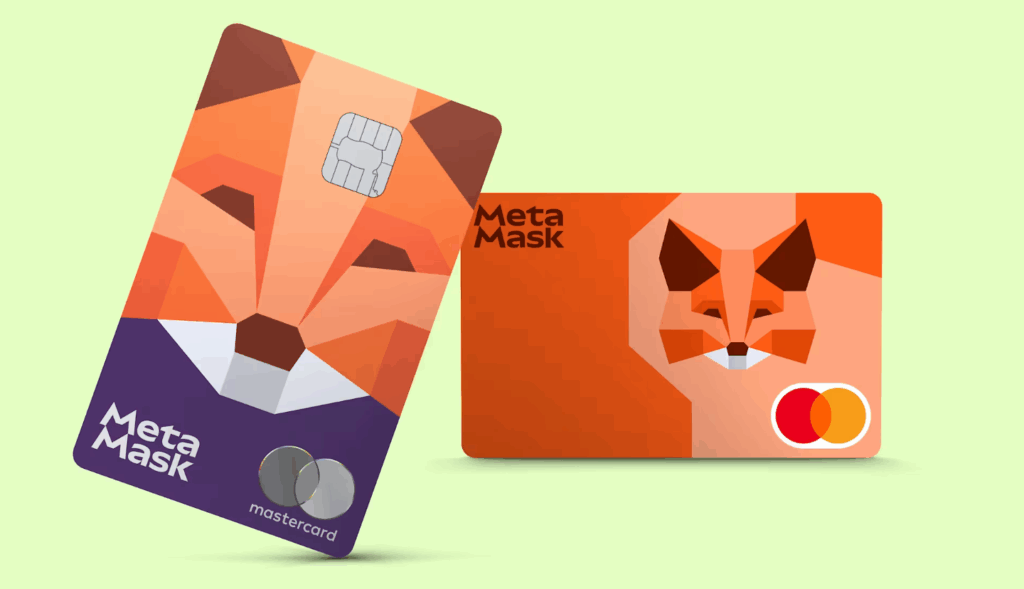
The card operates on Linea, a zkEVM Layer-2 network, allowing for lower gas fees and near-instant settlement, making it suitable for everyday payments.
Key Features
- Supported tokens: USDC, USDT, wETH, EURe, GBPe, aUSDC (US users: USDC & aUSDC only)
- Mobile payments: Apple Pay and Google Pay
- Availability: Argentina, Brazil, Colombia, Mexico, UK, and most of Europe
- Self-custodial: Funds remain in the user’s wallet until spending
Card Options
- Virtual Card (Free):
- 1% cashback in USDC
- $10,000 per transaction / $15,000 daily limit
- Metal Card ($199/year):
- 3% cashback on first $10,000 annually (1% after)
- Higher spending and ATM limits
- Cross-border fees waived
Fees
- No fees for local-currency stablecoins
- Foreign stablecoins: 0.5%
- DeFi tokens: free up to $1,200/month, then 0.5%
- wETH: 0.875%
- ATM withdrawals: 2%
- Cross-border: 1% (free for Metal)
Best for: Web3-native users who want self-custody and on-chain transparency.
Coinbase Card
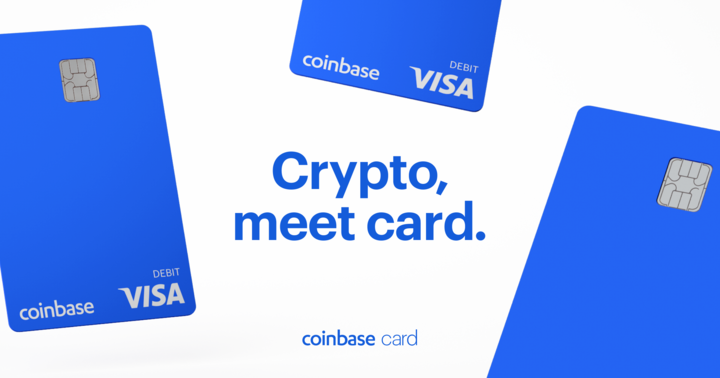
The Coinbase Card is a Visa debit card linked directly to a user’s Coinbase account, allowing crypto spending with seamless integration into one of the world’s largest exchanges.
Key Features
- Supports BTC, ETH, USDC, and more
- Earn crypto cashback rewards
- Accepted anywhere Visa debit cards work
- No annual or spending fees
- Strong security controls (2FA, PIN, instant freeze)
- Available in the US, UK, and Europe
Fees
- No card fees
- Network fees apply for transfers and conversions
- ATM operators may charge withdrawal fees
The card also supports direct salary deposits and bank funding with zero fees.
Best for: Beginners and frequent Coinbase users who want simplicity and reliability.
Bybit Card
The Bybit Card is a Mastercard debit card designed for active traders and everyday users, with no staking requirements.

Key Features
- Supports BTC, ETH, XRP, USDT, USDC
- Up to 10% cashback via loyalty rewards
- Auto-Savings with flexible interest earning
- Apple Pay & Google Pay support
- Available in EEA countries and Australia
Fees
- No annual fees
- FX fee: 0.5%
- Crypto conversion: 0.9%
- Free ATM withdrawals up to €100/month
Best for: Users who want rewards and yield without locking up assets.
Crypto.com Visa Card
The Crypto.com Visa Card remains one of the most popular crypto cards globally, especially for users willing to stake CRO.
Overview
- Supported assets: 150+ cryptocurrencies
- Rewards: Up to 5% cashback (paid in CRO)
- Perks: Spotify, Netflix, airport lounge access (tier-based)
- Availability: US, Europe, UK, Canada, Australia, parts of Asia
While there is no annual fee, higher rewards require significant CRO staking.
Best for: Users committed to the Crypto.com ecosystem and long-term CRO holders.


You May Also Like

Trump effect: World Cup to cut 'tens of thousands' of hotel reservations

EUR/GBP Exchange Rate Surges as Bank of England Rate Hike Expectations Intensify – Market Analysis




