

Trump Related WLFI Proposes Mandatory Staking for Governance in Major Overhaul
World Liberty Financial (WLFI) has introduced a sweeping governance reform proposal that would require token holders to stake their assets in order to participate in voting.
The proposed WLFI Governance Staking System is designed to shift the ecosystem away from short-term speculation and toward long-term alignment by linking influence and rewards to token lock-up duration.
If approved, the proposal would fundamentally reshape how governance power is distributed within the WLFI ecosystem.
Mandatory Staking for Voting Rights
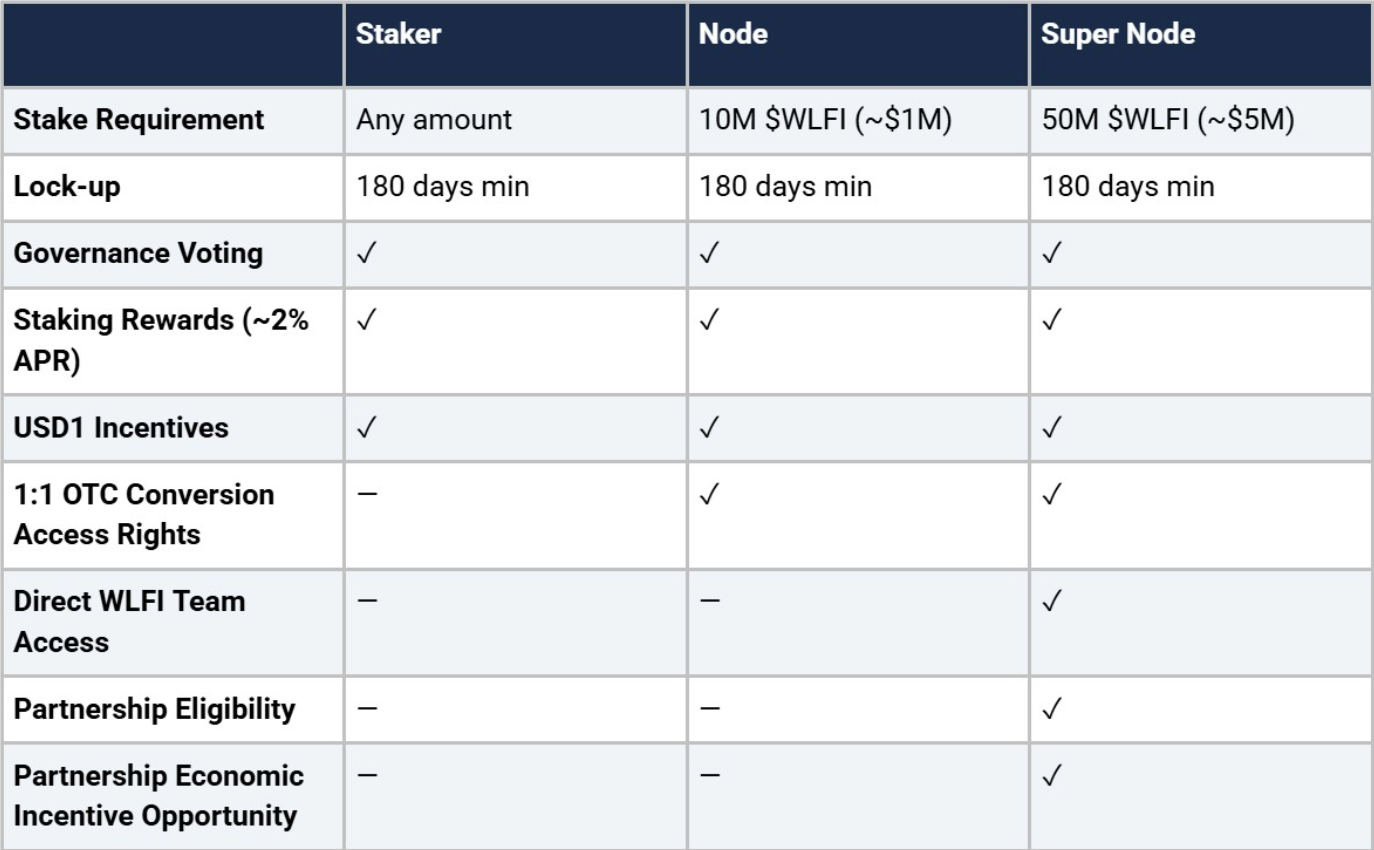
Under the proposal, holders of unlocked WLFI tokens would be required to stake their tokens for a minimum of 180 days in order to vote on governance matters. Voting power would not be calculated solely based on the number of tokens staked. Instead, it would use a square root formula that factors in both the amount of tokens locked and the remaining duration of the lock-up.
 Source: https://governance.worldlibertyfinancial.com/t/proposal-wlfi-governance-staking-system/52645
This structure is intended to reduce the influence of short-term large holders while rewarding sustained commitment to the ecosystem.
Staking Rewards for Active Participation
Participants who stake their tokens and vote at least twice during their lock period would be eligible for a base reward of approximately 2% APR. These rewards would be funded directly from the WLFI treasury.
By tying rewards to active governance participation, the system aims to incentivize engagement rather than passive holding.
Tiered Participation Roles
The proposal also introduces two high-level participation tiers designed for large stakeholders.
The Node Tier would require a minimum stake of 10 million WLFI, estimated at approximately $1 million. In return, participants would gain access to 1:1 over-the-counter (OTC) conversion pathways for stablecoins such as USDT and USDC into USD1, along with additional rewards tied to conversion volume.
The Super Node Tier would require a minimum stake of 50 million WLFI, roughly $5 million. This tier would provide priority access to the WLFI team for partnership discussions and potential economic incentives, signaling a closer relationship between major stakeholders and the protocol’s strategic direction.
Strategic Objective Behind the Proposal
According to the proposal, one of the core objectives is to redirect arbitrage value back into the ecosystem. During the expansion of the USD1 stablecoin, institutional market makers reportedly captured a significant portion of arbitrage opportunities. The new staking system aims to ensure that long-term WLFI participants benefit more directly from ecosystem growth rather than external actors.
Voting Timeline and Implementation Plan
The proposal is currently open for a seven-day community vote. In order to pass, it requires a minimum quorum of 1 billion eligible voting tokens.
If approved, implementation would roll out in three phases, beginning with the activation of governance staking for all holders of unlocked WLFI tokens.
If adopted, the WLFI Governance Staking System would mark a major shift toward long-term capital commitment, structured influence, and deeper ecosystem alignment.
The post Trump Related WLFI Proposes Mandatory Staking for Governance in Major Overhaul appeared first on ETHNews.


You May Also Like

Bitcoin 28% Haircut: Moody’s Sets Forced-Selling Trigger

BitGo Launches Stablecoin Minting and Redemption Service for Institutions




