

The Retail vs. Institutional Divide: How Trading Patterns Reveal Two Completely Different Markets

When Bitcoin fell from its all-time high above $120,000 in October 2025, taking the broader crypto market with it, the predictable four-year halving cycles suddenly changed. Previously, Bitcoin’s supply crunch triggered retail-driven rallies into bubble-popping peaks, but this past year signaled a break from the pattern.
Institutions entered as retail left. Previous cycles were primarily driven by frenzied retail interest; whether it was ICOs or memecoins, the average trader was at the center generating demand. However, new and old organizations began accumulating for long-term visions of the industry as institutional adoption brought more mature strategies and participants that weren’t chasing speculative anticipation around halvings. This shift is reshaping price dynamics, liquidity, and value accrual in the sector with massive inflows into spot ETFs, the emergence of Digital Asset Treasuries (DATs), and accelerating tokenization of real-world assets (RWAs).
The 2024 Bitcoin halving was expected to spark the usual post-halving surge as miner rewards were cut and the annual issuance was reduced to about 0.85%. Instead, 2025 saw Bitcoin close lower than it began in the post-halving period for the first time ever, with significant drawdowns despite institutional support. Many are calling that the four-year cycle is effectively over, as ETF inflows and corporate balance-sheet strategies have supplanted mining supply shocks as the primary price drivers.
Spot Bitcoin ETFs alone attracted tens of billions in net inflows through 2025, with cumulative figures pushing assets under management into the hundreds of billions by early 2026. Public companies soon became top holders in the new cycle, whereas a diverse range of retail-oriented exchanges were leading holders in previous cycles. Institutions absorbed far more daily supply than miners could produce, often by multiples, turning Bitcoin into a macro-sensitive reserve asset rather than a purely speculative one. This institutional pivot brings profound implications. Growth becomes more stable but also more selective. Volatility is now driven by macro factors like interest rates, liquidity conditions, and regulatory developments, while extreme retail-fueled mania diminishes.
Value increasingly accrues to assets with demonstrated utility: Bitcoin as a store of value, Ethereum for staking and DeFi infrastructure, and protocols enabling RWAs. While spot Bitcoin ETFs normalized Bitcoin as a portfolio staple, managing over $150 billion in AUM as of late 2025, institutional absorption structurally dominated supply and price action, according to our Outlook 2026 report. This marks a clear transition from a retail-driven casino to an institution-dominated machine economy, reducing volatility as Bitcoin converges toward traditional risk assets and liquidity flows selectively to blue-chip utilities with real adoption and recurring cash flows.
Tokenized real-world assets exploded in adoption, including U.S. Treasuries, private credit, and commodities. On-chain value reached tens of billions of dollars, while projections for the tokenized market expect a surge toward $100 billion or more by the end of the year. This further bridges blockchain with traditional finance, offering fractional ownership on-chain, 24/7 liquidity, and global access while reducing reliance on hype-driven narratives. DATs, despite the existing flaws, further illustrate this maturity. Following pioneers like Strategy, public companies adopting Bitcoin and Ethereum as treasury assets have accumulated hundreds of thousands of coins, treating crypto as a hedge against inflation and currency debasement rather than a short-term trade. These structures provide yield-generating vehicles and signal conviction from balance sheets, not just trading desks. Meanwhile, RWAs enable institutions to bring illiquid assets on-chain, creating efficient markets that favor real economic utility over pure speculation.
All of these trends stem from institutional-driven demand while retail pursues collectibles andprediction markets. The search for get-rich-quick markets doesn’t end as the crypto industry matures, it becomes more niche. Exchanges look to pivot away from low-volume memecoins to list utility-focused tokens and RWAs. While some exchanges may offer prediction markets of their own as retail day trades for small gains, the general trend of exchanges enhancing compliance and security continues in hopes of becoming potential hubs for institutional trading and investment.
Where does that leave Bitcoin? Our 2026 Crypto Market Outlook report highlights the end of the halving-dominated era and the rise of institution-led dynamics. We forecast that Bitcoin will likely reach $180,000 this year, stemming from policy tailwinds and sustained institutional demand. We also cautioned that broad altcoin rallies are unlikely to happen as liquidity concentrates on projects with clear adoption and business models.
Our analyses emphasize navigating volatility through a focus on fundamentals as institutional demand continues leading the crypto market. TradFi treats crypto as part of a broader macro allocation, monitoring ETF inflows, regulatory progress (like potential U.S. market structure legislation), and global liquidity trends.
While retail comes and goes, institutions look to long-term sustainability. Investors should carefully follow ETFs and global fund flows while anticipating macro-influences on crypto similarly to equities. Deeper consideration should be given to finding long-term winners in high-utility sectors such as RWA platforms and infrastructure enabling tokenization where institutional interest is building lasting value.
The end of the traditional four-year cycle is not a decline but an evolution as institutional demand pushes retail interest into a niche market. Protocols and exchanges prepare to focus on long-term and less volatile assets, products, and services to gain more corporate participants. Retail can still access the benefits of crypto and blockchain technology, but institutional maturity brings stability, deeper integration with global finance, and a focus on utility that promises more sustainable growth. Those who adapt stand to benefit most in this new era as focus shifts to fundamentals over speculation.
Jeff Ko is a seasoned investment professional and crypto analyst with a distinctive career spanning private banking, entrepreneurship, and crypto. As Chief Analyst at CoinEx, he leads research and investment initiatives, publishing in-depth analysis on crypto markets and macroeconomic trends. He concurrently manages ViaBTC Capital's venture portfolio and oversees CoinEx Earn Products, designing yield-generation strategies for the platform's user base.
Prior to entering the crypto industry, Jeff spent five years in Finland as founder of Chartipedia, a data visualization startup that became the first Hong Kong-based company to receive a startup permit from Business Finland. Jeff began his career at J.P. Morgan Private Bank, where he worked as an Investment Analyst managing asset allocation and investment portfolios for ultra-high-net-worth individuals and family offices.
Blockcast – Licensed to Shill: How Energy & Geopolitics Are Building a Bitcoin-Driven World, ft. Bitcoin Arabia's Lara Eggimann & Jeff Gorman
The Middle East is poised to become a pivotal hub in the global cryptocurrency ecosystem. Countries within the region are increasingly recognizing the strategic importance of integrating blockchain technology into their economic frameworks, energy markets, and geopolitical strategies, according to Lara Eggimann and Jeff Gorman, co-founders of Bitcoin Arabia, a strategic Bitcoin advisory and ecosystem builder that connects the global Bitcoin industry with the Middle East’s most powerful stakeholders.
Thanks for tuning in! If you enjoyed this episode, please like and subscribe to Blockcast on your favorite podcast platforms like Spotify and Apple.
Be at the heart of TradFi–DeFi collaboration at Money20/20 Asia 2026.
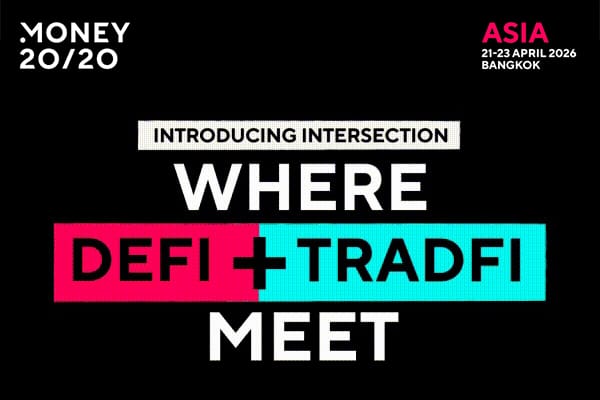
Are you looking to forge partnerships with banks and fintechs? To expand into new markets across Asia, or to secure funding from top-tier investors? This April, the world of digital assets, blockchain, and Web3 converges with the biggest players in APAC’s financial ecosystem at Money20/20 Asia 2026 and its brand new ‘Intersection’ zone, complete with a dedicated content stage, TradFi-Defi innovator showcase, and curated networking spaces. From traditional banking giants to decentralised innovators, private equity leaders, and cutting-edge fintech disruptors, this is where they meet to forge partnerships, spark dialogue, and shape the future of finance.


You May Also Like

AEVIS VICTORIA Shareholders Approve All Proposals at 2025 AGM

Mike Johnson 'fed up' with Trump as he ditches White House for first time: insiders

How to Spot a South African Cyber-Scam Before You Click “Pay”



