BitcoinWorld Starknet Outage: Unpacking the Critical 20-Minute Halt on Ethereum’s L2 The crypto world recently witnessed an unexpected event: a significant Starknet outage. This incident, which saw block production halt for a concerning 20 minutes, sent ripples of discussion across the community. For a network built on the promise of scalability and efficiency, such a pause naturally raises questions about stability and resilience. Let’s delve into what happened and what this brief but impactful interruption signifies for the future of Ethereum’s Layer 2 ecosystem. What Exactly Caused the Starknet Outage? According to reports from Wu Blockchain and observations on the Voyager explorer, the Starknet (STRK) network, a prominent ZK-rollup-based Ethereum Layer 2, experienced a service issue. This led to a complete halt in block production for approximately 20 minutes. While the exact root cause was not immediately detailed, such events in blockchain networks typically stem from various factors. Potential causes for a network halt can include: Software bugs: Unforeseen errors in the network’s code. Consensus issues: Disagreements among network validators on the next valid block. Infrastructure overload: Sudden spikes in transaction volume overwhelming the system. Security incidents: Though less common for a full halt, they are always a consideration. This particular Starknet outage quickly became a talking point, emphasizing the fragility even of advanced blockchain solutions. The Immediate Impact of the Starknet Outage A 20-minute halt might seem brief in the grand scheme of things, but in the fast-paced world of decentralized finance (DeFi) and blockchain transactions, it can feel like an eternity. During this period, users attempting to process transactions on Starknet would have experienced delays or outright failures. This directly impacts user experience and can lead to missed opportunities for traders or disruptions for dApp users. Moreover, such an event can temporarily erode user confidence. When a network like Starknet, designed to enhance Ethereum’s performance, faces an operational pause, it highlights the inherent challenges in maintaining continuous uptime for complex Layer 2 solutions. It serves as a stark reminder that even the most innovative technologies are not immune to technical glitches. Understanding the specifics of this Starknet outage is crucial for assessing its long-term implications. Learning from the Starknet Outage: Enhancing Resilience Every network incident, including this recent Starknet outage, offers valuable lessons for developers and the wider blockchain community. For Starknet, it’s an opportunity to thoroughly investigate the cause, implement robust fixes, and enhance their monitoring and response protocols. Transparency in communication during and after such events is also paramount for maintaining trust. For users and developers relying on Layer 2 solutions, this incident underscores the importance of: Diversification: Not putting all eggs in one basket; considering multiple Layer 2 options. Monitoring: Staying informed about network status and updates from official channels. Risk Assessment: Understanding the potential for downtime and building applications with resilience in mind. The incident prompts a broader discussion on the stress testing and emergency protocols that ZK-rollups employ to ensure continuous operation, even under unexpected conditions. This commitment to continuous improvement ultimately strengthens the entire ecosystem. The recent 20-minute Starknet outage was a moment of reflection for the Layer 2 landscape. While brief, it highlighted the critical need for robust infrastructure, transparent communication, and continuous improvement in the pursuit of decentralized scalability. As Starknet and other ZK-rollups continue to evolve, these experiences will undoubtedly contribute to building more resilient and reliable networks, ultimately benefiting all users of the Ethereum ecosystem. The journey to a truly seamless and scalable blockchain future is ongoing, and every challenge overcome makes the network stronger. Frequently Asked Questions (FAQs) Q1: What is Starknet? A1: Starknet is a ZK-rollup-based Ethereum Layer 2 network designed to scale Ethereum by processing transactions off-chain, thereby reducing costs and increasing throughput. Q2: What happened during the recent Starknet outage? A2: The Starknet network experienced a service issue, halting block production for approximately 20 minutes, which meant no new transactions could be processed. Q3: Was the Starknet outage a security breach? A3: No official reports indicate the Starknet outage was a security breach. It was likely caused by software bugs, consensus issues, or infrastructure problems. Q4: How does a network halt impact users? A4: Users face transaction delays or failures, leading to missed opportunities and a temporary dip in confidence regarding the network’s reliability and uptime. Was this article helpful in understanding the recent Starknet outage? Share your thoughts and spread awareness within the crypto community! Follow us on social media and share this article to keep others informed about critical developments in the blockchain space. To learn more about the latest crypto market trends, explore our article on key developments shaping Ethereum price action. This post Starknet Outage: Unpacking the Critical 20-Minute Halt on Ethereum’s L2 first appeared on BitcoinWorld and is written by Editorial TeamBitcoinWorld Starknet Outage: Unpacking the Critical 20-Minute Halt on Ethereum’s L2 The crypto world recently witnessed an unexpected event: a significant Starknet outage. This incident, which saw block production halt for a concerning 20 minutes, sent ripples of discussion across the community. For a network built on the promise of scalability and efficiency, such a pause naturally raises questions about stability and resilience. Let’s delve into what happened and what this brief but impactful interruption signifies for the future of Ethereum’s Layer 2 ecosystem. What Exactly Caused the Starknet Outage? According to reports from Wu Blockchain and observations on the Voyager explorer, the Starknet (STRK) network, a prominent ZK-rollup-based Ethereum Layer 2, experienced a service issue. This led to a complete halt in block production for approximately 20 minutes. While the exact root cause was not immediately detailed, such events in blockchain networks typically stem from various factors. Potential causes for a network halt can include: Software bugs: Unforeseen errors in the network’s code. Consensus issues: Disagreements among network validators on the next valid block. Infrastructure overload: Sudden spikes in transaction volume overwhelming the system. Security incidents: Though less common for a full halt, they are always a consideration. This particular Starknet outage quickly became a talking point, emphasizing the fragility even of advanced blockchain solutions. The Immediate Impact of the Starknet Outage A 20-minute halt might seem brief in the grand scheme of things, but in the fast-paced world of decentralized finance (DeFi) and blockchain transactions, it can feel like an eternity. During this period, users attempting to process transactions on Starknet would have experienced delays or outright failures. This directly impacts user experience and can lead to missed opportunities for traders or disruptions for dApp users. Moreover, such an event can temporarily erode user confidence. When a network like Starknet, designed to enhance Ethereum’s performance, faces an operational pause, it highlights the inherent challenges in maintaining continuous uptime for complex Layer 2 solutions. It serves as a stark reminder that even the most innovative technologies are not immune to technical glitches. Understanding the specifics of this Starknet outage is crucial for assessing its long-term implications. Learning from the Starknet Outage: Enhancing Resilience Every network incident, including this recent Starknet outage, offers valuable lessons for developers and the wider blockchain community. For Starknet, it’s an opportunity to thoroughly investigate the cause, implement robust fixes, and enhance their monitoring and response protocols. Transparency in communication during and after such events is also paramount for maintaining trust. For users and developers relying on Layer 2 solutions, this incident underscores the importance of: Diversification: Not putting all eggs in one basket; considering multiple Layer 2 options. Monitoring: Staying informed about network status and updates from official channels. Risk Assessment: Understanding the potential for downtime and building applications with resilience in mind. The incident prompts a broader discussion on the stress testing and emergency protocols that ZK-rollups employ to ensure continuous operation, even under unexpected conditions. This commitment to continuous improvement ultimately strengthens the entire ecosystem. The recent 20-minute Starknet outage was a moment of reflection for the Layer 2 landscape. While brief, it highlighted the critical need for robust infrastructure, transparent communication, and continuous improvement in the pursuit of decentralized scalability. As Starknet and other ZK-rollups continue to evolve, these experiences will undoubtedly contribute to building more resilient and reliable networks, ultimately benefiting all users of the Ethereum ecosystem. The journey to a truly seamless and scalable blockchain future is ongoing, and every challenge overcome makes the network stronger. Frequently Asked Questions (FAQs) Q1: What is Starknet? A1: Starknet is a ZK-rollup-based Ethereum Layer 2 network designed to scale Ethereum by processing transactions off-chain, thereby reducing costs and increasing throughput. Q2: What happened during the recent Starknet outage? A2: The Starknet network experienced a service issue, halting block production for approximately 20 minutes, which meant no new transactions could be processed. Q3: Was the Starknet outage a security breach? A3: No official reports indicate the Starknet outage was a security breach. It was likely caused by software bugs, consensus issues, or infrastructure problems. Q4: How does a network halt impact users? A4: Users face transaction delays or failures, leading to missed opportunities and a temporary dip in confidence regarding the network’s reliability and uptime. Was this article helpful in understanding the recent Starknet outage? Share your thoughts and spread awareness within the crypto community! Follow us on social media and share this article to keep others informed about critical developments in the blockchain space. To learn more about the latest crypto market trends, explore our article on key developments shaping Ethereum price action. This post Starknet Outage: Unpacking the Critical 20-Minute Halt on Ethereum’s L2 first appeared on BitcoinWorld and is written by Editorial Team

Starknet Outage: Unpacking the Critical 20-Minute Halt on Ethereum’s L2

BitcoinWorld
Starknet Outage: Unpacking the Critical 20-Minute Halt on Ethereum’s L2

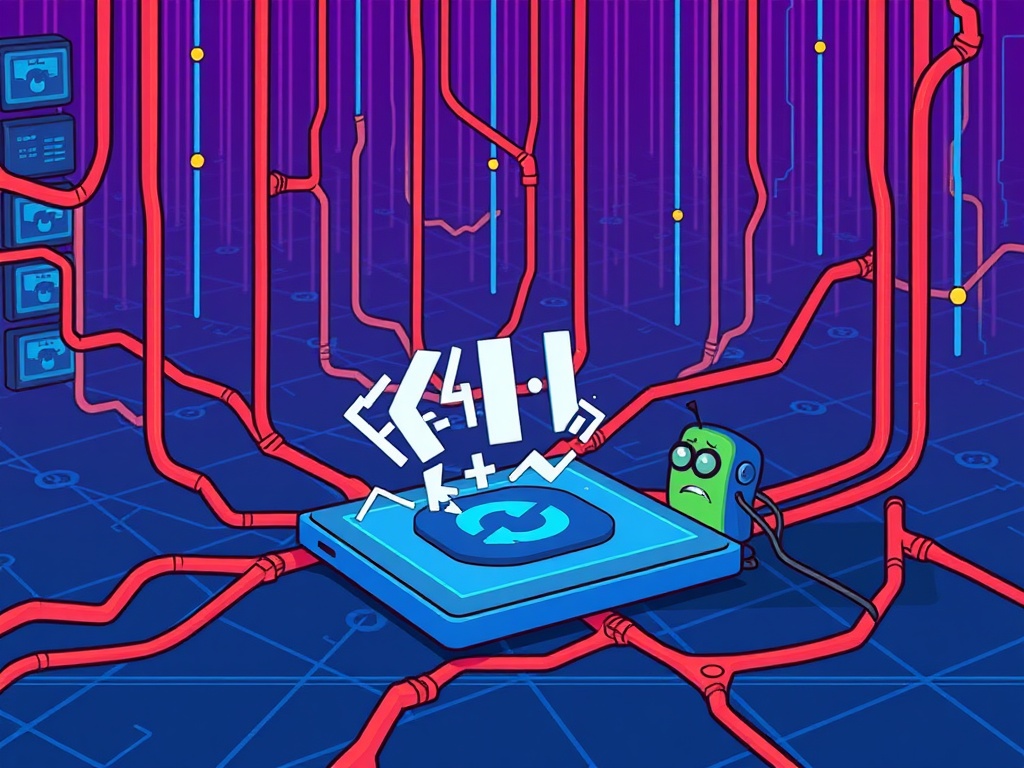
The crypto world recently witnessed an unexpected event: a significant Starknet outage. This incident, which saw block production halt for a concerning 20 minutes, sent ripples of discussion across the community. For a network built on the promise of scalability and efficiency, such a pause naturally raises questions about stability and resilience. Let’s delve into what happened and what this brief but impactful interruption signifies for the future of Ethereum’s Layer 2 ecosystem.

What Exactly Caused the Starknet Outage?

According to reports from Wu Blockchain and observations on the Voyager explorer, the Starknet (STRK) network, a prominent ZK-rollup-based Ethereum Layer 2, experienced a service issue. This led to a complete halt in block production for approximately 20 minutes. While the exact root cause was not immediately detailed, such events in blockchain networks typically stem from various factors.

Potential causes for a network halt can include:

  • Software bugs: Unforeseen errors in the network’s code.
  • Consensus issues: Disagreements among network validators on the next valid block.
  • Infrastructure overload: Sudden spikes in transaction volume overwhelming the system.
  • Security incidents: Though less common for a full halt, they are always a consideration.

This particular Starknet outage quickly became a talking point, emphasizing the fragility even of advanced blockchain solutions.

The Immediate Impact of the Starknet Outage

A 20-minute halt might seem brief in the grand scheme of things, but in the fast-paced world of decentralized finance (DeFi) and blockchain transactions, it can feel like an eternity. During this period, users attempting to process transactions on Starknet would have experienced delays or outright failures. This directly impacts user experience and can lead to missed opportunities for traders or disruptions for dApp users.

Moreover, such an event can temporarily erode user confidence. When a network like Starknet, designed to enhance Ethereum’s performance, faces an operational pause, it highlights the inherent challenges in maintaining continuous uptime for complex Layer 2 solutions. It serves as a stark reminder that even the most innovative technologies are not immune to technical glitches. Understanding the specifics of this Starknet outage is crucial for assessing its long-term implications.

Learning from the Starknet Outage: Enhancing Resilience

Every network incident, including this recent Starknet outage, offers valuable lessons for developers and the wider blockchain community. For Starknet, it’s an opportunity to thoroughly investigate the cause, implement robust fixes, and enhance their monitoring and response protocols. Transparency in communication during and after such events is also paramount for maintaining trust.

For users and developers relying on Layer 2 solutions, this incident underscores the importance of:

  • Diversification: Not putting all eggs in one basket; considering multiple Layer 2 options.
  • Monitoring: Staying informed about network status and updates from official channels.
  • Risk Assessment: Understanding the potential for downtime and building applications with resilience in mind.

The incident prompts a broader discussion on the stress testing and emergency protocols that ZK-rollups employ to ensure continuous operation, even under unexpected conditions. This commitment to continuous improvement ultimately strengthens the entire ecosystem.

The recent 20-minute Starknet outage was a moment of reflection for the Layer 2 landscape. While brief, it highlighted the critical need for robust infrastructure, transparent communication, and continuous improvement in the pursuit of decentralized scalability. As Starknet and other ZK-rollups continue to evolve, these experiences will undoubtedly contribute to building more resilient and reliable networks, ultimately benefiting all users of the Ethereum ecosystem. The journey to a truly seamless and scalable blockchain future is ongoing, and every challenge overcome makes the network stronger.

Frequently Asked Questions (FAQs)

Q1: What is Starknet?
A1: Starknet is a ZK-rollup-based Ethereum Layer 2 network designed to scale Ethereum by processing transactions off-chain, thereby reducing costs and increasing throughput.

Q2: What happened during the recent Starknet outage?
A2: The Starknet network experienced a service issue, halting block production for approximately 20 minutes, which meant no new transactions could be processed.

Q3: Was the Starknet outage a security breach?
A3: No official reports indicate the Starknet outage was a security breach. It was likely caused by software bugs, consensus issues, or infrastructure problems.

Q4: How does a network halt impact users?
A4: Users face transaction delays or failures, leading to missed opportunities and a temporary dip in confidence regarding the network’s reliability and uptime.

Was this article helpful in understanding the recent Starknet outage? Share your thoughts and spread awareness within the crypto community! Follow us on social media and share this article to keep others informed about critical developments in the blockchain space.

To learn more about the latest crypto market trends, explore our article on key developments shaping Ethereum price action.

This post Starknet Outage: Unpacking the Critical 20-Minute Halt on Ethereum’s L2 first appeared on BitcoinWorld and is written by Editorial Team


Market Opportunity
STRK Logo
STRK Price(STRK)
$0.08489
$0.08489$0.08489
-1.21%
USD
STRK (STRK) Live Price Chart
Disclaimer: The articles reposted on this site are sourced from public platforms and are provided for informational purposes only. They do not necessarily reflect the views of MEXC. All rights remain with the original authors. If you believe any content infringes on third-party rights, please contact service@support.mexc.com for removal. MEXC makes no guarantees regarding the accuracy, completeness, or timeliness of the content and is not responsible for any actions taken based on the information provided. The content does not constitute financial, legal, or other professional advice, nor should it be considered a recommendation or endorsement by MEXC.

You May Also Like

FCA komt in 2026 met aangepaste cryptoregels voor Britse markt

FCA komt in 2026 met aangepaste cryptoregels voor Britse markt

De Britse financiële waakhond, de FCA, komt in 2026 met nieuwe regels speciaal voor crypto bedrijven. Wat direct opvalt: de toezichthouder laat enkele klassieke financiële verplichtingen los om beter aan te sluiten op de snelle en grillige wereld van digitale activa. Tegelijkertijd wordt er extra nadruk gelegd op digitale beveiliging,... Het bericht FCA komt in 2026 met aangepaste cryptoregels voor Britse markt verscheen het eerst op Blockchain Stories.
Share
Coinstats2025/09/18 00:33
‘Groundbreaking’: Barry Silbert Reacts to Approval of ETF with XRP Exposure

‘Groundbreaking’: Barry Silbert Reacts to Approval of ETF with XRP Exposure

The post ‘Groundbreaking’: Barry Silbert Reacts to Approval of ETF with XRP Exposure appeared on BitcoinEthereumNews.com. A “combo” ETF  Crypto ETF trailblazer  Digital Currency Group founder Barry Silbert has reacted to the approval of the Grayscale Digital Large Cap Fund  (GDLC), the very first multi-crypto exchange-traded fund (ETF), describing it as “groundbreaking.”  “Grayscale continues to be the first mover, driving new product innovations that bridge tradfi and digital assets,” Silbert said while commenting on the news.  Peter Mintzberg, chief executive officer at Graysacle, claims that the team behind the world’s leading cryptocurrency asset manager is working “expeditiously” in order to bring the product to the market.  A “combo” ETF  The ETF in question offers exposure to Bitcoin (BTC), Ethereum (ETH), as well as several other major altcoins, including the Ripple-linked XRP token, Solana (SOL), and Cardano (ADA). XRP, for instance, has a 5.2% share of the fund, making it the third-largest constituent.  The fund initially debuted as a private placement for accredited investors back in early 2018, and its shares later became available on over-the-counter (OTC) markets.  In early July, the SEC approved the conversion of GDLC into an ETF, but it was then abruptly halted for a “review” shortly after this.  As of Sept. 17, the fund currently has a total of $915.6 million in assets.  Crypto ETF trailblazer  It is worth noting that Grayscale is usually credited with kickstarting the cryptocurrency ETF craze by winning its court case against the SEC.  The SEC ended up approving Bitcoin ETFs in early 2024 and then followed up with Ethereum ETFs.  Grayscale’s flagship GBTC currently boasts more than $20.5 billion in net assets, according to data provided by SoSoValue.  Source: https://u.today/groundbreaking-barry-silbert-reacts-to-approval-of-etf-with-xrp-exposure
Share
BitcoinEthereumNews2025/09/19 03:39
Signal No. 1 up in more than a dozen areas amid Tropical Storm Ada

Signal No. 1 up in more than a dozen areas amid Tropical Storm Ada

Storm Signal No. 1 has been raised in more than a dozen areas due to Tropical Storm Nokaen, locally named Ada, according to the Philippine Atmospheric, Geophysical
Share
Bworldonline2026/01/16 14:05