

South Korean Crypto Theft: Police Probe $4.8M Heist from Tax Agency After Stunning Security Blunder
BitcoinWorld
South Korean Crypto Theft: Police Probe $4.8M Heist from Tax Agency After Stunning Security Blunder
SEOUL, South Korea – Authorities have launched a critical investigation into a major security failure after the stunning theft of $4.8 million in seized cryptocurrency from South Korea’s National Tax Service (NTS). This incident, first reported by Etoday, represents a significant breach of trust and procedure, prompting the National Police Agency to assign its elite Cyber Terror Response Division to lead the preliminary inquiry. The investigation centers on allegations that the NTS inadvertently exposed the master key to a digital wallet containing billions of won in confiscated assets.
South Korean Crypto Theft Exposes Critical Flaw
Consequently, the case highlights a profound vulnerability in the handling of digital assets by government entities. The National Tax Service had been publicizing its successful seizure of four cold wallet USB drives from a tax delinquent. However, during this process, the agency committed a catastrophic error. Specifically, it exposed the wallet’s “mnemonic code” or seed phrase in a publicly released document. This code functions as an absolute master key, granting anyone who possesses it complete control over the associated cryptocurrency funds. Following this exposure, unknown actors swiftly drained the wallet of 6.9 billion won, equivalent to $4.8 million.
Anatomy of a Digital Security Breach
This breach underscores the complex and often misunderstood nature of cryptocurrency security. Unlike traditional banking, where recovery processes exist, control of a crypto wallet is binary. Therefore, possession of the private key or mnemonic phrase means absolute ownership. The NTS’s error was fundamentally procedural. Government agencies worldwide are still developing protocols for securing seized digital assets, which require specialized knowledge distinct from conventional asset forfeiture.
- Cold Wallet Storage: The seized assets were stored offline on USB devices, a generally secure method.
- Key Management Failure: The critical failure occurred in handling the recovery phrase, not the physical devices.
- Public Exposure: Including sensitive key material in a press release is an unprecedented operational error.
Expert Analysis on Institutional Crypto Security
Cybersecurity experts point to a glaring gap in institutional training. “This incident is a textbook case of applying analog procedures to a digital asset world,” explains a former forensic analyst for Interpol’s cybercrime unit, who requested anonymity due to ongoing consulting work. “A press officer or legal team, unfamiliar with the technical gravity of a seed phrase, likely treated it as a case file number. The result is an irreversible loss of public funds.” Furthermore, this event mirrors growing pains observed globally as law enforcement and tax agencies ramp up crypto seizures without fully standardized, secure chains of custody for the cryptographic keys involved.
Broader Implications for Crypto Regulation
Moreover, the theft carries significant implications for South Korea’s ambitious digital asset regulatory framework. The nation has positioned itself as a leader in establishing clear rules for the cryptocurrency sector. This high-profile failure at a major government agency could undermine public confidence and potentially accelerate calls for even stricter oversight of security practices, not just for exchanges but for all entities holding digital assets. It also raises urgent questions about liability and insurance for seized crypto holdings.
Timeline and Investigative Response
The National Police Agency’s decision to deploy the Cyber Terror Response Division signals the seriousness with which they view the case. This unit typically handles sophisticated cyber-attacks, financial cybercrimes, and online threats to critical infrastructure. Their involvement suggests investigators are treating the theft as a potential targeted cybercrime rather than a simple accident exploited by opportunists. The timeline will be crucial. Investigators will likely attempt to trace the stolen funds across blockchains, a process that is public but often leads to overseas exchanges or privacy-focused protocols.
Conclusion
In conclusion, the South Korean crypto theft from the National Tax Service is more than a financial loss; it is a stark lesson in the new realities of digital asset management. The incident exposes critical gaps in institutional knowledge and security protocols for handling cryptocurrency. As the police investigation unfolds, the global crypto community will watch closely. The outcome will undoubtedly influence how governments worldwide secure the billions in digital assets they seize annually, making robust, specialized procedures an absolute necessity to prevent future, similar breaches.
FAQs
Q1: What exactly was stolen from the South Korean National Tax Service?
The NTS lost $4.8 million (6.9 billion won) worth of cryptocurrency that it had previously seized from a tax delinquent. The funds were drained from a digital wallet after its master key was exposed.
Q2: How did the security breach happen?
The breach occurred because the National Tax Service accidentally included the wallet’s “mnemonic code” or seed phrase in a public press release. This code is a master password, and its exposure allowed unauthorized access.
Q3: What is a mnemonic code or seed phrase in cryptocurrency?
A mnemonic code is a list of 12 to 24 words generated by a cryptocurrency wallet. It serves as a human-readable backup of the private keys. Anyone with this phrase can fully control the associated crypto assets, making its secrecy paramount.
Q4: Which police unit is investigating the South Korean crypto theft?
The National Police Agency has assigned the case to its Cyber Terror Response Division. This specialized unit handles high-level cybercrimes, indicating the complexity and severity of the investigation.
Q5: Can the stolen $4.8 million in cryptocurrency be recovered?
Recovery is extremely difficult. Blockchain transactions are irreversible. Law enforcement can attempt to trace the funds to an exchange where they might be frozen, but if the thief uses privacy tools or decentralized exchanges, recovery becomes unlikely.
This post South Korean Crypto Theft: Police Probe $4.8M Heist from Tax Agency After Stunning Security Blunder first appeared on BitcoinWorld.


You May Also Like

5 Features Every AI Trading Agent Will Expect From DeFi

Iran threatens retaliation as Trump vows to “hit hard,” crypto market under stress
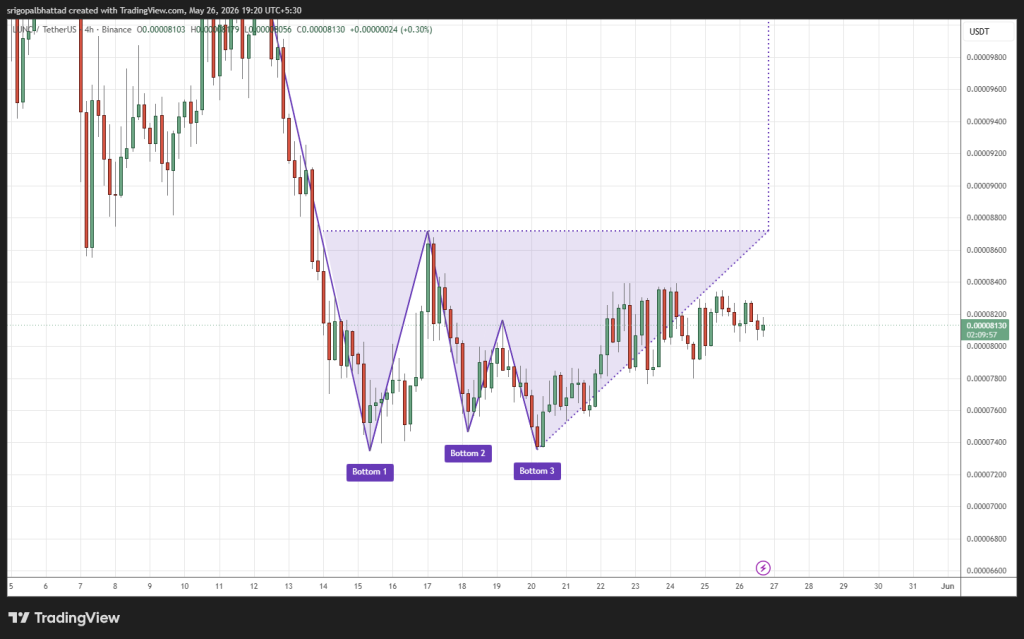
Terra Luna Classic Bulls Refuse to Give Up: Another LUNC Rally Seems Close



