

Vitalik Buterin Says AI May Speed Up Ethereum’s Roadmap While Raising Security Standards
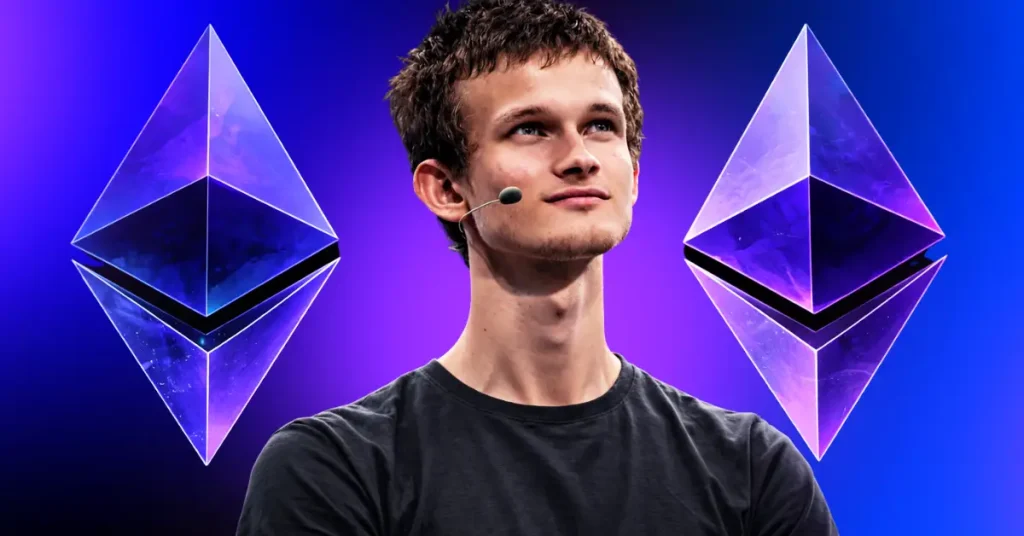
The post Vitalik Buterin Says AI May Speed Up Ethereum’s Roadmap While Raising Security Standards appeared first on Coinpedia Fintech News
The future of Ethereum development may be arriving faster than many expected.
Vitalik Buterin recently described an experiment in which much of Ethereum’s proposed 2030 roadmap was “vibe-coded” within just a few weeks using artificial intelligence tools. While he cautioned that the results are far from production-ready, the broader message was clear: AI is rapidly transforming how blockchain infrastructure is built.
AI Coding Is Moving at Unprecedented Speed
According to Buterin, creating a rough version of such a complex roadmap in just two weeks would have seemed unrealistic only six months ago. He said that the AI-generated code likely contains critical bugs and incomplete sections. Some components may be placeholders rather than fully implemented features.
Still, the speed of development itself marks a shift.
Buterin also shared that he recently built a version of his blog software in about an hour using an open-source AI model running locally on his laptop. More advanced systems, he suggested, could potentially complete similar tasks even faster.
The takeaway is not that AI can instantly produce secure blockchain infrastructure. Rather, it shows how dramatically development timelines are shrinking.
Speed Is Only Half the Story
Buterin stressed that faster coding alone is not enough. In his view, the real opportunity lies in balancing speed with stronger security practices.
Instead of using AI only to write more code, developers can use it to:
- Generate significantly more test cases
- Run deeper security audits
- Create multiple independent implementations of the same system
- Formally verify critical components
One collaborator from the LeanEthereum initiative reportedly used AI to help produce a machine-verifiable proof for one of the complex mathematical theorems underlying STARK-based cryptography.
For Ethereum, which increasingly relies on advanced zero-knowledge systems, such verification tools are essential.
Formal Verification May Become Standard Practice
A core principle of LeanEthereum is to formally verify all components wherever possible. Formal verification means mathematically proving that code behaves exactly as intended.
In blockchain systems that secure billions of dollars in value, reducing even small vulnerabilities can have an outsized impact. Buterin suggested that AI is accelerating the ability to produce verified proofs and stress-test implementations at scale.
He was careful to add that no one should expect to enter a single prompt and receive perfectly secure code. Bugs, inconsistencies and design trade-offs will remain part of the process.
However, debugging and testing cycles could happen five times faster and far more thoroughly than before.
Could Ethereum’s Roadmap Finish Earlier Than Expected?
While Buterin did not make any firm predictions, he encouraged the community to stay open to the possibility that Ethereum’s long-term roadmap could be completed faster than many anticipate.
More importantly, he suggested that it could reach higher security standards than traditionally expected for complex distributed systems.
If AI continues improving at its current pace, development bottlenecks that once slowed blockchain upgrades may become less restrictive.


You May Also Like

China PBoC Interest Rate Decision in line with expectations (3%)

Veterans losing their homes in droves after Trump ignored major warning: report
![Can edgeX [EDGE] rebound after its 17% drop? THESE signals say…](https://i1.wp.com/ambcrypto.com/wp-content/uploads/2026/04/Abdul-2026-04-19T121716.811-e1776597537620.webp)



