

Iran Shuts the World’s Most Important Oil Chokepoint – What That Means for Oil, Stocks and Bitcoin
TLDR
- U.S. and Israeli strikes on Iran killed Supreme Leader Khamenei and triggered fears of a major oil supply disruption through the Strait of Hormuz.
- Iran has warned ships not to transit the Strait, which carries roughly 20–26% of global crude oil and significant LNG volumes.
- Brent crude could reach $100 a barrel; a prolonged conflict could add 0.6–0.7 percentage points to global inflation.
- Tanker stocks like Frontline and DHT Holdings have surged this year, with shipping rates already hitting multi-year highs.
- Bitcoin fell 2% and has lost over a quarter of its value in two months, while gold, Treasuries, and the Swiss franc are seeing safe-haven demand.
The United States and Israel launched strikes on Iran on Saturday, killing Supreme Leader Ali Khamenei and triggering an immediate market response across oil, stocks, and crypto.
Iran’s Islamic Revolutionary Guard Corps warned ships not to transit the Strait of Hormuz following the attacks. The Strait carries about 26% of global crude oil and 23% of liquefied natural gas.
Brent crude was trading around $73 a barrel on Friday, already up roughly 20% this year. Analysts now expect prices to climb higher when markets reopen Sunday evening.
Barclays said Brent could reach $100 a barrel as markets weigh a potential supply disruption. Capital Economics said even a contained conflict could push prices to around $80.
Iran produces approximately 3.3 to 3.5 million barrels per day, about 3% of global supply. Its main export terminal at Kharg Island handles around 90% of those exports, and explosions have been reported in the area.
All LNG exports from Qatar, roughly 20% of global LNG shipping, also pass through the Strait. There is no alternative route. A closure would force Asian buyers to compete with Europe for U.S. cargoes on the spot market.
Goldman Sachs estimates that losing one million barrels per day of Iranian exports for a year would raise prices by about $8 per barrel. Rystad Energy puts the price jump at $10 to $15 per barrel in a wider conflict.
Shipping Stocks Surge on Rate Expectations
Tanker stocks have already priced in much of this risk. Frontline is up 74% in 2026, DHT Holdings has gained 60%, and Ardmore Shipping has risen 55%. The S&P 500 is up just 0.5% over the same period.
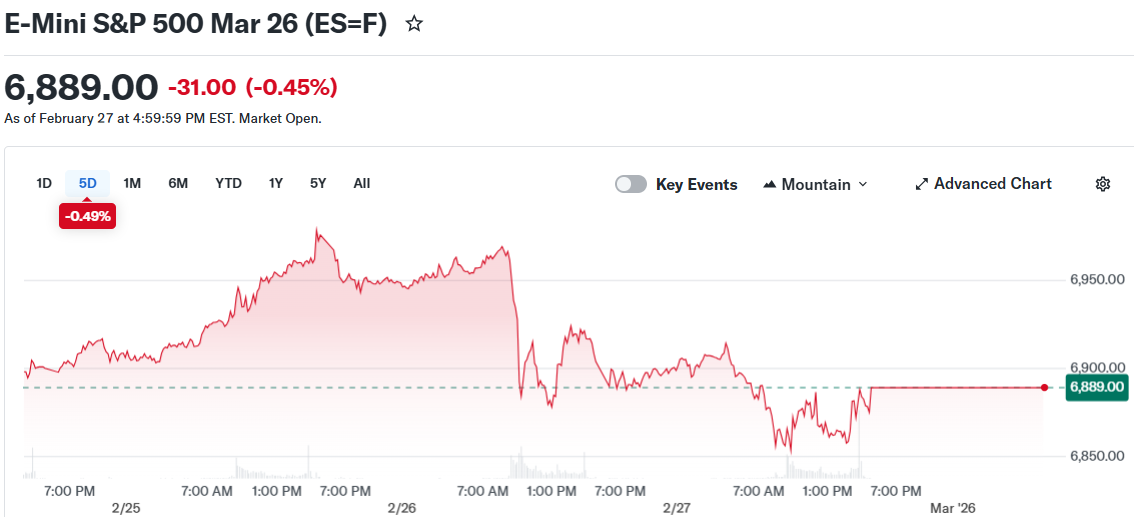 E-Mini S&P 500 Mar 26 (ES=F)
Frontline reported that it booked 92% of its first-quarter VLCC spot days at an average rate of $107,100 per day. Evercore analyst Jonathan Chappell raised his price target on the stock to $42 from $31.
During the first Gulf War in 1991, very large crude carrier rates spiked more than 40%. During the second Gulf War, they rose as much as 304%.
Bitcoin Drops While Gold and Treasuries Draw Buyers
Bitcoin fell 2% on Saturday and has now lost more than a quarter of its value over the past two months. Analysts say it is no longer seen as a safe-haven asset.
Gold is up 22% in 2026 and drawing further demand. The Swiss franc is up 3% against the dollar this year. U.S. Treasury yields have been falling in recent weeks.
The VIX volatility index has risen by a third this year. Some oil majors and trading houses have already suspended crude shipments through the Strait of Hormuz.
The post Iran Shuts the World’s Most Important Oil Chokepoint – What That Means for Oil, Stocks and Bitcoin appeared first on CoinCentral.


You May Also Like

UK Economic Growth Outperforms Expectations, Yet Bank of England MPC Remains Cautious – TD Securities Analysis
Trump team now wants three massive arches built across Washington, D.C.




