

Vitalik Buterin Signals EIP 8141 Could Launch Within a Year to Fully Implement Account Abstraction on Ethereum
Vitalik Buterin Signals EIP-8141 Could Arrive Within a Year, Advancing Full Account Abstraction on Ethereum
Ethereum co-founder Vitalik Buterin has indicated that EIP-8141, a proposal aimed at fully implementing account abstraction on Ethereum, could potentially roll out within the next year, marking a significant milestone in the network’s long-term evolution.
The update, first highlighted by the X account Cointelegraph and later confirmed by the Hokanews editorial team, has drawn widespread attention across the cryptocurrency and developer communities. If realized, EIP-8141 would represent one of the most transformative upgrades to Ethereum’s account model since the network’s inception.
 |
| Source: XPost |
Understanding Account Abstraction
At its core, account abstraction seeks to simplify how users interact with Ethereum by making crypto wallets behave more like traditional digital accounts.
Currently, Ethereum operates with two primary types of accounts: externally owned accounts, controlled by private keys, and smart contract accounts, governed by programmable logic.
This structure creates certain usability challenges. Users must manage private keys carefully, pay transaction fees in ETH and interact directly with the underlying protocol mechanics.
Account abstraction aims to remove many of these technical barriers by allowing smart contract wallets to function more seamlessly and flexibly.
EIP-8141, as discussed by Buterin, would move Ethereum closer to fully abstracting account logic, potentially enabling customizable security rules, alternative fee payment methods and more intuitive user experiences.
Why EIP-8141 Matters
Ethereum Improvement Proposals, or EIPs, are the formal process by which protocol changes are introduced and evaluated.
EIP-8141 is designed to advance the broader account abstraction roadmap, building upon earlier developments such as ERC-4337, which introduced a framework for smart contract wallets without requiring fundamental changes to the Ethereum consensus layer.
Buterin’s remarks suggest that EIP-8141 could integrate account abstraction more deeply into the protocol itself, reducing reliance on workarounds and enhancing efficiency.
Developers say full account abstraction would enable features such as:
Paying gas fees in tokens other than ETH
Bundling multiple transactions into a single action
Social recovery mechanisms for lost keys
Multi-signature authentication rules
Automated transaction validation
Such improvements could significantly enhance Ethereum’s usability for mainstream adoption.
A Step Toward Mainstream Adoption
One of the most persistent barriers to widespread crypto adoption has been wallet complexity.
Managing seed phrases and private keys can be daunting for new users.
Account abstraction aims to abstract these complexities away, making blockchain interactions resemble familiar web and mobile app experiences.
Buterin has long advocated for simplifying user onboarding without compromising decentralization.
If EIP-8141 achieves full implementation of account abstraction at the protocol level, Ethereum could become more accessible to retail users, enterprises and developers alike.
Technical Implications
Implementing full account abstraction is not a trivial task.
The Ethereum protocol must maintain backward compatibility while ensuring network security and performance.
EIP-8141 would likely require coordination among core developers, client teams and ecosystem participants.
Protocol-level changes must undergo rigorous testing to prevent vulnerabilities or unintended consequences.
Buterin’s timeline of within a year reflects optimism but also acknowledges the complexity of consensus-driven development.
Developers will need to evaluate how EIP-8141 interacts with Ethereum’s current architecture, including Layer 2 scaling solutions.
Impact on Layer 2 Ecosystems
Ethereum’s scalability roadmap increasingly relies on Layer 2 networks, which process transactions off-chain while leveraging Ethereum’s security.
Account abstraction could integrate seamlessly with these solutions, further enhancing their flexibility.
Smart contract wallets on Layer 2 chains could benefit from protocol-level abstraction, reducing overhead and improving user experience.
Industry observers note that improvements in usability often correlate with growth in decentralized applications, including DeFi, NFTs and gaming platforms.
Market Reaction and Developer Response
Following the circulation of Buterin’s comments, developer forums and crypto analysts began evaluating the potential impact of EIP-8141.
Some view the proposal as a natural progression in Ethereum’s maturation.
Others caution that timelines in decentralized development are subject to change based on technical challenges and community feedback.
The confirmation of Buterin’s remarks by Cointelegraph’s X account and their citation by Hokanews underscores the significance of the discussion within the broader crypto ecosystem.
Security and Governance Considerations
Account abstraction introduces new design possibilities but also new security considerations.
Customizable validation logic could create vulnerabilities if not implemented carefully.
Ensuring robust auditing and standardized frameworks will be critical.
Ethereum’s governance model relies on community consensus rather than centralized authority.
EIP-8141 will likely undergo extensive review and debate before final approval.
The Broader Ethereum Roadmap
Ethereum has undergone significant evolution since transitioning to proof of stake.
Subsequent upgrades have focused on scalability, efficiency and ecosystem growth.
Account abstraction represents another foundational shift, focusing on usability and flexibility rather than throughput alone.
By abstracting account management, Ethereum could reduce friction for developers building complex applications.
This aligns with the network’s long-term vision of serving as a decentralized global computing platform.
Institutional and Enterprise Implications
Improved account abstraction may also benefit enterprise adoption.
Businesses require customizable security policies and streamlined transaction management.
Smart contract wallets with programmable authentication rules could enable corporate treasury management, automated compliance checks and flexible transaction authorization.
As blockchain technology integrates with traditional finance and corporate systems, enhanced account functionality could accelerate institutional participation.
Challenges Ahead
Despite enthusiasm, several hurdles remain.
Protocol-level upgrades require careful coordination across client implementations.
Testing phases must identify and mitigate potential exploits.
Moreover, Ethereum’s decentralized governance means that broad community support is essential.
Buterin’s projection of a possible rollout within a year reflects both ambition and recognition of these complexities.
Looking Forward
If EIP-8141 achieves implementation within the suggested timeframe, Ethereum could enter a new era of user-friendly functionality.
Account abstraction has long been considered a key piece of Ethereum’s usability puzzle.
By embedding it more fully into the protocol, developers hope to reduce reliance on fragmented wallet solutions.
Such a shift may help Ethereum maintain its competitive edge amid increasing competition from alternative smart contract platforms.
As discussions continue within developer circles, the crypto community will watch closely to see whether EIP-8141 progresses from proposal to production within the next year.
For now, Buterin’s remarks signal momentum behind one of Ethereum’s most anticipated upgrades, potentially reshaping how users and institutions interact with the network.
hokanews.com – Not Just Crypto News. It’s Crypto Culture.
Writer @Ethan
Ethan Collins is a passionate crypto journalist and blockchain enthusiast, always on the hunt for the latest trends shaking up the digital finance world. With a knack for turning complex blockchain developments into engaging, easy-to-understand stories, he keeps readers ahead of the curve in the fast-paced crypto universe. Whether it’s Bitcoin, Ethereum, or emerging altcoins, Ethan dives deep into the markets to uncover insights, rumors, and opportunities that matter to crypto fans everywhere.
Disclaimer:
The articles on HOKANEWS are here to keep you updated on the latest buzz in crypto, tech, and beyond—but they’re not financial advice. We’re sharing info, trends, and insights, not telling you to buy, sell, or invest. Always do your own homework before making any money moves.
HOKANEWS isn’t responsible for any losses, gains, or chaos that might happen if you act on what you read here. Investment decisions should come from your own research—and, ideally, guidance from a qualified financial advisor. Remember: crypto and tech move fast, info changes in a blink, and while we aim for accuracy, we can’t promise it’s 100% complete or up-to-date.


You May Also Like
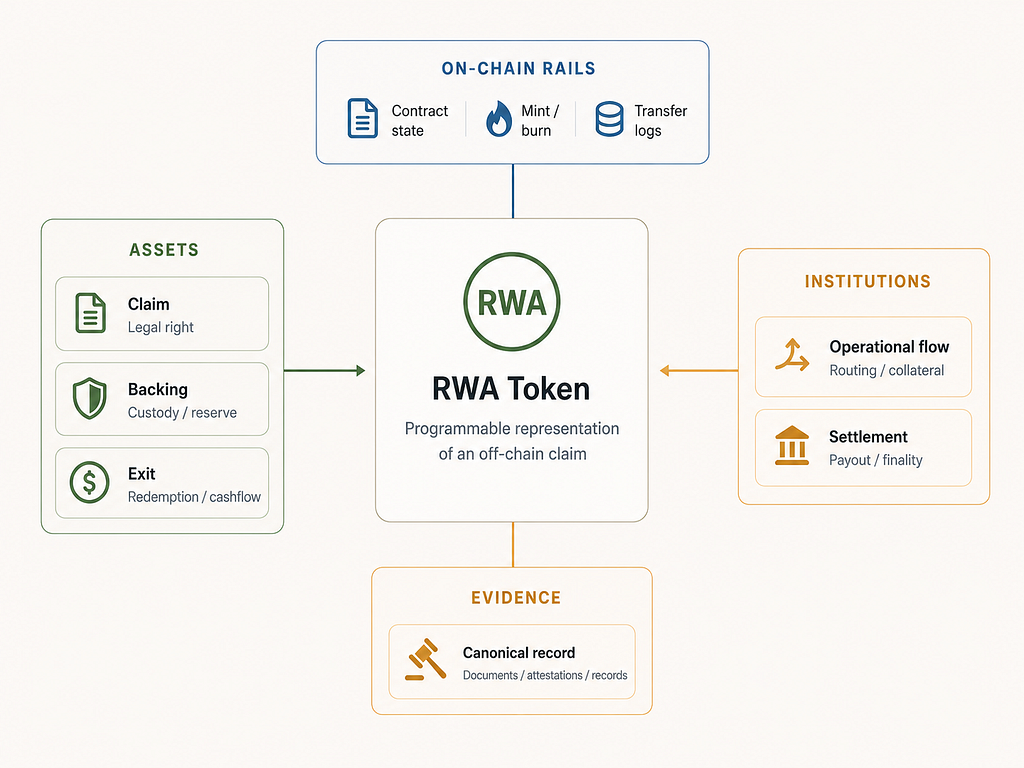
When Real-World Assets Move On-Chain, What Becomes Visible?

World Cup Memecoin WORLDCUP Surges 130% Ahead of June Tournament
Yuga Labs rescues 68 NFTs after Flooring Protocol exploit



