

Daily Market Update: Bitcoin, Oil Prices, and Stock Futures React to U.S.-Iran Strikes
TLDR
- Bitcoin dropped to $66,700 on Monday as traditional markets reacted to U.S.-Iran military strikes
- Oil surged over 6%, with Brent crude hitting $77.50, its biggest jump since Russia’s Ukraine invasion in 2022
- U.S. stock futures fell around 1%, with the Dow, S&P 500, and Nasdaq all declining
- The Strait of Hormuz, handling roughly 20% of global oil, is effectively closed
- Higher oil prices are raising inflation fears, which could delay Federal Reserve rate cuts
Bitcoin and U.S. stock futures fell Monday after the United States and Israel launched military strikes on Iran over the weekend. Markets opened to their first chance to price in the conflict, and the reaction was sharp.
Bitcoin dropped to $66,702, down 1.1% in 24 hours. That erased most of Sunday’s brief rally to $68,000, which had followed confirmation of Supreme Leader Khamenei’s death.
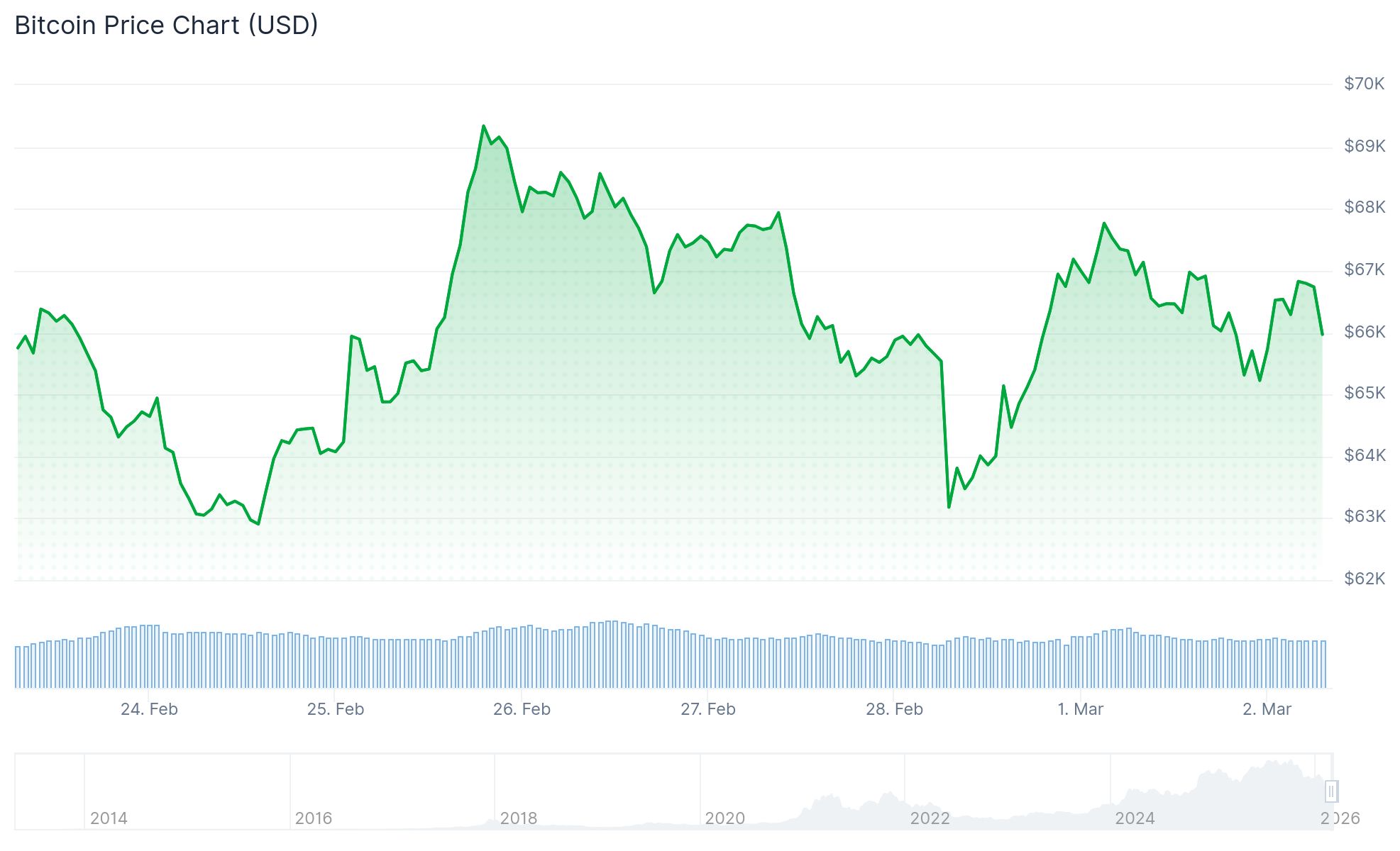 Bitcoin (BTC) Price
Other cryptocurrencies also fell. Ether dropped 2.5% to $1,967, Solana fell 4.1% to $84, and XRP lost 3.6% to $1.36. Over seven days, Solana led losses among major tokens, down 8.1%.
The strikes came after Tehran rejected U.S. demands to scale back its nuclear program. Iranian leaders have promised a strong response, raising concerns about a wider regional conflict.
Oil prices moved sharply on the news. Brent crude surged as much as 13% at the open before settling around $77.50, still up 6.4%. That’s the biggest single-day jump since Russia invaded Ukraine in 2022.
West Texas Intermediate, the U.S. benchmark, traded around $73 a barrel. Iran is OPEC’s fourth-largest producer, adding to supply uncertainty.
The Strait of Hormuz, through which roughly one-fifth of global oil flows, is effectively closed, according to Bloomberg. That’s adding pressure to prices and rattling energy markets worldwide.
Stock Futures and Safe-Haven Assets React
U.S. stock futures dropped around 1% across the board. Dow Jones futures fell over 500 points, while S&P 500 and Nasdaq 100 futures each dropped about 1.4% and 1.8% respectively. Asian equities slid 1.4%.
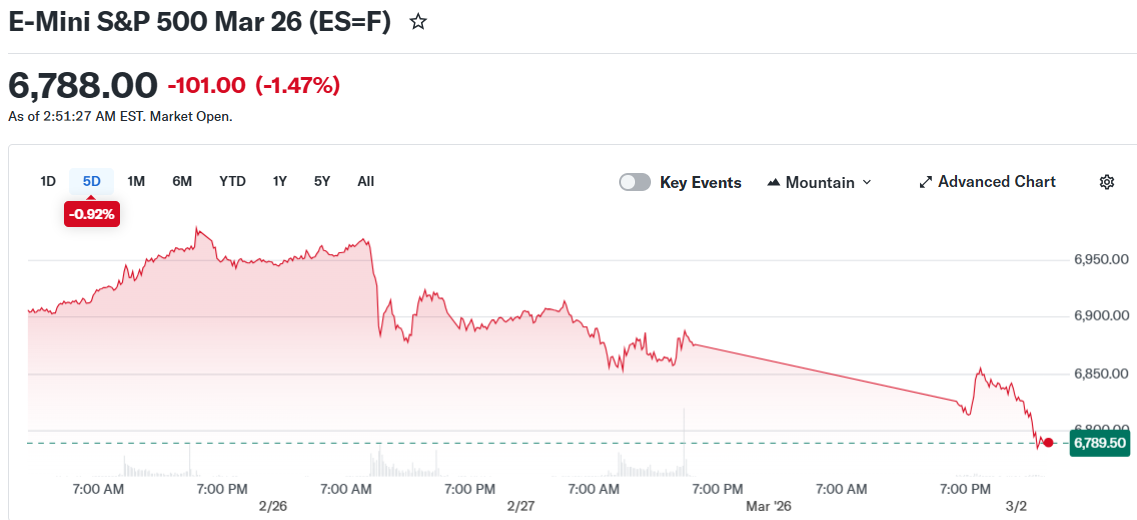 E-Mini S&P 500 Mar 26 (ES=F)
Gold climbed to $5,350 an ounce, as investors moved into safe-haven assets.
The S&P 500 had already ended February in negative territory. Renewed volatility in AI and software stocks had rattled markets heading into the week.
Higher oil prices are feeding into inflation concerns. If inflation rises, the Federal Reserve may delay rate cuts, which would tighten liquidity and put further pressure on risk assets like stocks and crypto.
What Traders Are Saying About Crypto’s Downside Risk
Some crypto traders believe the downside for digital assets may be limited. Jeff Mei, COO at BTSE, said Iran has been cut off from global financial markets for some time, which reduces the direct shock to crypto.
Mei added that OPEC and U.S. supply increases could offset the loss of Iranian oil and help stabilize prices over time.
Conflicting reports emerged Monday about whether Iran might seek nuclear talks with the U.S. The Wall Street Journal reported a push to negotiate, but Iran’s national security chief said the country would not negotiate.
President Trump said the bombing campaign would continue until objectives are met.
Looking ahead, earnings from Broadcom and Marvell Technology are due this week, along with retail results from Target and Costco. Friday’s February jobs report is also expected, with Wall Street forecasting 60,000 jobs added.
The post Daily Market Update: Bitcoin, Oil Prices, and Stock Futures React to U.S.-Iran Strikes appeared first on CoinCentral.


You May Also Like

New Zealand Dollar Outlook: RBNZ Signals Extended Hiking Cycle, Says TD Securities

From Telegram to Terminal: Banana Gun’s Pro Platform Hits Ethereum as User Base Surpasses One Million

Best Free Social Media Tools for Growth & Engagement in 2026



