

USD/INR Exchange Rate Soars to Monthly Peak as US Dollar Stages Fierce Rally Amid US-Iran Conflict
BitcoinWorld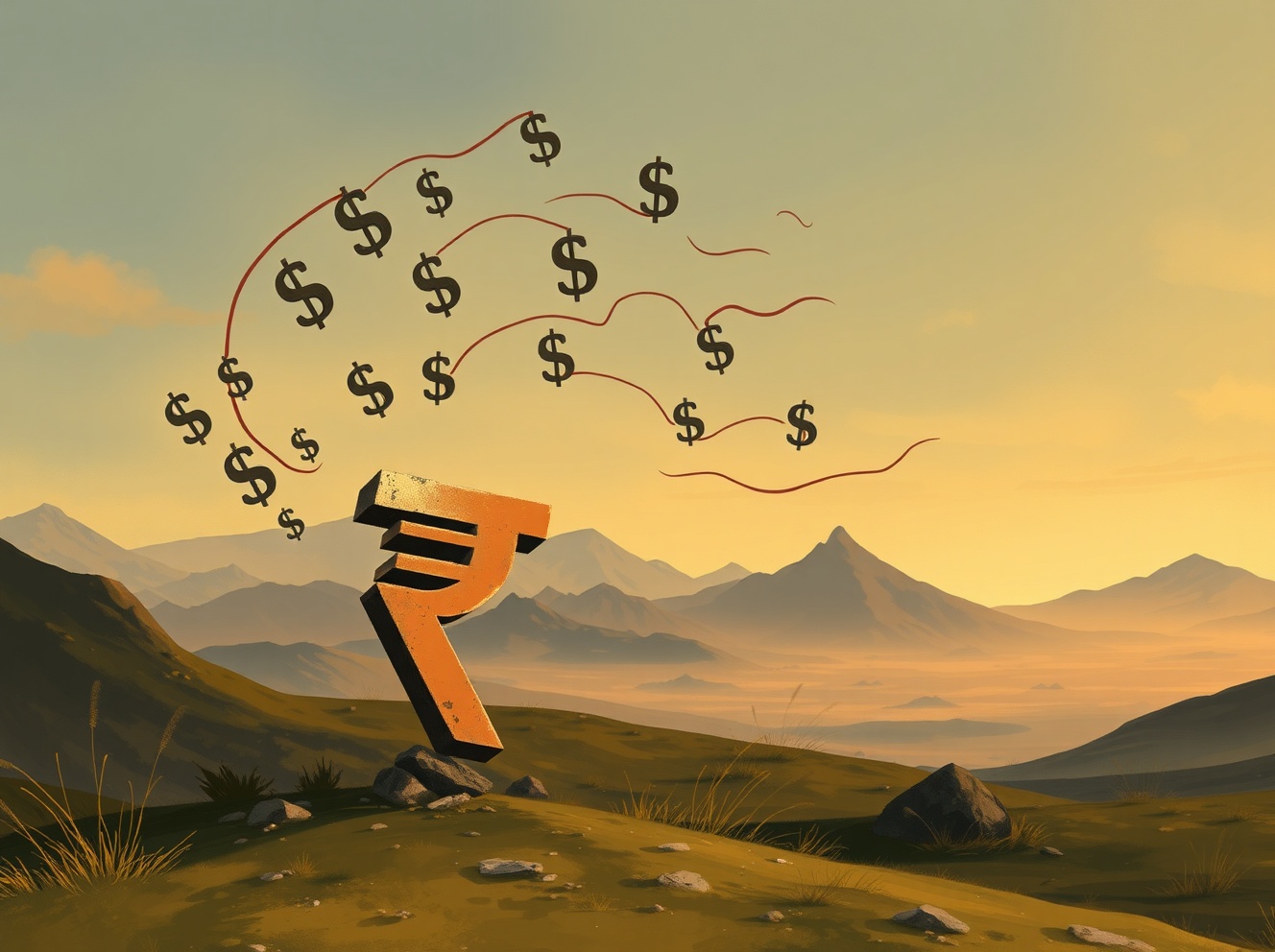
USD/INR Exchange Rate Soars to Monthly Peak as US Dollar Stages Fierce Rally Amid US-Iran Conflict
The USD/INR currency pair surged to a fresh monthly high on Thursday, March 13, 2025, as the US Dollar staged a powerful global rally fueled by escalating military tensions between the United States and Iran. This significant move underscores the profound impact geopolitical instability exerts on foreign exchange markets, particularly for emerging market currencies like the Indian Rupee. Consequently, traders and policymakers are now closely monitoring the situation for its potential long-term effects on trade, inflation, and capital flows.
USD/INR Exchange Rate Reaches Critical Monthly High
The USD/INR pair breached a key technical resistance level, trading at its highest point in over thirty days. Market data from major financial terminals confirmed the pair’s sharp ascent during the Asian and European trading sessions. This movement primarily reflects a broad-based safe-haven bid for the US Dollar, a typical market reaction during periods of international conflict. Historically, the Dollar Index (DXY) often strengthens when global risk appetite diminishes, as investors seek the perceived safety and liquidity of US Treasury assets. Meanwhile, the Indian Rupee, like many peers, faces selling pressure under such conditions due to concerns over imported inflation and potential foreign portfolio outflows.
Geopolitical Catalyst: The US-Iran Conflict Escalation
The immediate trigger for the forex volatility stems from a significant escalation in hostilities. On March 12, 2025, confirmed reports indicated a direct military engagement between US and Iranian forces in the Strait of Hormuz, a critical global oil chokepoint. This event marks a dangerous new phase in long-standing regional tensions. Geopolitical analysts note that conflicts in oil-rich regions invariably trigger volatility across multiple asset classes. Crude oil prices have already spiked, adding further pressure on India’s current account deficit given the nation’s status as a major oil importer. This dual pressure—a stronger dollar and higher import costs—creates a challenging environment for the Reserve Bank of India’s monetary policy framework.
Expert Analysis on Market Mechanics
Senior forex strategists from leading international banks have provided context for the move. “The USD/INR move is a textbook example of a risk-off shock,” explained one strategist, whose firm manages over $2 trillion in assets. “Capital flows are shifting rapidly. We observe selling in emerging market equities and bonds, with proceeds being converted back into Dollars. The Rupee’s relative liquidity makes it a proxy for broader EM sentiment.” Furthermore, analysts reference historical precedents, such as the market reactions following the 2020 Iran crisis or the initial 2022 Russia-Ukraine conflict, where the DXY also saw pronounced rallies. However, they caution that the sustained trajectory will depend on the conflict’s duration and the subsequent policy responses from global central banks.
Broader Impacts on the Indian Economy
A sustained higher USD/INR rate carries significant implications. Primarily, it increases the cost of India’s imports, notably crude oil, electronics, and gold. This scenario poses a direct threat to the country’s inflation management goals. The Reserve Bank of India (RBI) may face a complex dilemma: intervening to support the currency could deplete foreign reserves, while raising interest rates to attract capital could stifle domestic economic growth. The following table outlines key immediate impacts:
| Sector | Potential Impact |
|---|---|
| Importers | Higher input costs, reduced profit margins. |
| Exporters | Short-term competitiveness boost; long-term uncertainty. |
| Monetary Policy | Complicated inflation targeting for the RBI. |
| Foreign Investment | Risk of capital flight from Indian markets. |
Additionally, companies with substantial foreign currency debt will see their repayment burdens increase. Conversely, sectors like IT services and pharmaceuticals, which earn significant revenue in US Dollars, might experience a temporary accounting benefit from favorable conversion rates.
Historical Context and Comparative Analysis
Examining past episodes provides crucial perspective. The USD/INR pair has experienced similar spikes during previous geopolitical events and US Dollar strengthening cycles. For instance, during the 2013 “Taper Tantrum,” the Rupee depreciated sharply as global liquidity tightened. Similarly, the US-China trade war phases in 2018-2019 induced volatility. However, the current situation uniquely combines military conflict with existing global macroeconomic headwinds, including moderating growth in major economies. This confluence of factors suggests the market’s reaction could be more pronounced and persistent. Technical analysts are now watching several key Fibonacci retracement levels to gauge potential support zones for the INR if geopolitical pressures begin to ease.
The Role of Central Bank Policies
The response of monetary authorities will be pivotal. The US Federal Reserve’s stance on interest rates remains a dominant driver for the Dollar’s strength. If the conflict fuels broader inflationary pressures, the Fed may maintain a restrictive policy for longer, further supporting the USD. Conversely, the RBI has a toolkit including direct intervention in spot and forward markets, as well as verbal guidance to manage volatility. The central bank’s substantial foreign exchange reserves, exceeding $600 billion, provide a significant buffer to smooth disorderly market movements. Market participants will scrutinize any statements from the RBI for clues on its tolerance level for the currency’s depreciation.
Conclusion
The surge in the USD/INR exchange rate to a fresh monthly high is a direct consequence of the US Dollar’s rally amid escalating US-Iran tensions. This development highlights the intricate link between geopolitics and global finance, particularly for emerging market economies like India. While a weaker Rupee offers some advantages for exporters, the broader implications for inflation, corporate debt, and financial stability present considerable challenges. Moving forward, the currency pair’s trajectory will hinge on the evolution of the conflict, subsequent policy actions from the RBI and Fed, and the overall shift in global risk sentiment. Market participants must therefore prepare for continued volatility as these complex dynamics unfold.
FAQs
Q1: Why does the US Dollar strengthen during geopolitical conflicts?
A1: The US Dollar is considered the world’s primary reserve currency and a safe-haven asset. During times of global uncertainty or conflict, investors seek safety and liquidity, often selling riskier assets and buying US Treasury bonds, which increases demand for the Dollar.
Q2: How does a higher USD/INR rate affect the common person in India?
A2: A higher USD/INR rate makes imported goods more expensive, which can increase the prices of fuel, electronics, and other imported items. This can contribute to higher overall inflation, reducing purchasing power. It may also make overseas education and travel more costly.
Q3: What can the Reserve Bank of India (RBI) do to support the Rupee?
A3: The RBI can intervene directly in the foreign exchange market by selling US Dollars from its reserves to increase the supply of Dollars and support the Rupee. It can also use monetary policy tools, like interest rates, to make Indian assets more attractive to foreign investors.
Q4: Are there any beneficiaries from a weaker Indian Rupee?
A4: Yes, export-oriented sectors like information technology (IT), pharmaceuticals, and textiles benefit as their products become cheaper for foreign buyers, potentially boosting their revenue in Rupee terms. Families receiving remittances from abroad also get more Rupees for each Dollar sent.
Q5: How long might this USD/INR volatility last?
A5: The duration of volatility is directly tied to the geopolitical situation. If tensions de-escalate quickly, the market may stabilize. However, a prolonged conflict or further escalation could lead to sustained pressure on the Rupee until there is a clear resolution or a significant shift in global capital flows.
This post USD/INR Exchange Rate Soars to Monthly Peak as US Dollar Stages Fierce Rally Amid US-Iran Conflict first appeared on BitcoinWorld.


You May Also Like

Silver Price Forecast: XAG Breaks Channel Support as Bears Target $73.00
Dozens of ex-federal judges launch bid to kill MAGA slush fund: 'The court was deceived'

Hasbulla Net Worth: How Rich Is Hasbulla Magomedov?



