Gold Prices Retreat as Greenback Strength Overshadows Middle East Conflict
TLDR
- Gold prices retreated following a four-session rally as US dollar strength counterbalanced safe-haven buying from Middle East tensions
- Joint US-Israeli military operations in Iran resulted in the death of Supreme Leader Khamenei, triggering Iranian missile strikes throughout the region
- Silver plummeted as much as 7.1%, with platinum and palladium experiencing significant losses
- Brent crude surged past $80 per barrel, fueling inflation concerns and pushing Fed rate cut expectations back to September
- Precious metal shipments from Dubai remain suspended following UAE airspace restrictions and airline service interruptions
Gold prices declined Tuesday, ending a four-session advance as a strengthening US dollar weighed on the precious metal despite escalating Middle East hostilities.
Spot gold traded at $5,316.38 per ounce during Singapore hours. The metal had reached an intraday peak of $5,379.65 earlier in the session.
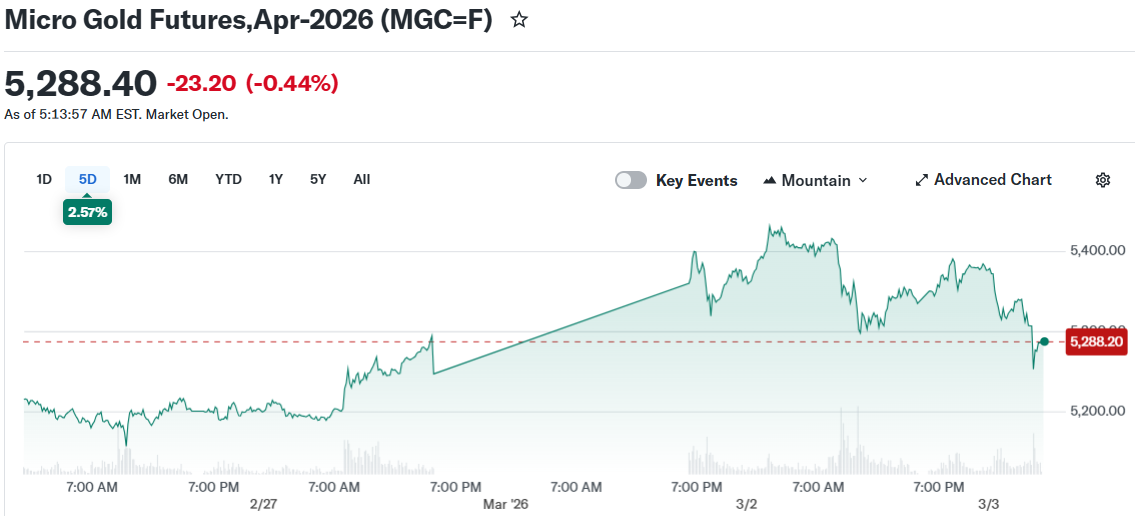 Micro Gold Futures,Apr-2026 (MGC=F)
The pullback occurred as the US Dollar Index advanced nearly 1% for the week, reaching its strongest level since late January. An appreciating dollar makes gold less affordable for international buyers.
Gold had advanced more than 3% during the prior four trading sessions. Market participants had sought refuge in safe-haven assets amid a significant Middle East crisis escalation.
Joint US and Israeli forces executed extensive strikes against Iranian targets during the weekend. The operations resulted in the deaths of Supreme Leader Ayatollah Ali Khamenei and multiple high-ranking Iranian military officials.
Tehran launched retaliatory missile attacks throughout the region. Fighting has expanded into Lebanon, while Kuwaiti air defense systems reportedly shot down US aircraft in a friendly fire incident.
President Trump indicated the military campaign might persist for several weeks. He also noted the uncertain state of Iran’s leadership structure following Khamenei’s elimination.
Iran issued threats to close the Strait of Hormuz, a critical chokepoint for international petroleum transport. The threat drove oil prices substantially higher, pushing Brent crude above $80 per barrel Tuesday.
Rate Cut Hopes Pushed Back
Elevated oil prices have intensified inflation worries across the United States. Market participants now anticipate the Federal Reserve won’t reduce interest rates before September, a delay from earlier projections.
The Institute for Supply Management reported that manufacturing input costs increased at their most rapid pace since 2022 during February. JPMorgan CEO Jamie Dimon cautioned that inflation risks could challenge the US economy.
Since gold generates no yield, postponed rate reductions diminish its attractiveness compared to interest-bearing assets like bonds and cash equivalents. This dynamic limited the metal’s upside despite the warfare escalation.
Precious Metals Shipments Disrupted
Silver experienced a steep decline, falling as much as 7.1% Tuesday to $86.37 per ounce. Platinum decreased 4% to $2,224.06, while palladium also posted losses.
The regional conflict has severely disrupted physical precious metals transportation. UAE authorities closed the nation’s airspace during the weekend, grounding gold and silver shipments typically transported in commercial aircraft cargo compartments.
Multiple trading houses and logistics companies reported that metal deliveries to and from Dubai have been suspended without a clear resumption timeline. Ground transportation to alternative regional airports is deemed too hazardous for high-value commodities.
Swiss banking institution UBP suggested gold has “ample scope” to test its record peak above $5,595 per ounce should the conflict persist for multiple weeks.
Tuesday saw two drone strikes target the US embassy in Riyadh. President Trump pledged American retaliation.
The post Gold Prices Retreat as Greenback Strength Overshadows Middle East Conflict appeared first on Blockonomi.
You May Also Like

Why Home Energy Bills Are Higher Than Expected in 2026

SoFi and Mastercard Join Forces to Integrate SoFiUSD for Global Settlement