Real estate mogul Grant Cardone thinks he has an answer to what ails the crypto treasury industry — pair Bitcoin with rental income. Related Reading: US Should Real estate mogul Grant Cardone thinks he has an answer to what ails the crypto treasury industry — pair Bitcoin with rental income. Related Reading: US Should

Crypto Treasury Inflows Slide To October 2024 Levels—What Happened?

2026/03/06 01:30
2 min read
For feedback or concerns regarding this content, please contact us at crypto.news@mexc.com

Real estate mogul Grant Cardone thinks he has an answer to what ails the crypto treasury industry — pair Bitcoin with rental income.

His fund buys multifamily housing, collects rent, and channels the proceeds into additional Bitcoin purchases, giving investors exposure to property appreciation alongside the asset’s price swings.

It is a model built for a market that no longer rewards passive accumulation.

Companies Search For Ways To Put Bitcoin To Work

That shift in thinking comes as the broader crypto treasury sector posts its weakest numbers in well over a year. Monthly inflows into digital asset treasury companies have fallen to roughly $555 million, according to data from DefiLlama — the lowest reading since October 2024.
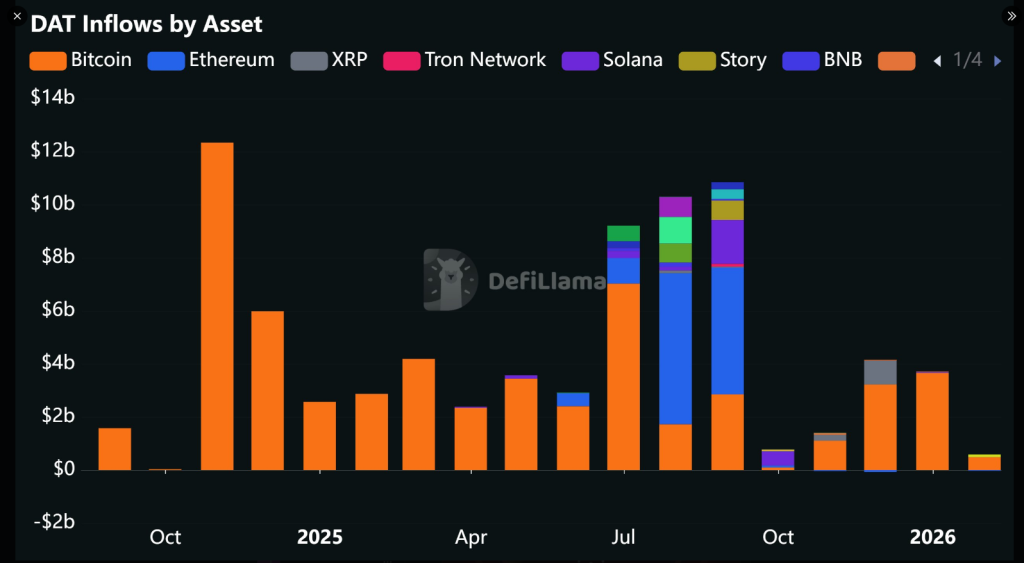
At that point, just weeks before the US presidential election, inflows had cratered to around $32 million as investors waited out the uncertainty.

What followed was a historic surge. After US President Donald Trump’s election victory and a sharp turn toward crypto-friendly regulation, monthly inflows rocketed past $12 billion.

The sector looked unstoppable. It wasn’t. Inflows pulled back through most of 2025, stayed well below $10 billion per month, then dropped sharply again heading into 2026.
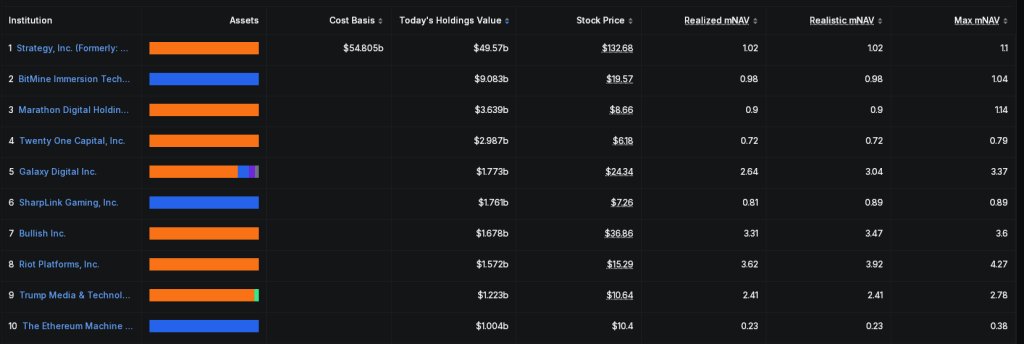
A prolonged bear market has erased much of those post-election gains. Reports indicate crypto prices have retraced to levels last seen before the 2024 election pump, dragging treasury company valuations down with them and drying up fresh capital.

The Crypto Warehouse Model Loses Its Appeal

Patrick Ngan, chief investment officer at Zeta Network Group, said the old playbook is no longer enough. Companies that simply buy and hold Bitcoin — warehousing the asset with no active strategy — are at risk of being left behind. Those with real operating businesses generating cash flow will have an edge, he said.

The options for doing so are expanding. Treasury companies can stake crypto assets to earn rewards on proof-of-stake networks, run mining operations on proof-of-work chains, or put capital to work through decentralized lending platforms.

Each approach turns a static balance sheet into something that generates returns independent of price movement.

A New Blueprint Takes Shape

Cardone’s hybrid model pushes that idea further. By anchoring a fund in physical real estate — an asset with built-in rental demand — he sidesteps the problem of relying entirely on Bitcoin appreciation. Tax advantages tied to real estate ownership sweeten the returns further.

Featured image from Pexels, chart from TradingView

Disclaimer: The articles reposted on this site are sourced from public platforms and are provided for informational purposes only. They do not necessarily reflect the views of MEXC. All rights remain with the original authors. If you believe any content infringes on third-party rights, please contact crypto.news@mexc.com for removal. MEXC makes no guarantees regarding the accuracy, completeness, or timeliness of the content and is not responsible for any actions taken based on the information provided. The content does not constitute financial, legal, or other professional advice, nor should it be considered a recommendation or endorsement by MEXC.

You May Also Like

Two companies account for 97% of the market, and transaction volume surges by 1100%: Predicting the reshaping of the market landscape and the next wave of entrepreneurial opportunities.

Two companies account for 97% of the market, and transaction volume surges by 1100%: Predicting the reshaping of the market landscape and the next wave of entrepreneurial opportunities.

Author: MetaHub Research Introduction: Redefining the Boundaries of Prediction Markets Prediction markets are markets that allow participants to trade on the outcomes
Share
PANews2026/03/06 08:30
The U.S. Securities and Exchange Commission (SEC) dismissed charges against Justin Sun and the Tron Foundation; Rainberry agreed to pay a $10 million fine.

The U.S. Securities and Exchange Commission (SEC) dismissed charges against Justin Sun and the Tron Foundation; Rainberry agreed to pay a $10 million fine.

PANews reported on March 6th that, according to The Block, the U.S. Securities and Exchange Commission (SEC) has dropped its 2023 charges against TRON founder Justin
Share
PANews2026/03/06 08:05
UK crypto holders brace for FCA’s expanded regulatory reach

UK crypto holders brace for FCA’s expanded regulatory reach

The post UK crypto holders brace for FCA’s expanded regulatory reach appeared on BitcoinEthereumNews.com. British crypto holders may soon face a very different landscape as the Financial Conduct Authority (FCA) moves to expand its regulatory reach in the industry. A new consultation paper outlines how the watchdog intends to apply its rulebook to crypto firms, shaping everything from asset safeguarding to trading platform operation. According to the financial regulator, these proposals would translate into clearer protections for retail investors and stricter oversight of crypto firms. UK FCA plans Until now, UK crypto users mostly encountered the FCA through rules on promotions and anti-money laundering checks. The consultation paper goes much further. It proposes direct oversight of stablecoin issuers, custodians, and crypto-asset trading platforms (CATPs). For investors, that means the wallets, exchanges, and coins they rely on could soon be subject to the same governance and resilience standards as traditional financial institutions. The regulator has also clarified that firms need official authorization before serving customers. This condition should, in theory, reduce the risk of sudden platform failures or unclear accountability. David Geale, the FCA’s executive director of payments and digital finance, said the proposals are designed to strike a balance between innovation and protection. He explained: “We want to develop a sustainable and competitive crypto sector – balancing innovation, market integrity and trust.” Geale noted that while the rules will not eliminate investment risks, they will create consistent standards, helping consumers understand what to expect from registered firms. Why does this matter for crypto holders? The UK regulatory framework shift would provide safer custody of assets, better disclosure of risks, and clearer recourse if something goes wrong. However, the regulator was also frank in its submission, arguing that no rulebook can eliminate the volatility or inherent risks of holding digital assets. Instead, the focus is on ensuring that when consumers choose to invest, they do…
Share
BitcoinEthereumNews2025/09/17 23:52




