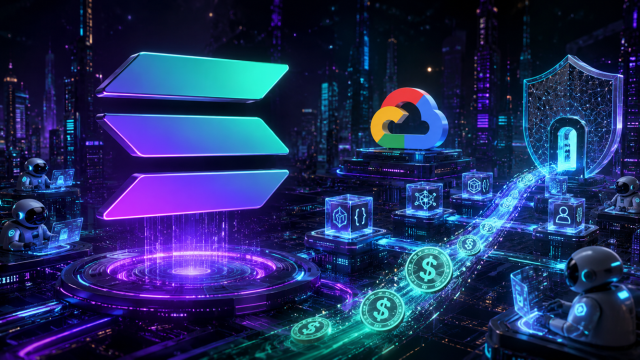
Financial technology has undergone rapid changes over the past decade, exceeding the expectations of most people. Digital payments, online lending, and mobile banking have become essential components of modern daily life. The Blockchain system protects information through its secure, transparent, and decentralized storage system that serves as the foundation for many new technological developments.
Digital finance started to develop when Bitcoin introduced the concept of digital currencies that could be transferred without using standard banking systems. Developers gained new capabilities through Ethereum, enabling them to create financial applications that operated automatically on its programmable platform. Financial institutions currently investigate blockchain technology for its potential to boost operational efficiency while enhancing security measures and establishing customer confidence.

Fintech companies are showing strong interest in blockchain technology because of its potential applications. The current fintech ecosystem requires modern solutions because it needs to achieve faster transactions, better fraud protection, simplified compliance, and improved cross-border payment systems.
Many startups work with blockchain app development services to design customized ledger-based solutions to modernize their old-fashioned systems. Let’s discuss blockchain in fintech, use cases, and challenges.
Why Blockchain Matters in Fintech
The financial system’s base relies on central server systems to operate its various functions. The existing model has functioned successfully for many years, yet it introduces multiple constraints to its operations. The system faces major issues, like data breaches, delays in transactions, and high costs for processing.
Blockchain technology creates an alternative data storage system because it stores information across several nodes instead of using a central database. The system requires transaction verification to establish permanent record status. The system prevents unauthorized changes by establishing a security mechanism that makes such alterations extremely challenging.
Trust is a critical element that needs to be considered. Financial transactions often require intermediaries such as banks or payment processors. Blockchain technology enables users to conduct direct peer-to-peer transactions without needing intermediary systems.
Speed also contributes to the situation. Traditional banking channels need several days to complete international transfers. The speed of blockchain-based transactions depends on the current state of network conditions.
Use Cases of Blockchain in Fintech
1. Cross-Border Payments
International money transfer serves as the most powerful demonstration of blockchain technology use in the financial sector.
Traditional remittance systems involve multiple banks, currency conversions, and verification steps. The process requires additional resources at each stage, resulting in higher expenses and longer durations. Blockchain technology enables organizations to use its shared ledger system for direct transaction validation without needing intermediary verification.
For migrant workers sending money to family members, this improvement matters. The recipient receives more money because of reduced fees, which transfers more funds to them.
2. Digital Identity Verification
Online finance faces a serious threat from identity fraud. Financial platforms need their users to submit verification documents multiple times.
Blockchain-based identity systems give users the ability to control their personal information. People can share their verified credentials through secure networks instead of needing to send documents repeatedly.
This approach provides dual benefits because it decreases administrative tasks for financial institutions while creating a better experience for their customers.
3. Smart Contracts and Automated Finance
Smart contracts function as self-executing programs that activate their operations when specific conditions are met. The system enables automatic loan payment deductions from a borrower’s account, which occurs whenever their income is deposited. Insurance claims can be processed without manual approval when their requirements are met. The purpose of this function exists on platforms that operate through the Ethereum blockchain.
4. Fraud Detection and Prevention
Businesses lose billions of dollars every year because of financial fraud. Blockchain technology creates transparent transaction records that provide better visibility into transaction activities. It enables better detection of suspicious activities because recorded information remains unchanged. Banks and payment companies use advanced monitoring systems to detect unusual behavior patterns, which can be identified earlier than traditional systems permit.
5. Supply Chain Finance
Supply chain financing connects manufacturers with their suppliers and distribution partners. The blockchain system tracks products from their manufacturing stage until their final delivery stage. The lenders use inventory information to verify assets, which helps them decrease their risk before they issue credit approvals.
6. Digital Asset Management
Financial institutions are examining digital stocks, bonds, and property shares as tokenized assets. The blockchain system enables users to own partial stakes in assets. Investors can purchase small portions of high-value assets instead of buying entire units.
Challenges of Blockchain in Fintech
1. Scalability Issues
Public networks often face limitations when handling thousands of transactions per second. The capability of large financial platforms to operate their systems successfully will be limited by this issue. The development team is currently creating layer-two scaling solutions together with enhanced consensus protocols.
2. Regulatory Uncertainty
Financial regulations differ across countries. Governments are developing their blockchain-based finance policies. Some regions promote innovation while other regions enforce strict compliance requirements. Companies must monitor legal frameworks before launching blockchain financial products.
3. Integration with Legacy Systems
Many banks use outdated software systems that were developed before decentralized systems existed. The process of connecting blockchain networks to current databases requires specific technical adjustments. The migration process needs careful management to prevent any disruption of services.
4. Energy Consumption
Some blockchain networks require major computational resources for their operations. The proof-of-work system used in earlier cryptocurrency mining demanded extensive energy requirements. Developers work on new consensus models that aim to decrease environmental harm.
5. User Adoption and Education
Financial technology requires user trust and conceptual understanding to function correctly. Many customers are unfamiliar with wallet security, private keys, or decentralized storage. Poor user interface design can discourage adoption.
Solutions to Blockchain Challenges
Improving Network Performance
Developers research hybrid system designs and better consensus protocols. The system uses layer-two solutions to handle transactions outside the main blockchain, which are later recorded as final results.
Strengthening Regulatory Collaboration
Financial technology companies need to collaborate with government agencies. The existence of compliance frameworks that businesses can use to operate legally results in better business innovation.
Modernizing Infrastructure
Organizations need to implement system upgrades through a gradual process instead of abrupt system replacements. The API-based integration system enables traditional banking software to establish communication with blockchain networks.
Enhancing Energy Efficiency
Current research on blockchain protocols now emphasizes sustainable development. Proof-of-stake and similar mechanisms now use less energy than earlier models because they need less power to operate.
Improving User Experience
Users who lack technical knowledge can access blockchain services through simple interface designs. The three systems, which include wallet recovery systems and transaction tracking, and customer education programs, establish trust with customers.
Future of Blockchain in Fintech
Blockchain is poised to become a fundamental infrastructure layer for digital finance. The growth of decentralized finance platforms may persist, and tokenized real-world assets might become standard investment tools. Additionally, financial transparency could see enhancements as more organizations implement distributed ledgers.
Machine learning and AI might be combined with blockchain analytics to recognize fraudulent behavior and stock market predictions.
Role of Development Companies
Businesses planning a blockchain transformation choose to work together with specialized service providers. A professional blockchain app development company creates secure decentralized applications, while a fintech app development company develops customer-oriented financial platforms.
Conclusion
Blockchain technology creates modern financial solutions through enhanced security measures, complete transaction visibility, and operational efficiency improvements. The technology provides real-world solutions that address multiple financial technology problems through its capabilities in cross-border payments and automated smart contracts.
Adoption faces obstacles because of existing scalability limits, regulatory issues, and technical integration problems. The barriers will be eliminated through ongoing innovative development, together with improved infrastructure and user educational programs.
Financial technology will keep evolving through its ongoing development work, and blockchain technology will continue to serve as an essential component. Companies that invest in research, along with their development efforts and responsible technology implementation, will achieve a strong competitive advantage in the digital economy.