

Dow Jones Plummets 600 Points: Devastating -92K NFP Print Sparks Market Panic
BitcoinWorld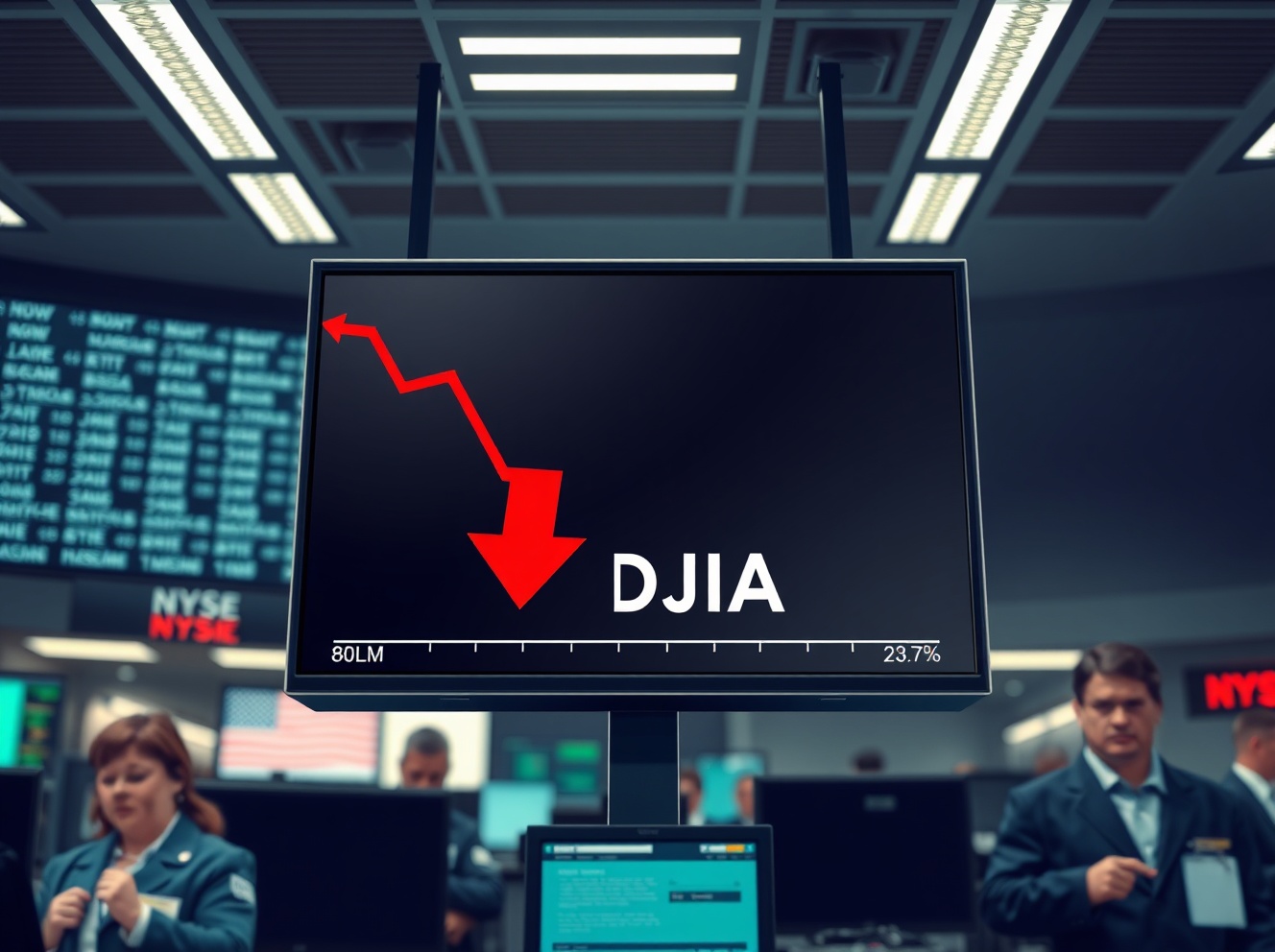
Dow Jones Plummets 600 Points: Devastating -92K NFP Print Sparks Market Panic
NEW YORK, NY – Financial markets reeled on Friday as the Dow Jones Industrial Average suffered a precipitous 600-point drop. This dramatic sell-off followed the shocking release of the monthly Non-Farm Payrolls (NFP) report, which showed the U.S. economy lost 92,000 jobs against expectations of modest growth. The immediate and severe reaction underscores deep-seated anxieties about economic resilience and future Federal Reserve policy.
Analyzing the Dow Jones Industrial Average’s Sharp Decline
The Dow’s plunge represented one of its worst single-day performances of the year. Trading volume surged to nearly double the 30-day average, indicating broad-based institutional selling. Furthermore, the sell-off was not isolated. The S&P 500 and Nasdaq Composite indices also fell sharply, by 2.1% and 2.8% respectively. This synchronized decline suggests a market-wide reassessment of risk.
Market analysts quickly identified the catalyst. The U.S. Bureau of Labor Statistics released its monthly employment situation summary at 8:30 AM Eastern Time. Consequently, futures markets, which had been trading slightly lower, went into freefall. The Dow Jones futures contract dropped over 400 points in mere minutes. This pre-market action accurately foreshadowed the carnage at the opening bell.
Decoding the Shocking -92K NFP Print
The Non-Farm Payrolls report serves as a critical barometer of U.S. economic health. Economists surveyed by major financial data providers had forecast a gain of approximately 180,000 jobs. Therefore, the actual print of -92,000 constituted a staggering miss of over 270,000 jobs. This negative figure immediately raised red flags across multiple sectors.
A deeper dive into the report’s components revealed concerning trends. Significant job losses appeared in the goods-producing sector, particularly manufacturing and construction. Meanwhile, the service sector, which had been a pillar of strength, showed nearly flat growth. The unemployment rate, however, held steady at 3.9%, a discrepancy analysts attributed to a shrinking labor force participation rate.
Historical Context and Market Psychology
Historically, a single negative NFP print does not define a trend. However, the magnitude of this miss, combined with recent weaker-than-expected retail sales and manufacturing data, painted a troubling picture. Market psychology shifted from cautious optimism to genuine concern about a potential economic slowdown. Investors rapidly moved to price in a higher probability of recession.
This sentiment triggered a classic flight-to-safety trade. As equities sold off, demand for U.S. Treasury bonds surged. The yield on the benchmark 10-year Treasury note fell 15 basis points to 4.05%. Simultaneously, the U.S. dollar index (DXY) weakened against a basket of major currencies. This dynamic reflected global investors seeking the relative safety of government debt while betting on a less aggressive Federal Reserve.
Immediate Sector Impacts and Corporate Reactions
The sell-off exhibited clear sector rotation. Cyclical sectors, whose fortunes are closely tied to economic growth, bore the brunt of the selling. The industrial sector fell 3.5%, while financials dropped 3.1%. Technology stocks, sensitive to interest rate expectations, also declined sharply. In contrast, more defensive sectors like utilities and consumer staples experienced only modest losses.
Corporate leaders responded with cautious statements. Several major bank CEOs cited the jobs data as a key monitor for consumer health. Retail executives expressed concern about potential softening in consumer demand. The CBOE Volatility Index (VIX), often called the “fear gauge,” spiked over 35%, its highest level in three months. This indicated expectations for continued market turbulence.
- Industrial Sector: Worst performer, down 3.5%.
- Financial Sector: Heavily sold, down 3.1%.
- Defensive Sectors: Utilities (-0.5%) and Consumer Staples (-0.7%) showed relative resilience.
- Market Breadth: Over 90% of NYSE-listed stocks closed lower.
Federal Reserve Policy and Future Interest Rate Trajectory
All eyes now turn to the Federal Reserve. The central bank’s dual mandate focuses on maximum employment and price stability. This jobs report directly challenges the first part of that mandate. Prior to the release, markets had priced in a low probability of an interest rate cut at the next Federal Open Market Committee (FOMC) meeting. However, futures markets now indicate a 65% chance of a 25-basis-point cut.
Fed officials have consistently stated their data-dependent approach. This NFP print provides powerful data suggesting economic cooling. Analysts predict the Fed will likely pause its quantitative tightening program. They may also adopt a more dovish tone in upcoming communications. The central bank walks a tightrope, however, as inflation metrics, while improved, remain above its 2% target.
| Metric | Reported Value | Consensus Forecast | Variance |
|---|---|---|---|
| Non-Farm Payrolls | -92,000 | +180,000 | -272,000 |
| Unemployment Rate | 3.9% | 3.9% | 0.0% |
| Average Hourly Earnings (MoM) | +0.2% | +0.3% | -0.1% |
Global Ripple Effects and Central Bank Coordination
The shockwave extended beyond U.S. borders. European and Asian markets sold off in sympathy. The Euro Stoxx 50 closed down 1.8%, and Japan’s Nikkei 225 fell 1.5% in its next session. Global central banks monitor U.S. economic data closely. A slowdown in the world’s largest economy impacts export-driven nations and complicates monetary policy abroad. The European Central Bank and Bank of England may now delay their own tightening cycles.
Conclusion
The Dow Jones Industrial Average’s 600-point plunge serves as a stark reminder of the market’s sensitivity to economic fundamentals. The devastating -92K NFP print acted as a catalyst, exposing underlying fears about growth and shifting expectations for Federal Reserve policy. While one data point does not make a trend, its severity guarantees intense scrutiny of upcoming economic releases. Investors should prepare for continued volatility as the market searches for a new equilibrium between growth concerns and inflation dynamics. The path forward depends heavily on subsequent data confirming or contradicting this jobs report shock.
FAQs
Q1: What is the Non-Farm Payrolls (NFP) report?
The NFP report is a key U.S. economic indicator released monthly by the Bureau of Labor Statistics. It estimates the total number of paid workers, excluding farm employees, government employees, private household employees, and non-profit organization employees.
Q2: Why did the Dow Jones drop so sharply on this news?
The Dow Jones Industrial Average dropped because the jobs data was dramatically worse than expected. A loss of 92,000 jobs suggests potential economic weakness, which can hurt corporate profits and lead investors to sell stocks in anticipation of a slowdown.
Q3: How does this affect the Federal Reserve’s interest rate decisions?
Weak jobs data reduces pressure on the Federal Reserve to raise interest rates to cool inflation. It may instead lead the Fed to consider cutting rates to stimulate the economy, which changes the investment landscape for bonds and stocks.
Q4: Could this single report indicate a recession is coming?
While a very negative report is a concern, economists typically look for a sustained trend over multiple months. One month of data is a warning signal, not a definitive recession call, and will be weighed against other data like consumer spending and inflation.
Q5: What should investors watch for in the coming weeks?
Investors should monitor the next NFP report for confirmation of a trend, upcoming Consumer Price Index (CPI) data for inflation clues, and any public statements from Federal Reserve officials for hints about future monetary policy shifts.
This post Dow Jones Plummets 600 Points: Devastating -92K NFP Print Sparks Market Panic first appeared on BitcoinWorld.


You May Also Like
Bitcoin (BTC) Dips Below $67K as Markets Enter Easter Break While Oil Hits 11% Single-Day Surge

Trump's revenge tour will come back to bite him in the you-know-what

Ethereum price today $2,130 — bearish below $2,150; $2,116 key



