

Trump Oil Prices Stance: A Calculated Gamble for Global Peace and Security
BitcoinWorld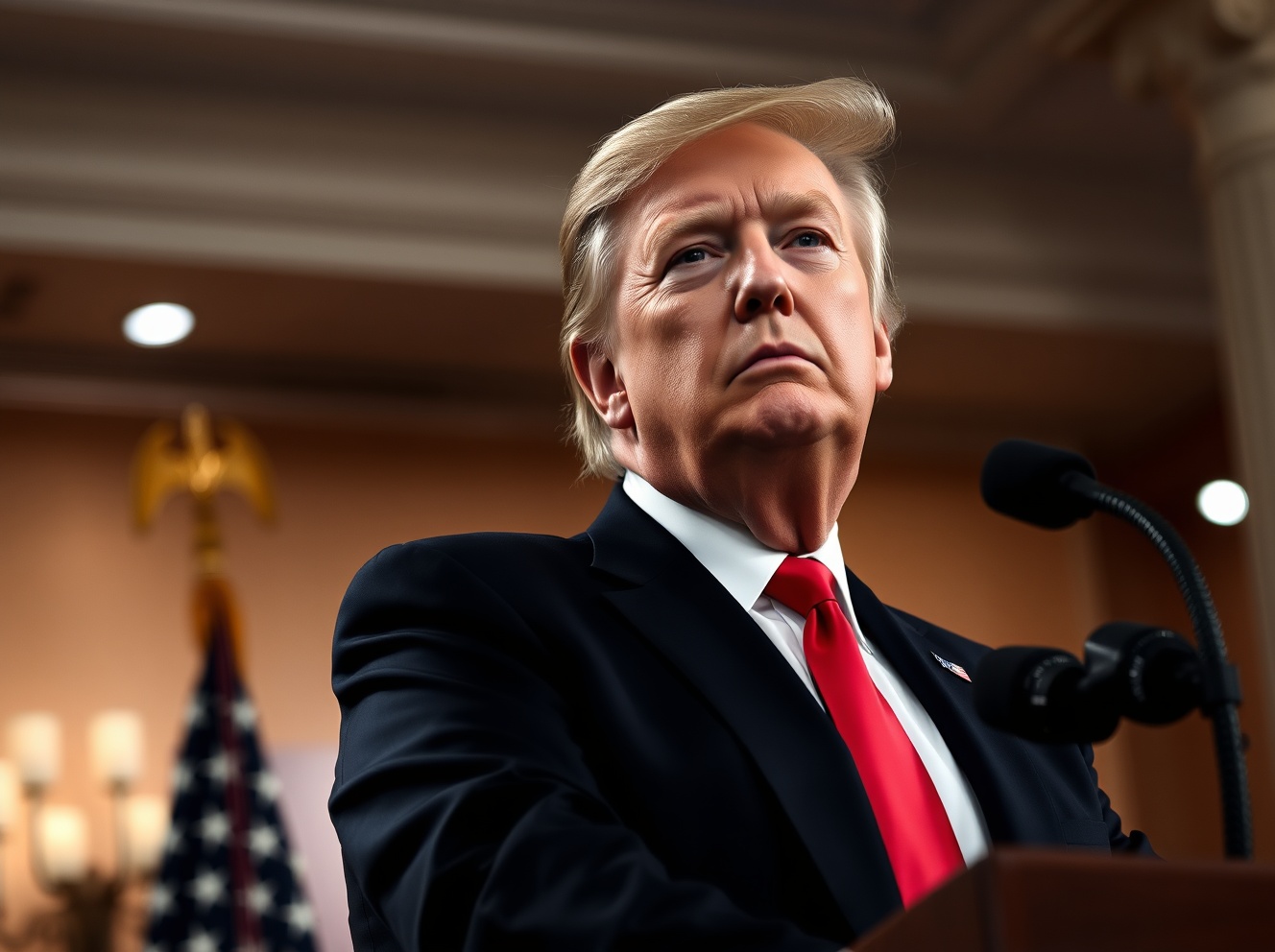
Trump Oil Prices Stance: A Calculated Gamble for Global Peace and Security
In a significant statement addressing global energy markets, former U.S. President Donald Trump framed rising oil prices as a necessary, temporary cost for achieving long-term peace and security, specifically regarding the Iranian nuclear threat. This perspective, reported by Walter Bloomberg, immediately sparked intense debate among economists, energy analysts, and foreign policy experts. Consequently, the remarks highlight the perennial tension between immediate economic pressures and strategic geopolitical objectives. This analysis delves into the context, potential impacts, and expert reactions to this notable position on energy security.
Trump Oil Prices Commentary: Context and Immediate Reaction
President Trump’s comments emerged during a period of heightened geopolitical friction. Specifically, he characterized a temporary surge in oil prices as “a small price to pay” for the security of the United States and the global community. Furthermore, he projected that prices would decline rapidly once the perceived nuclear threat from Iran was neutralized. Additionally, he labeled those who disagree with this calculus as “foolish,” employing his characteristic direct rhetoric. This stance directly ties energy economics to national security policy, a linkage with profound implications.
Historically, oil markets exhibit extreme sensitivity to Middle Eastern stability. For instance, events like the 1973 oil embargo, the 1990 Gulf War, and the 2019 attacks on Saudi Aramco facilities triggered immediate price volatility. Therefore, Trump’s argument rests on a familiar precedent: security risks command an economic premium. However, experts quickly noted the complexity of this relationship. Meanwhile, global benchmark Brent crude and U.S. West Texas Intermediate (WTI) often swing based on regional tensions, refinery outputs, and OPEC+ decisions.
The Geopolitical Backdrop: Iran and Global Energy Flows
The core of Trump’s statement centers on Iran. The country holds the world’s fourth-largest oil reserves and a strategic position along the Strait of Hormuz, a chokepoint for roughly 20% of global oil trade. Any conflict or major sanctions enforcement disrupts these flows. During the Trump administration’s “maximum pressure” campaign, Iranian oil exports plummeted, but prices saw mixed effects due to increased U.S. shale production and Saudi output. A renewed focus on the Iranian nuclear program inevitably reintroduces this market uncertainty.
Energy analysts point to a critical factor: the global market’s current spare capacity. According to the International Energy Agency (IEA), effective spare capacity—primarily held by Saudi Arabia and the UAE—acts as a buffer. However, a simultaneous disruption from Iran and another major producer could strain this system. Consequently, Trump’s prediction of a quick price fall assumes a swift, decisive resolution without prolonged conflict or cascading regional instability, a scenario some strategists view as optimistic.
Economic Impacts and Consumer Realities
Labeling higher oil prices as “small” contrasts sharply with the lived experience of consumers and businesses. Transportation, manufacturing, and agriculture sectors feel immediate cost pressures. The U.S. Energy Information Administration (EIA) consistently tracks the correlation between crude prices and prices at the pump. For example, a $10 per barrel increase in crude typically translates to a roughly $0.25 per gallon increase in gasoline, impacting household budgets and inflation metrics.
The following table outlines recent historical correlations between geopolitical events and oil price movements:
| Event | Approximate Price Impact | Duration of Peak Effect |
|---|---|---|
| 2019 Attack on Saudi Aramco | +15% (Brent Crude) | ~2 Weeks |
| 2022 Russia-Ukraine War Onset | +30% (Brent Crude) | ~3 Months |
| 2015 Iran Nuclear Deal Announcement | -5% (Brent Crude) | ~1 Week |
Therefore, the term “temporary” becomes a key variable. A short, sharp price spike may be absorbable. Conversely, a prolonged period of elevated prices can alter consumer behavior, shift industrial planning, and influence central bank policies. Trump’s argument implicitly weighs these economic costs against the perceived existential cost of a nuclear-armed Iran.
Expert Analysis and Market Psychology
Reactions from financial and policy circles were mixed. Some commodity strategists acknowledged the logic of a security premium. “Markets routinely price in geopolitical risk,” noted an analyst from Rapidan Energy Group. “The debate isn’t whether the risk exists, but how to quantify it and how long the premium will last.” Other experts expressed concern that normalizing higher prices as a policy tool could reduce incentives for energy diversification and efficiency gains.
Market psychology plays a crucial role. Traders react not just to events, but to anticipated actions and rhetoric from major powers. A firm U.S. stance can sometimes calm markets by projecting control, or it can inflame them by raising the specter of conflict. The ultimate impact on oil prices depends on a complex interplay of:
- Supply Chain Resilience: Current inventory levels and logistics flexibility.
- Alternative Sources: Ability of other producers to increase output.
- Demand Elasticity: How much consumers and businesses cut back usage as prices rise.
- Financial Markets: Speculative positioning in futures contracts.
The Long-Term Security Calculus
Beyond immediate prices, Trump’s statement touches on a foundational foreign policy debate: the cost of prevention versus the cost of response. Proponents of a hardline stance argue that accepting higher oil prices now is far cheaper than confronting a nuclear-armed Iran later, which could involve catastrophic costs, military conflict, and a regional arms race. This perspective prioritizes long-term strategic deterrence over short-term economic comfort.
Critics, however, contend that this approach oversimplifies a nuanced challenge. They argue that sustained economic pressure via high oil prices can itself be destabilizing, potentially causing global recessions that fuel broader international instability. Furthermore, they emphasize diplomatic and multilateral avenues for non-proliferation. The path forward likely involves a delicate balance, where energy market stability and non-proliferation goals are managed in tandem, not as a trade-off.
Conclusion
Former President Trump’s framing of Trump oil prices as a justified expense for peace encapsulates a pivotal tension in global affairs. It elevates national security to a primary determinant of energy policy. While the immediate economic pain of higher prices is real and widespread, the argument forces a consideration of much larger, albeit less certain, future risks. Ultimately, the validity of this calculus hinges on the duration of the price increase, the effectiveness of the security outcome, and the global economy’s capacity to adapt. The debate over the true price of peace, measured at the pump and in geopolitical stability, remains one of the most consequential of our time.
FAQs
Q1: What did President Trump specifically say about oil prices and security?
According to the report, Trump stated that a temporary rise in oil prices is “a small price to pay” for U.S. and global security, adding that prices would fall quickly once Iran’s nuclear threat is addressed.
Q2: How do oil markets typically react to Middle East tensions?
Historically, markets price in a “risk premium” during periods of instability, causing prices to rise. The magnitude and duration depend on the perceived threat to actual supply flows from key producers like Iran or Saudi Arabia.
Q3: What is the Strait of Hormuz, and why is it important?
The Strait of Hormuz is a narrow waterway between Oman and Iran. It is a critical chokepoint through which about 20% of the world’s oil passes daily, making its security paramount to global energy markets.
Q4: Could other countries offset a loss of Iranian oil?
Major producers with spare capacity, notably Saudi Arabia and the United Arab Emirates, could potentially increase output to offset some disruptions. However, the global system’s total spare capacity is limited, and a major conflict could overwhelm it.
Q5: How do higher oil prices affect the average American consumer?
Higher crude oil prices typically lead to increased costs for gasoline, diesel, and heating oil. This raises transportation and manufacturing costs, which can contribute to broader inflation and reduce household disposable income.
This post Trump Oil Prices Stance: A Calculated Gamble for Global Peace and Security first appeared on BitcoinWorld.


You May Also Like

GBP/USD: Retail data underpins modest upside – Scotiabank
Trump insider admits 90% of White House spokespeople 'don't believe what they're saying'




