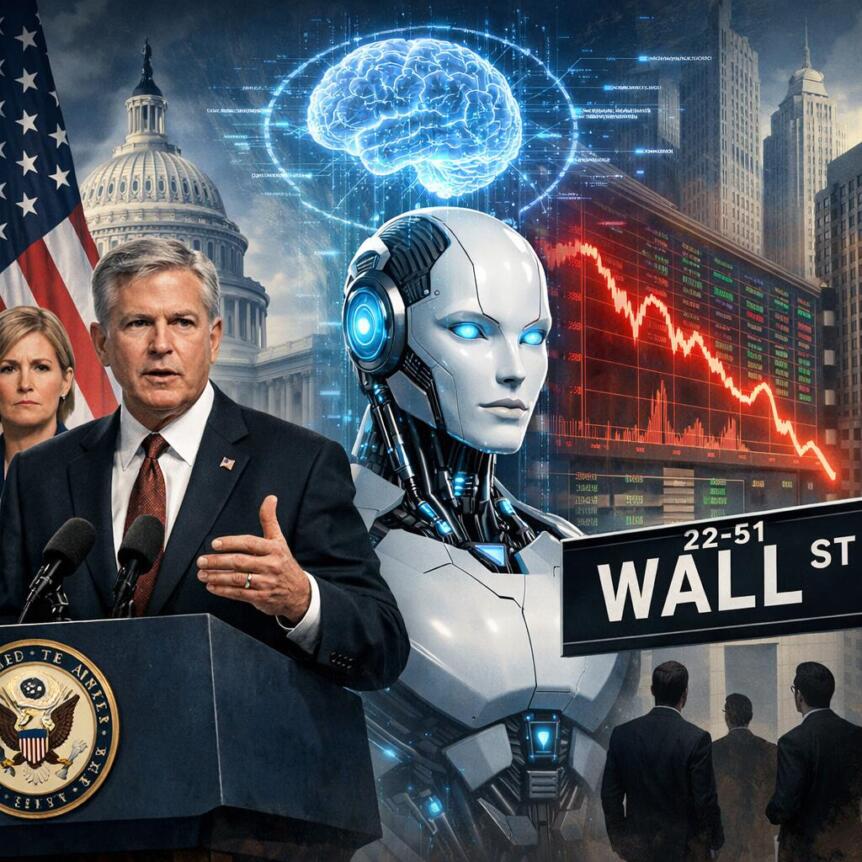
The post Nasdaq asks SEC to approve tokenized stock trading on its exchange appeared on BitcoinEthereumNews.com. Nasdaq is asking the U.S. Securities and Exchange Commission to allow fully regulated trading of tokenized stocks directly on its exchange, according to a request filed on Monday, that outlines a plan that could embed blockchain inside the core of American equity markets as part of the actual trading infrastructure. If approved, this would be the first time crypto technology directly powers the buying and selling of real, regulated stocks in the U.S. The request includes a proposed rule change that would officially redefine what counts as a “security.” Nasdaq wants the SEC to approve this change so that tokenized shares, digital replicas of real stocks, can be treated the same way as traditional securities. But before anything happens, the SEC must open the plan up for public comment and then make a final ruling. Nasdaq outlines how tokenized stocks would be traded Nasdaq’s filing details exactly how these tokenized assets would work. First, they would be clearly labeled so there’s no confusion for any party involved in clearing and settlement. The Depository Trust Company, which handles that part of the process, would be responsible for executing those trades. These assets wouldn’t be treated like second-class stocks. Nasdaq made it clear that once listed, a tokenized share would have the same execution priority, shareholder rights, and documentation standards as the original security it represents. This isn’t a minor tweak. Nasdaq’s proposal goes into the heart of how the market works: how stocks are created, how they’re traded, and how they settle. That’s a direct shot at Wall Street’s legacy infrastructure, which still relies on slow batch processing and after-hours reconciliation. Nasdaq also flagged a problem that’s been brewing: companies aren’t in control when their shares are tokenized by outsiders. “Tokenizing securities should not occur in a manner that deprives issuers… The post Nasdaq asks SEC to approve tokenized stock trading on its exchange appeared on BitcoinEthereumNews.com. Nasdaq is asking the U.S. Securities and Exchange Commission to allow fully regulated trading of tokenized stocks directly on its exchange, according to a request filed on Monday, that outlines a plan that could embed blockchain inside the core of American equity markets as part of the actual trading infrastructure. If approved, this would be the first time crypto technology directly powers the buying and selling of real, regulated stocks in the U.S. The request includes a proposed rule change that would officially redefine what counts as a “security.” Nasdaq wants the SEC to approve this change so that tokenized shares, digital replicas of real stocks, can be treated the same way as traditional securities. But before anything happens, the SEC must open the plan up for public comment and then make a final ruling. Nasdaq outlines how tokenized stocks would be traded Nasdaq’s filing details exactly how these tokenized assets would work. First, they would be clearly labeled so there’s no confusion for any party involved in clearing and settlement. The Depository Trust Company, which handles that part of the process, would be responsible for executing those trades. These assets wouldn’t be treated like second-class stocks. Nasdaq made it clear that once listed, a tokenized share would have the same execution priority, shareholder rights, and documentation standards as the original security it represents. This isn’t a minor tweak. Nasdaq’s proposal goes into the heart of how the market works: how stocks are created, how they’re traded, and how they settle. That’s a direct shot at Wall Street’s legacy infrastructure, which still relies on slow batch processing and after-hours reconciliation. Nasdaq also flagged a problem that’s been brewing: companies aren’t in control when their shares are tokenized by outsiders. “Tokenizing securities should not occur in a manner that deprives issuers…

Nasdaq asks SEC to approve tokenized stock trading on its exchange

Nasdaq is asking the U.S. Securities and Exchange Commission to allow fully regulated trading of tokenized stocks directly on its exchange, according to a request filed on Monday, that outlines a plan that could embed blockchain inside the core of American equity markets as part of the actual trading infrastructure.

If approved, this would be the first time crypto technology directly powers the buying and selling of real, regulated stocks in the U.S.

The request includes a proposed rule change that would officially redefine what counts as a “security.” Nasdaq wants the SEC to approve this change so that tokenized shares, digital replicas of real stocks, can be treated the same way as traditional securities.

But before anything happens, the SEC must open the plan up for public comment and then make a final ruling.

Nasdaq outlines how tokenized stocks would be traded

Nasdaq’s filing details exactly how these tokenized assets would work. First, they would be clearly labeled so there’s no confusion for any party involved in clearing and settlement. The Depository Trust Company, which handles that part of the process, would be responsible for executing those trades.

These assets wouldn’t be treated like second-class stocks. Nasdaq made it clear that once listed, a tokenized share would have the same execution priority, shareholder rights, and documentation standards as the original security it represents.

This isn’t a minor tweak. Nasdaq’s proposal goes into the heart of how the market works: how stocks are created, how they’re traded, and how they settle. That’s a direct shot at Wall Street’s legacy infrastructure, which still relies on slow batch processing and after-hours reconciliation.

Nasdaq also flagged a problem that’s been brewing: companies aren’t in control when their shares are tokenized by outsiders. “Tokenizing securities should not occur in a manner that deprives issuers of their ability to determine where and how their shares trade,” Nasdaq wrote.

And they admitted that under current rules, the exchange can’t give those issuers the power to approve or reject tokenization. That’s already created friction, like when Robinhood started offering OpenAI tokenized shares.

OpenAI quickly said they never signed off on it, and that those tokens didn’t count as real equity.

SEC leadership, Wall Street, and legacy firms react

This all comes asPaul Atkins, the new SEC chair under President Donald Trump, is pushing the agency to write new rules around crypto assets and clarify when they’re considered securities.

SEC Commissioner Hester Peirce said last month, “We are eager to work with tokenization companies,” but warned that they must be fully transparent about what kind of asset is being tokenized.

Right now, tokenized stocks are digital representations. They’re not the actual stock certificates. But they’ve been pitched as ways to give foreign investors access to U.S. equities, support fractional investing, and offer 24/7 trading.

Unlike traditional markets that close at 4 p.m. and take holidays off, tokenized shares could, in theory, trade around the clock. That’s because they settle almost instantly and cut out middlemen like brokers and clearinghouses.

Big asset managers like BlackRock, Franklin Templeton, and KKR have already started experimenting with tokenization, but they’ve been playing it safe. They’re still going through broker-dealers and haven’t gone direct-to-exchange.

Nasdaq wants to skip the intermediaries. This filing shows they’re trying to bring crypto-native architecture into Wall Street’s official systems.

But skepticism remains. JPMorgan said in a recent note that the industry hasn’t fully embraced tokenized assets yet. Most of the interest is still coming from crypto-first firms, not mainstream banks

Want your project in front of crypto’s top minds? Feature it in our next industry report, where data meets impact.

Source: https://www.cryptopolitan.com/nasdaq-sec-approve-tokenized-stock-trading/

Market Opportunity
Threshold Logo
Threshold Price(T)
$0.010144
$0.010144$0.010144
-0.11%
USD
Threshold (T) Live Price Chart
Disclaimer: The articles reposted on this site are sourced from public platforms and are provided for informational purposes only. They do not necessarily reflect the views of MEXC. All rights remain with the original authors. If you believe any content infringes on third-party rights, please contact service@support.mexc.com for removal. MEXC makes no guarantees regarding the accuracy, completeness, or timeliness of the content and is not responsible for any actions taken based on the information provided. The content does not constitute financial, legal, or other professional advice, nor should it be considered a recommendation or endorsement by MEXC.

You May Also Like

Ripple (XRP) Pushes Upwards While One New Crypto Explodes in Popularity

Ripple (XRP) Pushes Upwards While One New Crypto Explodes in Popularity

The post Ripple (XRP) Pushes Upwards While One New Crypto Explodes in Popularity appeared on BitcoinEthereumNews.com. As Ripple (XRP) is slowly recovering through
Share
BitcoinEthereumNews2026/01/18 02:41
Polygon Tops RWA Rankings With $1.1B in Tokenized Assets

Polygon Tops RWA Rankings With $1.1B in Tokenized Assets

The post Polygon Tops RWA Rankings With $1.1B in Tokenized Assets appeared on BitcoinEthereumNews.com. Key Notes A new report from Dune and RWA.xyz highlights Polygon’s role in the growing RWA sector. Polygon PoS currently holds $1.13 billion in RWA Total Value Locked (TVL) across 269 assets. The network holds a 62% market share of tokenized global bonds, driven by European money market funds. The Polygon POL $0.25 24h volatility: 1.4% Market cap: $2.64 B Vol. 24h: $106.17 M network is securing a significant position in the rapidly growing tokenization space, now holding over $1.13 billion in total value locked (TVL) from Real World Assets (RWAs). This development comes as the network continues to evolve, recently deploying its major “Rio” upgrade on the Amoy testnet to enhance future scaling capabilities. This information comes from a new joint report on the state of the RWA market published on Sept. 17 by blockchain analytics firm Dune and data platform RWA.xyz. The focus on RWAs is intensifying across the industry, coinciding with events like the ongoing Real-World Asset Summit in New York. Sandeep Nailwal, CEO of the Polygon Foundation, highlighted the findings via a post on X, noting that the TVL is spread across 269 assets and 2,900 holders on the Polygon PoS chain. The Dune and https://t.co/W6WSFlHoQF report on RWA is out and it shows that RWA is happening on Polygon. Here are a few highlights: – Leading in Global Bonds: Polygon holds 62% share of tokenized global bonds (driven by Spiko’s euro MMF and Cashlink euro issues) – Spiko U.S.… — Sandeep | CEO, Polygon Foundation (※,※) (@sandeepnailwal) September 17, 2025 Key Trends From the 2025 RWA Report The joint publication, titled “RWA REPORT 2025,” offers a comprehensive look into the tokenized asset landscape, which it states has grown 224% since the start of 2024. The report identifies several key trends driving this expansion. According to…
Share
BitcoinEthereumNews2025/09/18 00:40
Secure the $0.001 Price Before the BlockDAG Presale Ends in 10 Days: Is This the Best Crypto to Buy Today?

Secure the $0.001 Price Before the BlockDAG Presale Ends in 10 Days: Is This the Best Crypto to Buy Today?

Secure your position during the final 12 days of the BlockDAG presale at $0.001 before market forces take over. Learn why this Layer-1 project is seeing massive
Share
CoinLive2026/01/18 02:00