ALERT – The NPM Hack Is a Wake-Up Call for Crypto Users

The breach hit core JavaScript libraries like chalk, strip-ansi, and color-convert—packages so foundational they’re practically digital plumbing. Together, these libraries are downloaded billions of times every single week, quietly running inside everything from web apps to developer tools. Most devs never install them directly, but they lurk deep in dependency trees. That’s why this attack is systemic.
What Happened
According to multiple security reports, attackers compromised the NPM account of a well-known developer, slipped malicious code into these libraries, and shipped them straight into the global software bloodstream. The payload? A crypto-clipper—malware that swaps out wallet addresses mid-transaction, silently diverting funds to the attacker.
If you’ve ever copied a wallet address, pasted it into a field, and hit “Send,” this is your nightmare scenario. The code hijacks the destination address, and unless you manually double-check on a hardware wallet, your funds are gone.
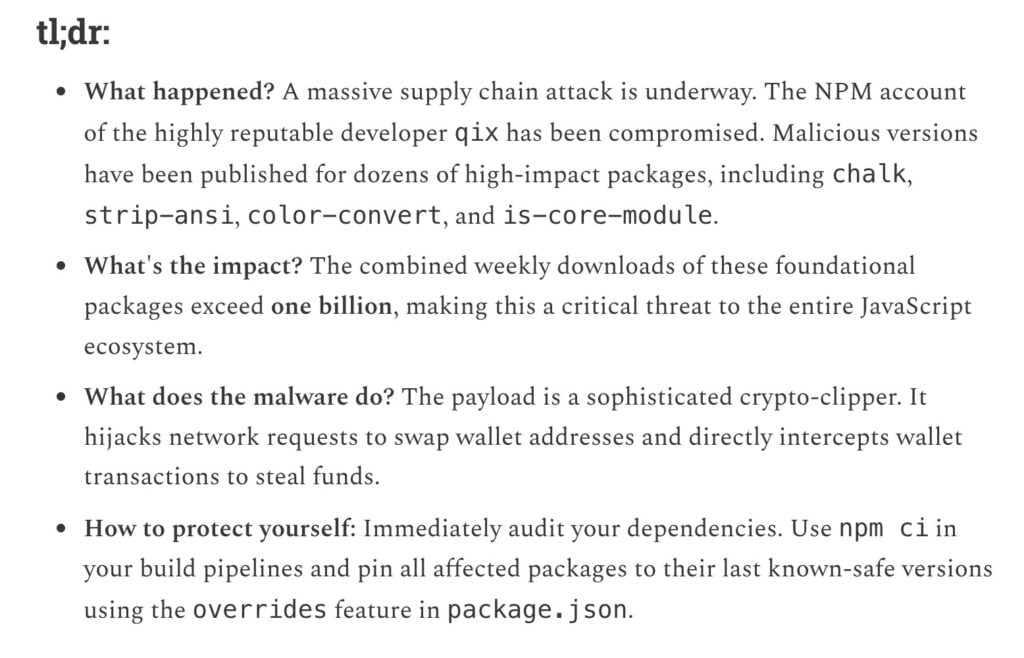
The TLDR from security researchers, source: Observations
Why This Matters
- For crypto users: If you rely on software wallets, you’re exposed. Hardware wallets that force you to physically confirm every transaction remain the gold standard for security.
- For developers: The attack didn’t just compromise apps built by careless coders. It poisoned libraries so fundamental that even the most diligent devs are affected. You don’t have to install these packages directly—your dependencies already did it for you.
- For the open-source ecosystem: NPM is basically the app store of the JavaScript world. It’s also a single point of failure. A lone compromised developer account just weaponized code that billions of people indirectly trust.
The Unanswered Questions
It’s still unclear whether the malware goes further—some researchers speculate it might also attempt to steal seed phrases directly. If true, this would elevate the hack from “clipper attack” to “full-on wallet drain.”
It’s another brutal reminder that our entire digital infrastructure rests on volunteer-maintained open-source codebases—often written by one person in their free time. Chalk isn’t glamorous, but it’s everywhere. When attackers compromise something this fundamental, the fallout ripples across the entire internet.
Crypto just happens to be the juiciest target because it’s instant money, no chargebacks, no middleman. But make no mistake: the real crisis is that the global software supply chain is held together with duct tape and trust.
Send transactions with caution until this is resolved.


You May Also Like

XRP adjacent Flare proposes protocol-level MEV capture and 40% inflation cut

Quantum-Safe Bitcoin Proposal Offers Emergency Protection Without Network Upgrade