

US Dollar Soars: Index Climbs Above 99.00 as Middle East Conflict Intensifies
BitcoinWorld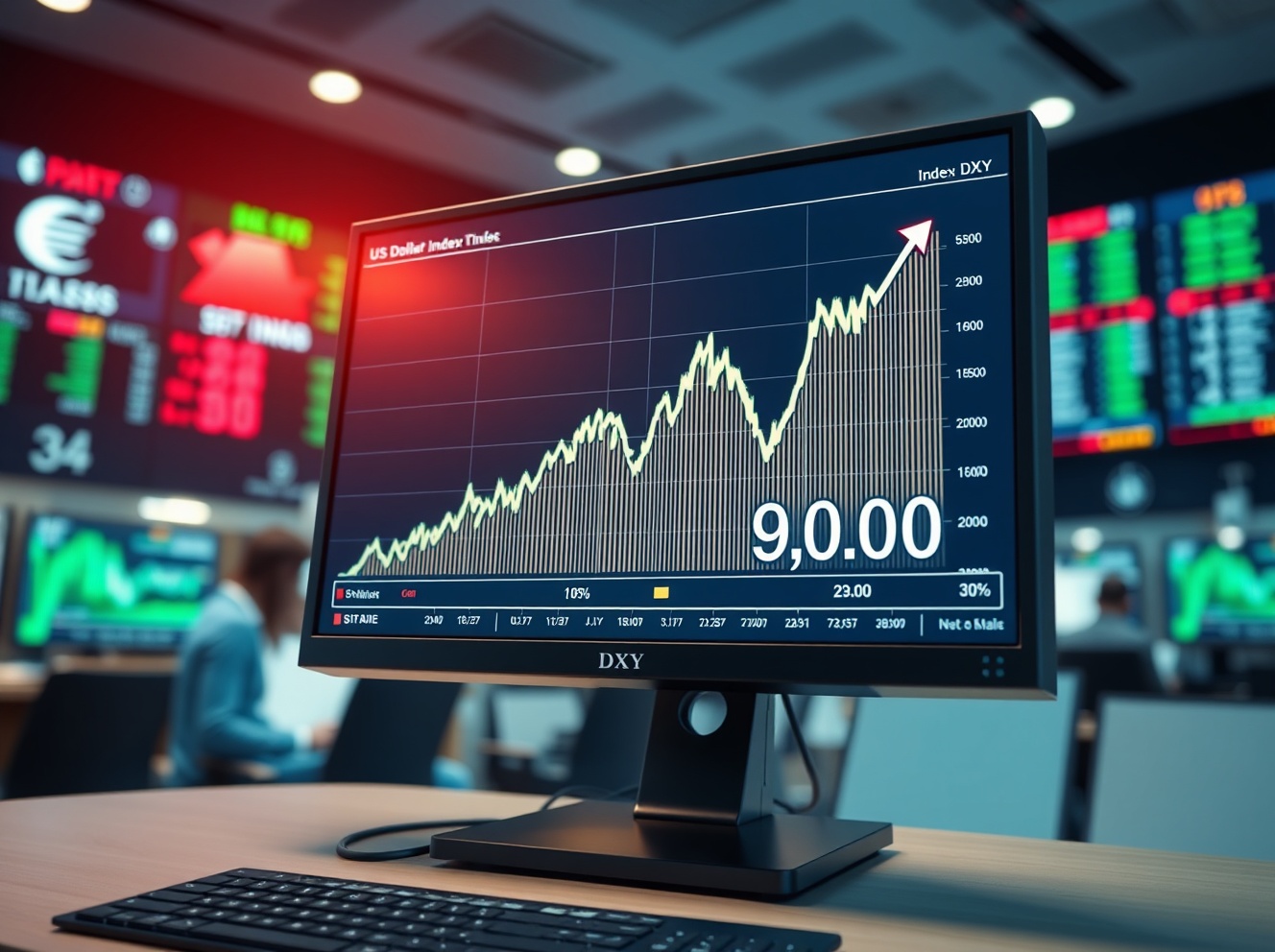
US Dollar Soars: Index Climbs Above 99.00 as Middle East Conflict Intensifies
In global financial markets today, the US Dollar Index (DXY) has surged decisively above the 99.00 threshold, a significant move analysts directly attribute to escalating geopolitical tensions in the Middle East. This development, observed in March 2025, underscores the dollar’s enduring role as the world’s premier safe-haven currency during periods of international uncertainty. Market participants are swiftly adjusting their portfolios, seeking refuge in dollar-denominated assets as the conflict shows no immediate signs of de-escalation. Consequently, this flight to safety is exerting pronounced pressure on other major currencies and reshaping near-term forex forecasts.
US Dollar Index Breakout: Analyzing the 99.00 Milestone
The DXY, which measures the greenback’s value against a basket of six major world currencies, breached the psychologically important 99.00 level in early trading. This marks its highest point in several months. Market technicians highlight that this breakout follows a period of consolidation. Furthermore, trading volumes have spiked significantly, confirming the strength behind the move. The euro, Japanese yen, and British pound have all registered notable declines against the resurgent dollar. Typically, such a coordinated shift signals a broad-based risk-off sentiment gripping the market.
Historical data reveals a strong correlation between geopolitical crises and dollar strength. For instance, similar patterns emerged during the initial phases of the Russia-Ukraine conflict in 2022. The current rally, however, appears more sustained in its early stages. Analysts at major financial institutions are now scrutinizing key resistance levels. A sustained hold above 99.00 could pave the way for a test of the 100.00 handle, a level not seen in over a year.
Expert Insight: The Mechanics of Safe-Haven Flows
Dr. Anya Sharma, Chief Strategist at Global Macro Advisors, explains the underlying dynamics. “During geopolitical shocks, capital seeks stability and liquidity above all else,” she states. “The US Treasury market, backed by the world’s largest economy, represents the deepest and most liquid pool of safe assets. Therefore, international investors convert other currencies into dollars to purchase these Treasuries. This process creates immediate and powerful upward pressure on the dollar’s exchange rate.” This expert analysis aligns with observable flows into US government bond funds this week.
Middle East Conflict: The Geopolitical Catalyst
The immediate trigger for this market movement is a significant escalation in hostilities across several flashpoints in the Middle East. Reports confirm heightened military activity, disrupting key regional stability. Crucially, these developments have reignited concerns over global energy supply chains. Although oil prices have also risen, the dollar’s gain is notably outpacing the crude rally. This indicates that currency traders are prioritizing safety over commodity-driven inflation bets.
The conflict’s complexity involves multiple state and non-state actors. Diplomatic channels remain open but have so far failed to produce a ceasefire. The uncertainty directly impacts several critical factors for currency valuation:
- Global Growth Outlook: Prolonged instability threatens to dampen worldwide economic confidence.
- Trade Routes: Vital shipping lanes face potential disruption, affecting global commerce.
- Central Bank Policy: The Federal Reserve may reconsider the pace of any planned monetary easing.
Consequently, the market is pricing in a prolonged period of risk aversion. This sentiment strongly favors the US dollar’s relative strength.
Global Currency Markets React to Dollar Dominance
The dollar’s ascent creates immediate winners and losers across the foreign exchange landscape. Emerging market currencies are particularly vulnerable. Many developing nations hold debt denominated in US dollars. A stronger dollar makes servicing this debt more expensive, straining national budgets. Meanwhile, the euro has fallen to multi-week lows against the greenback. The European Union’s proximity to the conflict and its heavy reliance on imported energy make the eurozone economy especially sensitive to these shocks.
The Japanese yen, another traditional safe-haven, has paradoxically weakened. Analysts attribute this to the Bank of Japan’s persistently accommodative monetary policy stance. This policy divergence with the potentially more hawkish Fed is driving the USD/JPY pair higher. The table below summarizes key currency pair movements following the DXY breakout:
| Currency Pair | Movement | Primary Driver |
|---|---|---|
| EUR/USD | Down 1.2% | Regional risk exposure & growth concerns |
| USD/JPY | Up 1.5% | Monetary policy divergence |
| GBP/USD | Down 0.8% | Broad dollar strength & risk-off sentiment |
| USD/CHF | Up 0.7% | Moderate safe-haven flow into Swiss Franc |
Impact on Global Trade and Corporate Earnings
A robust dollar presents a double-edged sword for multinational corporations. American companies with extensive overseas earnings face headwinds. When foreign profits are converted back into dollars, they translate into fewer US currency units. Conversely, importers in the United States benefit from greater purchasing power. For global trade, a strong dollar can act as a tightening mechanism. It effectively makes US goods more expensive for foreign buyers, potentially dampening export volumes.
Historical Context and Forward-Looking Analysis
Examining past crises provides a framework for potential outcomes. The dollar rally during the 2014-2016 oil price collapse and the early 2020 pandemic panic shared similar characteristics. Initially, a sharp “flight to quality” propelled the DXY. Subsequently, the pace of gains moderated as central bank interventions and fiscal stimulus measures were introduced. The current situation lacks a coordinated global policy response, suggesting dollar strength may persist in the near term.
Market participants are now closely monitoring several indicators:
- Federal Reserve Communications: Any shift in tone regarding interest rates.
- Geopolitical Developments: Signs of diplomatic progress or further escalation.
- Commodity Prices: Stability or volatility in oil and gold markets.
- Capital Flow Direct evidence of funds moving into US assets.
Risk management models across hedge funds and asset managers are being recalibrated. The new assumption incorporates a higher probability of sustained geopolitical risk and its market implications.
Conclusion
The US Dollar’s decisive break above 99.00 on the DXY serves as a clear barometer of market anxiety. Escalating conflict in the Middle East has triggered a classic flight to safety, channeling global capital toward the world’s primary reserve currency. This movement reverberates through all major currency pairs, impacts corporate strategies, and alters the global financial landscape. While the immediate trajectory points toward continued dollar strength, the ultimate path will depend heavily on geopolitical developments and the corresponding policy responses from the world’s major central banks. The dollar’s role as the paramount safe-haven asset, however, remains firmly intact.
FAQs
Q1: What does the US Dollar Index (DXY) measure?
The DXY measures the value of the United States dollar relative to a basket of six major world currencies: the euro, Japanese yen, British pound, Canadian dollar, Swedish krona, and Swiss franc. A reading above 99.00 indicates general dollar strength against this basket.
Q2: Why does the US dollar often strengthen during geopolitical conflicts?
The US dollar is considered the world’s premier safe-haven currency. During crises, investors seek the stability and liquidity of US financial markets, particularly US Treasury bonds. This increased demand for dollar-denominated assets pushes its value higher.
Q3: How does a stronger US dollar affect other countries?
A stronger dollar can strain economies with dollar-denominated debt, make their exports less competitive, and increase the local cost of imported goods (like oil). It can also trigger capital outflows from emerging markets as investors seek safer US returns.
Q4: Could this conflict affect the Federal Reserve’s interest rate decisions?
Potentially, yes. Increased geopolitical risk can cloud the economic outlook. If the conflict threatens to significantly slow global growth or spike inflation via energy prices, the Fed may delay or alter its planned monetary policy path, impacting the dollar’s future trajectory.
Q5: Are there any currencies that might gain alongside the US dollar in this environment?
Other traditional safe-haven currencies, like the Swiss Franc and, to a lesser extent, the Japanese yen, often see inflows during risk-off periods. However, their central banks’ policies can suppress their gains relative to the dollar, as seen currently with the yen.
This post US Dollar Soars: Index Climbs Above 99.00 as Middle East Conflict Intensifies first appeared on BitcoinWorld.


You May Also Like

Nvidia (NVDA) Earnings, Treasury Yields, and Retail Reports Highlight This Week’s Market Focus
Jump Crypto Quietly Launches Firedancer on Solana Mainnet




