Spot Ethereum ETF Inflows Surge: US Funds See Third Straight Day of Robust Demand
BitcoinWorld
Spot Ethereum ETF Inflows Surge: US Funds See Third Straight Day of Robust Demand
In a significant development for digital asset markets, U.S. spot Ethereum exchange-traded funds (ETFs) recorded substantial net inflows for a third consecutive trading day on March 12, 2025. According to verified data from industry tracker Trader T, these investment vehicles attracted a combined $72.45 million, equivalent to approximately 107.9 billion South Korean won. This sustained positive momentum provides a clear signal of growing institutional and retail investor confidence in accessing Ethereum through regulated, traditional finance pathways. The consistent inflows arrive amid a broader reassessment of crypto asset allocation within diversified portfolios.
Spot Ethereum ETF Inflows Demonstrate Market Resilience
The March 12 data reveals a detailed breakdown of contributions from major fund issuers. BlackRock’s iShares Ethereum Trust (ETHA) led the pack among other products, securing $18.77 million in new capital. Furthermore, Fidelity’s Ethereum Fund (FETH) demonstrated particularly strong demand, capturing the lion’s share with an inflow of $52.02 million. Smaller but notable contributions came from Bitwise Ethereum Fund (ETHW) with $890,000 and the Franklin Ethereum ETF (EZET) with $780,000. This distribution highlights a competitive yet growing landscape for spot Ethereum products. Consequently, the aggregated three-day inflow total presents a compelling narrative of renewed interest.
Market analysts often interpret consecutive net inflows as a bullish indicator for the underlying asset. These ETF flows represent direct purchases of physical Ethereum, which custodians hold in secure, cold storage solutions. Unlike futures-based products, spot ETFs require actual asset acquisition, potentially creating upward price pressure on the ETH market through simple supply and demand mechanics. The current trend follows a period of consolidation for crypto ETFs, making this multi-day streak particularly noteworthy for observers tracking institutional adoption metrics.
Context and Evolution of US Crypto ETFs
The successful launch and operation of U.S. spot Ethereum ETFs mark a pivotal chapter in the integration of digital assets into mainstream finance. Regulatory approval for these products culminated a lengthy process involving the Securities and Exchange Commission (SEC), which initially expressed concerns over market manipulation and custody. The eventual green light in 2024 established a regulated framework for investors seeking exposure to Ethereum’s price movements without the technical complexities of direct ownership, such as managing private keys or using cryptocurrency exchanges.
Comparing Ethereum and Bitcoin ETF Trajectories
Industry experts frequently draw parallels between the adoption curves of Bitcoin ETFs and their Ethereum counterparts. Spot Bitcoin ETFs, which launched earlier, experienced massive initial inflows followed by periods of volatility, including episodes of significant outflows. The current steady inflow pattern for Ethereum ETFs suggests a potentially more measured and sustained uptake from a different investor base, possibly one more focused on Ethereum’s utility within decentralized finance (DeFi) and smart contract platforms. This differentiation is crucial for understanding long-term demand drivers beyond mere speculative price appreciation.
The following table contrasts key metrics between the pioneering Bitcoin ETF launches and the current Ethereum ETF activity, based on aggregated industry data from the first 90 trading days post-launch.
| Metric | Spot Bitcoin ETFs (Early Phase) | Spot Ethereum ETFs (Current Phase) |
|---|---|---|
| Average Daily Inflow (First 90 Days) | ~$250 million | ~$85 million |
| Number of Consecutive Inflow Days (Record) | 19 days | 3 days (and counting) |
| Primary Investor Type Cited by Analysts | Macro hedge funds, RIAs | Tech-focused funds, Balanced portfolios |
| Typical Market Context | Post-halving anticipation | Network upgrade anticipation |
Several factors may be contributing to the current inflow trend. Firstly, anticipation surrounding upcoming Ethereum network upgrades, often referred to as “Ethereum 2.0” or specific Ethereum Improvement Proposals (EIPs), can stimulate investment. Secondly, broader macroeconomic conditions, including interest rate expectations and inflation data, influence asset allocation decisions across all classes, including digital assets. Finally, increasing clarity from U.S. regulators regarding the classification and treatment of cryptocurrencies provides a more stable foundation for institutional investment committees.
Impact on the Broader Cryptocurrency Ecosystem
The consistent capital movement into spot Ethereum ETFs carries implications beyond simple price action. Firstly, it legitimizes Ethereum as an institutional-grade asset, potentially encouraging more traditional financial firms to develop related products and services. Secondly, the flows provide transparent, publicly-available data on investor sentiment, replacing speculation with hard numbers. This transparency can reduce information asymmetry in the market. Thirdly, the fees generated by these ETFs—typically ranging from 0.20% to 0.95% annually—create a new, sustainable revenue model for asset managers in the digital asset space, ensuring long-term product viability and competition.
From a global perspective, the success of U.S. spot Ethereum ETFs places pressure on other major financial jurisdictions to approve similar products or risk capital flight. Markets in Europe, Asia, and the Middle East are closely monitoring the asset growth and investor response. This competitive dynamic could accelerate global regulatory harmonization efforts for crypto-based financial products. Moreover, the underlying Ethereum held by these ETFs contributes to the network’s security and decentralization, as these assets are typically staked by custodians to generate yield for the funds, further integrating traditional finance with blockchain protocol mechanics.
Conclusion
The third consecutive day of net inflows for U.S. spot Ethereum ETFs, totaling $72.45 million on March 12, 2025, underscores a maturing phase for cryptocurrency investment vehicles. This activity, led by major institutions like BlackRock and Fidelity, reflects a calculated and growing demand for regulated Ethereum exposure. While the inflow streak is nascent compared to historical Bitcoin ETF runs, its consistency amid a complex market environment is a positive signal for the asset class’s integration. Monitoring these spot Ethereum ETF flows will remain essential for gauging institutional sentiment and the evolving role of digital assets within the global financial system.
FAQs
Q1: What are spot Ethereum ETFs?
Spot Ethereum ETFs are exchange-traded funds that hold physical Ethereum (ETH). They trade on traditional stock exchanges, allowing investors to gain exposure to ETH’s price movements without directly buying, storing, or managing the cryptocurrency themselves.
Q2: Why are consecutive net inflows important?
Consecutive net inflows indicate sustained buying pressure and investor confidence. For spot ETFs, inflows mean the fund issuer must purchase more of the underlying asset (Ethereum), which can directly impact market supply and demand dynamics.
Q3: How do Ethereum ETFs differ from Bitcoin ETFs?
While both are spot ETFs holding digital assets, they track different cryptocurrencies with distinct use cases. Bitcoin is often viewed as “digital gold,” a store of value. Ethereum is a programmable blockchain supporting smart contracts and decentralized applications, leading to different investor rationales for allocation.
Q4: Who are the main issuers of U.S. spot Ethereum ETFs?
Major issuers include BlackRock (ETHA), Fidelity (FETH), Bitwise (ETHW), and Franklin Templeton (EZET). Other asset managers also offer competing products, creating a diverse market for investors.
Q5: What happens to the Ethereum held by these ETFs?
The ETH is held in secure, insured custody by qualified custodians. To generate yield for the fund (and potentially lower fees for investors), a portion of this ETH is often “staked” on the Ethereum network, participating in transaction validation and earning rewards.
This post Spot Ethereum ETF Inflows Surge: US Funds See Third Straight Day of Robust Demand first appeared on BitcoinWorld.


You May Also Like
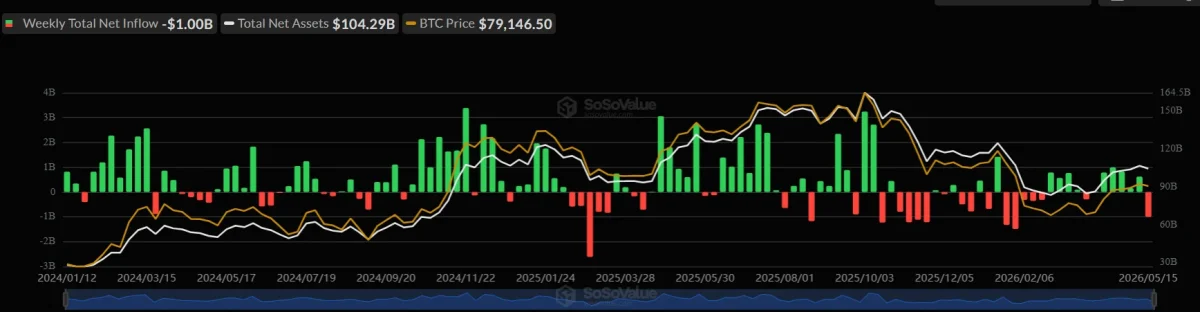
Bitcoin ETFs Bleed $1B in a Week — First Outflow in 6 Weeks

$2B Bitcoin Options Expiry Likely Spares Spot Markets