

Bitcoin (BTC) Price: BTC Surges Near $72K — Here’s What Sparked the Rally
TLDR
- Bitcoin climbed to just under $72,000 after U.S. Treasury Secretary Scott Bessent moved to calm oil market fears.
- The SEC and CFTC announced a joint regulatory framework called the “Joint Harmonization Initiative” for crypto assets.
- Bitcoin exchange reserves have fallen to their lowest level since 2019, dropping to around 2.75 million BTC.
- Long-term holders now control roughly 14.5 million BTC, with little sign of selling.
- Publicly listed companies collectively added close to 350,000 BTC in a recent stretch, pulling supply away from exchanges.
Bitcoin climbed to just below $72,000 on March 13, 2026, following a week of positive regulatory news and growing signs of a supply squeeze in the market.
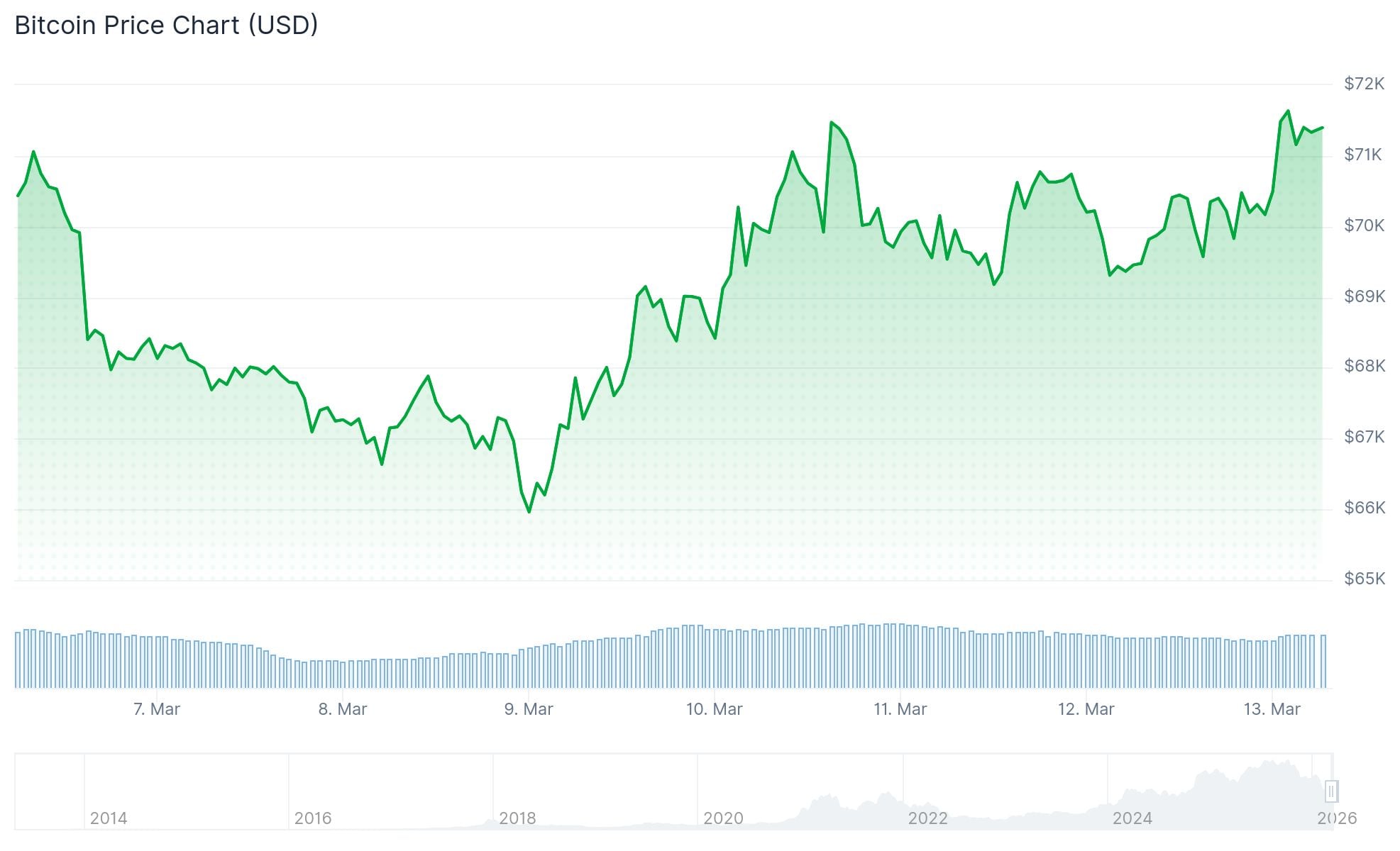 Bitcoin (BTC) Price
The move higher started mid-week when the U.S. Securities and Exchange Commission and the Commodity Futures Trading Commission announced they would work together to create a shared framework for crypto regulation. They called it the “Joint Harmonization Initiative.”
The agreement aims to create formal data-sharing protocols, streamline reporting requirements, and end separate crypto enforcement actions by the two agencies. While the deal is non-binding, it was taken as a positive sign by markets.
The announcement aligns with President Trump’s broader push to bring more regulatory clarity to the crypto industry. Both agencies have been staffed with pro-crypto leadership under the current administration.
Oil markets added some turbulence during the week. Crude prices rose nearly 10% to close to $100 per barrel on Thursday, partly tied to ongoing tensions from the U.S.-Israel conflict with Iran. That pushed equity markets lower and weighed on broader risk appetite.
Late Thursday, Treasury Secretary Scott Bessent posted on X that the U.S. would allow the purchase of Russian oil currently stranded at sea. He called the oil price rise a “short-term and temporary disruption.”
Oil pulled back about $2 per barrel after the post. Bitcoin, which had been holding around $70,000 for much of Thursday, jumped to just below $72,000 shortly after.
Bitcoin Supply on Exchanges Hits Lowest Level Since 2019
Exchange reserves across all centralized platforms fell to approximately 2.75 million BTC as of March 12, according to data from CryptoQuant. That’s the lowest level recorded since 2019.
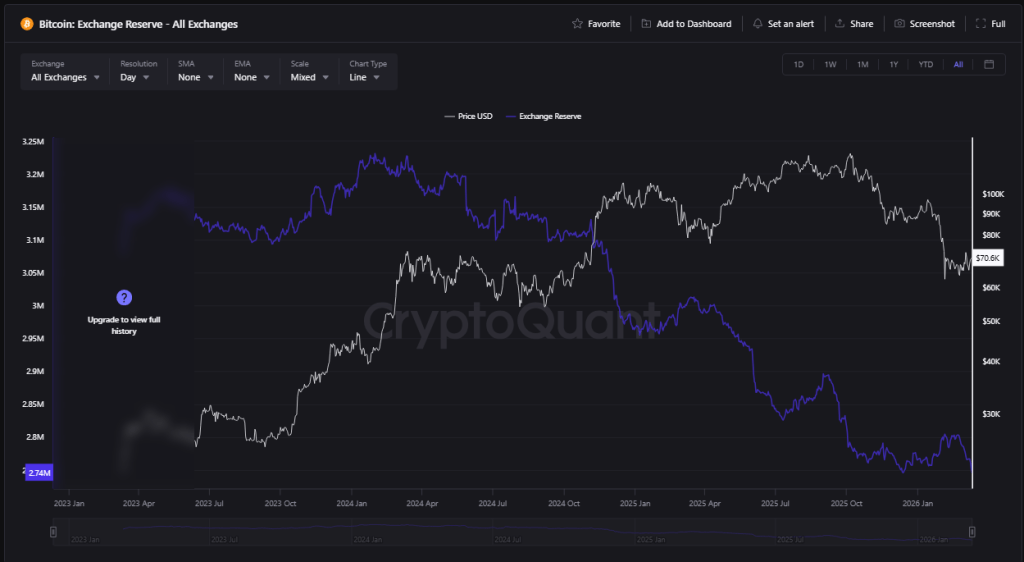 Source: CryptoQuant
Long-term holders now control around 14.5 million BTC — coins that have not moved in over five months. Retail and institutional holders moving coins into cold storage, spot Bitcoin ETFs absorbing supply, and companies building treasury positions have all contributed to the decline.
Spot ETFs pulled in close to $570 million net in a single week. On one day alone, exchange withdrawals hit 32,000 BTC.
Corporate Buyers Continue Adding Bitcoin
Strategy, formerly known as MicroStrategy, has continued buying. Publicly listed companies collectively added close to 350,000 BTC over a recent period.
With fewer coins available on exchanges, even moderate demand can move prices. Analysts have described the current dynamic as a supply squeeze.
Bitcoin spent much of February under pressure, sliding to the low $60,000s before recovering. It has since traded in a range between $67,000 and $71,000. A break above $72,000 could trigger forced buybacks from short sellers, which would add upward pressure.
Daily trading volume has stayed above $50 billion. Miner breakeven costs on electricity sit near $64,000 to $65,000.
The post Bitcoin (BTC) Price: BTC Surges Near $72K — Here’s What Sparked the Rally appeared first on CoinCentral.


You May Also Like

Public Companies Stacked 369,000 BTC in 12 Months, Signaling Deepening Institutional Adoption

The Chemistry of UV Resistance: How Titanium Dioxide Protects Against the California Sun




