

A Black man was sentenced to death for killing a white woman. His lawyer was in the Klan
Lawyers for a Black man serving life in prison in Alabama are seeking to overturn his conviction for the murder of a white woman, citing evidence his state-provided attorney was active in the Ku Klux Klan.
“Was he well positioned to represent a Black man?” one investigator asked.
“I think the answer is no.”
‘Enough questions’
Robin “Rocky” Myers, who has an intellectual disability, was convicted of stabbing to death Ludie Mae Tucker, 69, at her home in Decatur in 1991. Now 64, Myers has always claimed to be innocent.
Sentenced to death in 1994, Myers spent more than 30 years on death row. He was due to be executed using nitrogen gas before, last March, Alabama Gov. Kay Ivey commuted the sentence to life, observing that the case was “riddled with conflicting evidence from seemingly everyone involved.”
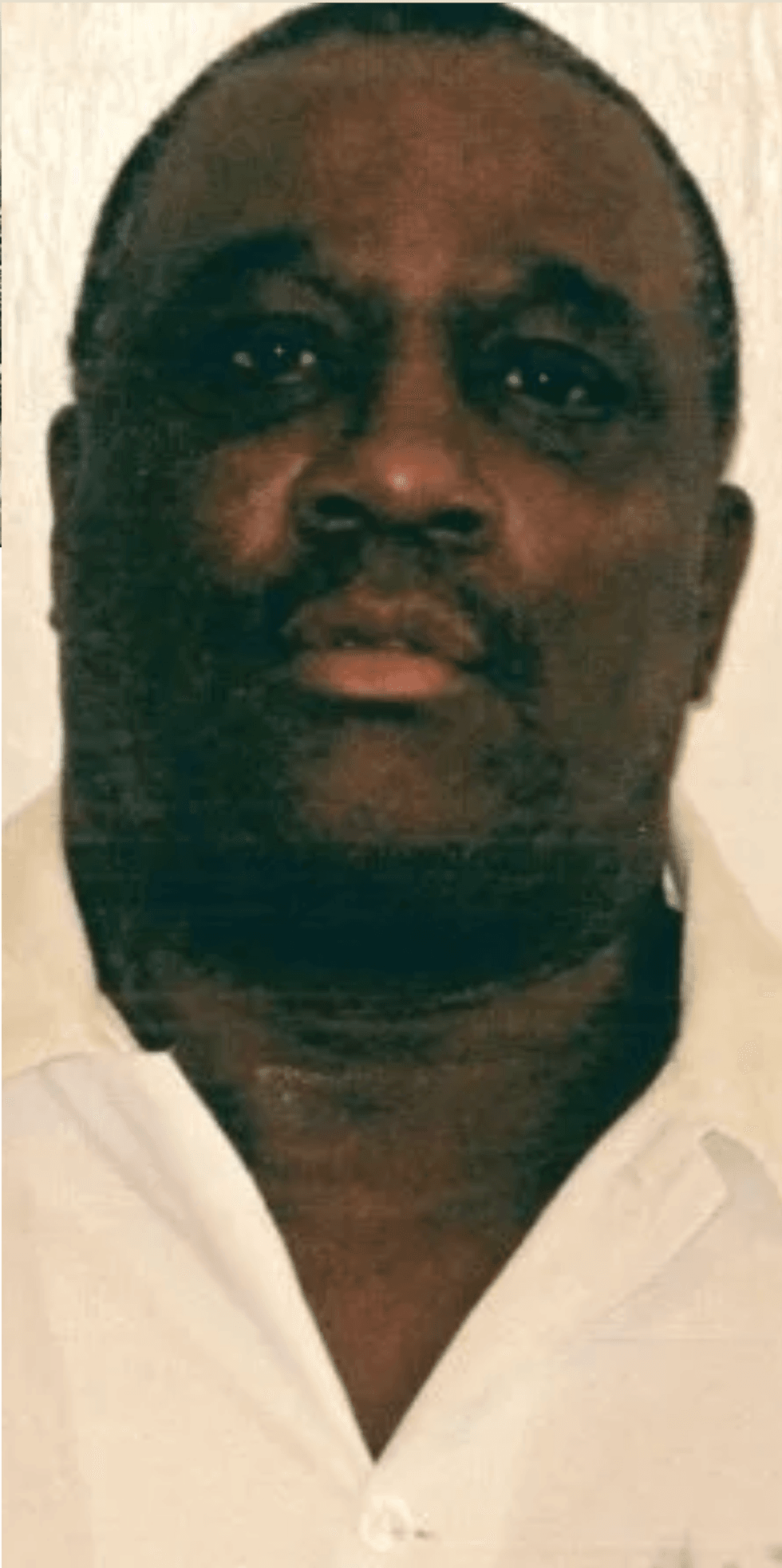 Robin Myers.
Saying she “had enough questions about Mr. Myers’ guilt that I cannot move forward with executing him,” the Republican governor also noted that the jury in Myers’ case recommended a life sentence only to be overridden by the judge, a step allowed under Alabama law until 2017.
Incredibly, it was known in 1994 that John E. Mays, the lawyer who represented Myers during his trial in Decatur, was a lawyer for United Klans of America.
Mays’ public work for the Klan included representing Imperial Wizard Robert Shelton in a civil lawsuit brought by the mother of Michael Donald, a Black teenager who was strangled and stabbed to death by three UKA members in Mobile, his body hung from a tree.
But what was not known about Mays until now — having been unearthed thanks to newspaper archive research by the legal team seeking to overturn Myers’ conviction — is that the lawyer was actively involved in the United Klans of America, giving speeches at rallies in six states and counseling parents on how to resist school segregation.
Mays even received credit as a contributor to the Klan newspaper, The Fiery Cross.
‘Exhorted Caucasians to band together’
According to a new filing, last July, Mays told investigators for Myers’ legal team Shelton asked him to write an article “about the risks of the Klan being infiltrated by the FBI.”
But the filing by Myers' legal team also cites contemporaneous reporting alleging that Mays traveled with Shelton to Lakeland, Fla. in 1977, “to teach parents who opposed desegregation how to file habeas suits on behalf of their children.”
According to a Virginia newspaper, meanwhile, Mays stood alongside Shelton at a 1977 Klan rally in Richmond, Va, and said: “You hear a lot about civil rights of n-----s and civil rights of murderers and every kind of pervert known to humanity.
“But what about the civil rights of the decent law-abiding white man or the law-abiding Black man, for that matter.”
Following Donald’s murder in Mobile, a Tennessee newspaper reported that at a 1981 Klan rally, Mays “exhorted Caucasians to band together in the face of an oncoming race war.”
Mays could not be reached for comment. But investigators for Myers’ legal team said that when they met Mays last year, he denied ever being a member of the Klan.
Leah Nelson, one of the investigators, told Raw Story she was confident that Mays “aligned with Klan goals” when he represented Myers.
“I believe the contemporaneous newspaper accounts over what he says now,” she said. “I think you really have to look at his actions, and ask: ‘Was he well positioned to represent a Black man?’
“I think the answer is, no.”
‘Unwaivable conflict of interest’
Myers’ motion requesting that the court vacate his conviction argues that no forensic evidence tied him to the crime. At least one witness for the state has recanted, saying he falsely implicated Myers in exchange for a police detective not charging him with auto theft.
The motion also argues that Myers’ conviction should be overturned on the basis of his lawyer’s failure to provide effective assistance.
Mays, the motion argues, “acted under an unwaivable conflict of interest: his racism, which ran so deep that there is no plausible way it did not impact his representation of Mr. Myers, a poor Black man.”
During his opening statement in 1994, Mays described the place where Myers lived as “the very pit of hell” while characterizing his client as a “transiate” [sic] despite the fact that he lived with his wife and family.
In a response filed late on Thursday, Assistant District Attorney Courtney Schellack asked the court to dismiss Myers' petition, arguing that it is "wholly without merit" and denying "any material allegation" in the filing.
Myers' legal team will have the opportunity to file a reply before a judge decides whether to grant the motion to vacate his sentence.
Schellack's response waved aside revelations about Mays' involvement with the Klan.
The only new information in the affidavit filed to support Myers' claim "is that Mr. Mays said he wrote an article at some point for the Klan publication," Schellack said, adding: "Mr. Mays specifically denied being a member of the Klan or attending Klan rallies."
The archived newspaper articles cannot be considered "newly discovered" information, Schellack said.
‘A certificate or trophy’
Nelson told Raw Story the extent to which other members of the legal community in Morgan County were aware of Mays’ involvement in the Klan in the 1970s and 1980s remains unclear.
Noting that Mays’ speaking engagements took place at rallies outside Alabama, Nelson said he may have taken care to reduce his visibility in his own community.
But one clue suggests Mays’ colleagues in the legal profession may have known more than they let on.
Based on a tip, J. Mitchell McGuire, Myers’ lawyer, filed an emergency motion last month expressing the belief that a “material artifact such as a certificate or trophy commending attorney Mays for his service to the Ku Klux Klan” is stashed in the evidence room or basement of the Morgan County Courthouse.
McGuire signaled that he intends to request discovery of May’s alleged Klan activity, and expressed concern that potential evidence could be misplaced or destroyed during renovations at the courthouse, which began in mid-February.
Judge Charles B. Elliot denied the motion — without explanation.


You May Also Like

Why Is the Crypto Market Bleeding Today?

Why Ethereum Took a Bigger Hit Than Bitcoin After Trump’s Iran “Stone Ages” Speech




