

ECB Inflation Shock: BNP Paribas Warns of Imminent Rate Hike Risks in 2025
BitcoinWorld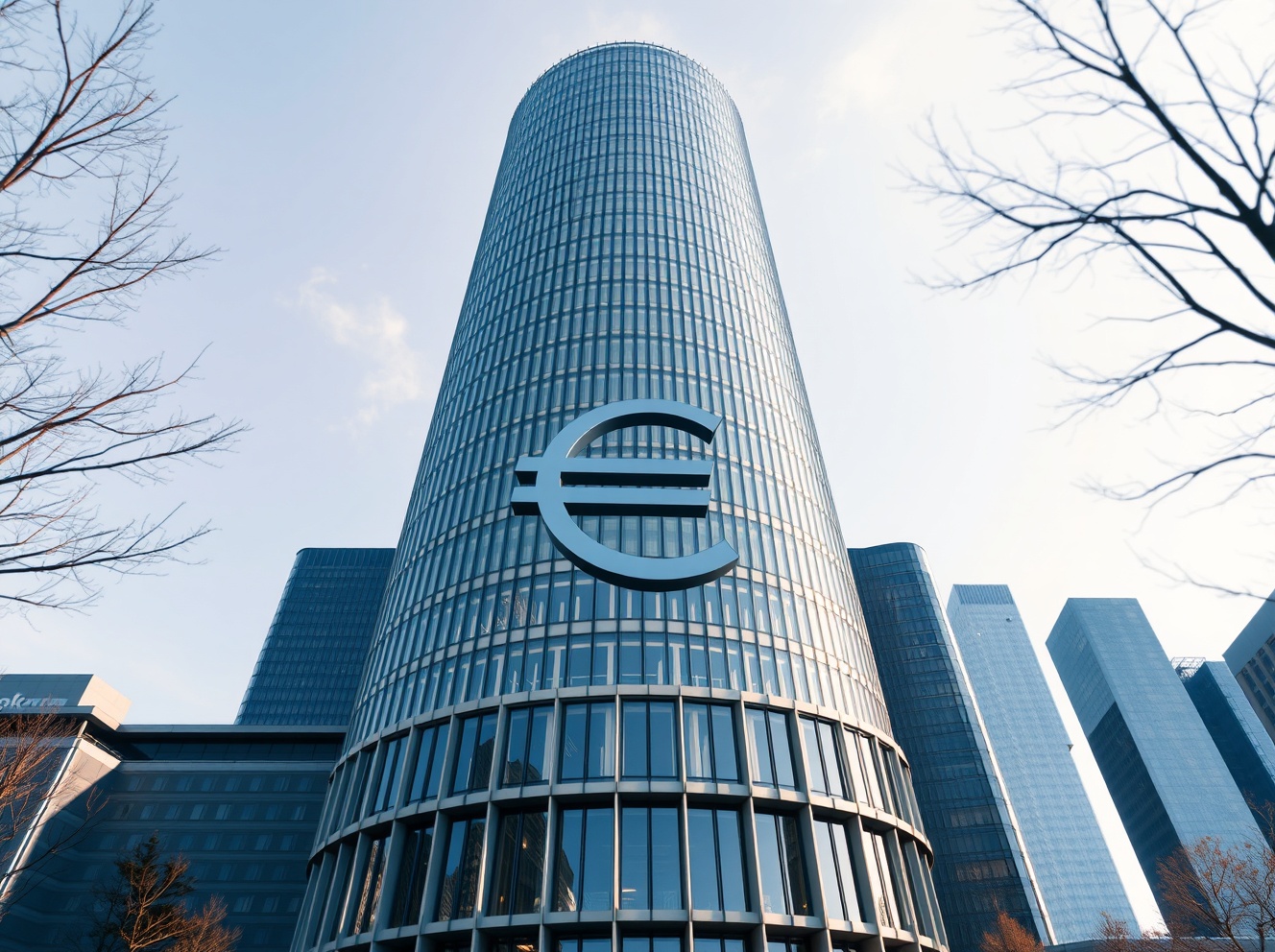
ECB Inflation Shock: BNP Paribas Warns of Imminent Rate Hike Risks in 2025
FRANKFURT, March 2025 – The European Central Bank faces mounting pressure to reconsider its monetary policy stance as BNP Paribas analysts warn of significant inflation shock risks that could trigger renewed interest rate hikes. This development comes amid persistent price pressures across the eurozone economy, challenging previous assumptions about disinflation trends.
ECB Inflation Shock Analysis and Monetary Policy Implications
BNP Paribas economists have identified several concerning indicators that suggest inflation may prove more stubborn than anticipated. Recent data shows core inflation remaining above the ECB’s 2% target despite previous tightening measures. The financial institution’s research department has documented particular vulnerabilities in services inflation and wage growth patterns.
Market participants now closely monitor the ECB’s upcoming policy meetings. Consequently, expectations have shifted toward potential rate increases rather than cuts. This represents a significant reversal from earlier projections that suggested easing cycles would dominate 2025 monetary policy discussions.
Economic Context and Historical Precedents
The current situation echoes previous inflationary episodes that required aggressive central bank responses. Historical analysis reveals that delayed reactions to inflation shocks often necessitate more severe policy adjustments later. The ECB maintains extensive data tracking price movements across nineteen eurozone nations.
Several factors contribute to the persistent inflation environment. Energy price volatility continues to impact production costs across industries. Simultaneously, tight labor markets sustain wage pressures that feed into services pricing. Global supply chain adjustments further complicate the inflation outlook for European policymakers.
Expert Analysis from BNP Paribas Research Division
BNP Paribas economists emphasize the importance of forward-looking indicators. Their research identifies three primary risk factors:
- Services sector inflation showing limited signs of moderation
- Wage growth agreements exceeding productivity gains
- Energy transition costs creating structural price pressures
The financial institution’s models suggest that current inflation expectations may become unanchored without policy intervention. This assessment draws on decades of monetary policy research and real-time economic data analysis.
Market Reactions and Financial Implications
Financial markets have begun pricing in increased probability of ECB rate hikes. Government bond yields across European maturities have risen substantially in recent weeks. Equity markets, particularly rate-sensitive sectors, have shown increased volatility as investors reassess valuation models.
The euro has strengthened against major currencies amid changing interest rate differential expectations. This currency movement affects European exporters while potentially helping contain imported inflation. Market participants now closely watch ECB communications for policy signals.
| Indicator | Current Value | ECB Target | Trend |
|---|---|---|---|
| Headline Inflation | 2.8% | 2.0% | Increasing |
| Core Inflation | 2.6% | 2.0% | Sticky |
| Services Inflation | 3.2% | 2.0% | Elevated |
Comparative Central Bank Approaches
The ECB’s potential policy shift occurs within a global context of reassessing inflation risks. Other major central banks, including the Federal Reserve and Bank of England, face similar challenges. However, structural differences between economies create varying policy requirements and constraints.
European monetary policy must balance inflation control with growth preservation. The eurozone’s diverse economic landscape complicates this balancing act. Southern European nations exhibit different inflation dynamics than their northern counterparts, creating policy implementation challenges.
Technical Analysis and Forecasting Models
Advanced econometric models employed by BNP Paribas suggest multiple scenarios for inflation development. Their baseline projection now includes at least one additional rate hike during 2025. Alternative scenarios consider more aggressive tightening if inflation proves particularly persistent.
These models incorporate real-time data from multiple sources. Payment system information provides early signals about economic activity. Survey data captures inflation expectations among businesses and consumers. Market-based indicators offer insights into investor expectations.
Policy Transmission Mechanisms and Economic Impact
Potential rate hikes would affect the European economy through several channels. Higher borrowing costs would influence investment decisions across corporations. Mortgage rates would increase, affecting housing markets and consumer spending patterns. Government financing costs would rise, impacting fiscal policy options.
The banking sector would experience both benefits and challenges from higher rates. Net interest margins might improve, but credit quality could deteriorate if economic growth slows substantially. Financial stability considerations remain paramount in ECB decision-making processes.
Conclusion
The ECB faces critical decisions regarding inflation shock management as BNP Paribas analysis highlights significant rate hike risks. Monetary policy adjustments may become necessary to maintain price stability across the eurozone. Market participants should prepare for potential policy shifts as inflation dynamics evolve throughout 2025. The coming months will test the ECB’s commitment to its price stability mandate amid complex economic crosscurrents.
FAQs
Q1: What specific inflation indicators concern BNP Paribas analysts?
BNP Paribas researchers highlight persistent services inflation, accelerating wage growth, and structural energy transition costs as primary concerns. These factors show limited responsiveness to previous monetary tightening measures.
Q2: How would ECB rate hikes affect European consumers?
Higher interest rates would increase borrowing costs for mortgages, auto loans, and credit cards. However, they might improve returns on savings accounts and reduce inflation’s erosion of purchasing power over time.
Q3: What distinguishes the current inflation situation from previous episodes?
The current environment combines supply-side constraints with strong labor markets and structural transition costs. This combination creates different policy challenges than demand-driven inflation alone.
Q4: How do financial markets currently price ECB policy changes?
Interest rate futures and bond markets now reflect increased probability of rate hikes rather than cuts. The exact timing and magnitude remain uncertain, creating market volatility around policy announcements.
Q5: What monitoring tools does the ECB use for inflation assessment?
The ECB employs multiple indicators including core inflation measures, wage growth trackers, inflation expectation surveys, and real-time payment system data to assess price stability risks comprehensively.
This post ECB Inflation Shock: BNP Paribas Warns of Imminent Rate Hike Risks in 2025 first appeared on BitcoinWorld.


You May Also Like
Fox's Maria Bartiromo clashes with guest on air over Trump's war

Kash Patel exploded at FBI official who dared question girlfriend's security detail: NYT




