New AI And Business Program Signals Rising Demand For Hybrid Tech Talent
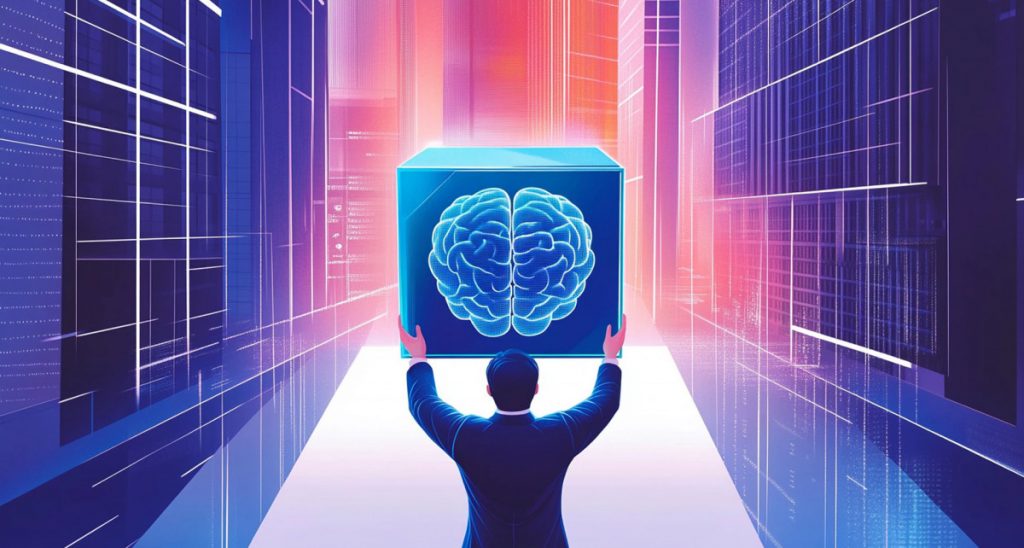
With the continued adoption of artificial intelligence in the global industries, educational institutions are increasingly thinking about how they will equip students to join the workforce in the future. The introduction of a new Bachelor’s degree course in Artificial Intelligence and Business by the Scaler School of Technology is one of the most recent programs that manifests this transition. The program will train students to not only have the narrow technical expertise but also the business skills necessary to create and run technology-driven businesses in an AI-first economy.
The announcement follows a period during which artificial intelligence is transforming the global economy and shaping the way businesses are constructed, grown, and managed. Most organizations nowadays need individuals who are not only aware of how to create advanced AI systems, but also how these systems can be transformed into workable business models. Based on this emerging need, the Scaler education platform has created a four-year interdisciplinary undergraduate program, which unites artificial intelligence, product development, and business strategy into one program.
The program is a more general educational movement where interdisciplinary learning is being introduced, where technology and business are not taught separately, but they are interdependent disciplines that depend on each other to create innovations.
The Vision Behind the AI and Business Program
The new undergraduate program is based on the concept that the future founders, engineers, and executives should work in the interface of technology and entrepreneurship. There are often traditional models of education that give a choice between engineering and management courses, but compel the student to decide between technical knowledge and business knowledge. Nonetheless, in a world where AI-driven goods and online services have become the norm, this distinction is considered as being obsolete.
The program designers claim that their objective is to educate students who will be proficient in creating sophisticated AI systems and comprehending the economic, operational, and strategic aspects involved in establishing technology firms. The project is aimed at producing graduates who could develop and grow AI-based startups, product teams, and technology organization leadership.
This is one of those methods of the present-day technological world where the companies succeed because of individuals or groups who unite their knowledge of engineering with their good sense of products and business.
Program Structure and Curriculum
The undergraduate program is four-year-old and it is residential in nature. Students will reside and learn on campus and attend an intensive curriculum of artificial intelligence, computer science, and business education.
The initial stage of the program is based on creating solid programming, mathematics, and data structure backgrounds. Communication and analytical skills, which are important in learning about the interplay of technology and business strategy, are also critical to the students.
It will build the curriculum as the program progresses to include more advanced concepts of AI, including machine learning, automation, and data science. Such technical aspects are accompanied by a course in finance and marketing, product design and entrepreneurship.
The program does not only focus on theoretical studies since it concentrates on practical education based on real-life projects, experiments, and product development tasks. The given structure allows students to observe how artificial intelligence technologies can be used to address the real issues in the market.
Technical and commercial knowledge integration is to equip the students with hybrid positions that are emerging in the world of technology.
Mandatory Startup Building
Entrepreneurship is another aspect of the program that is most particular. Learners must create a startup and make an effort to start it during their studies.
During the last year, participants will reach a stage of a founder mode where they design, develop, and prototype an AI-driven product or company. The program offers mentorship services, infrastructure, and access to funding resources to enable the students to transform their ideas into viable ventures.
Such emphasis on the startup development indicates the idea that experiential learning is also important to learn how businesses really work. Through real product work and working with users, the students obtain practical knowledge that is hard to duplicate using traditional classroom lectures.
The startup-building aspect also resembles the trends in the global technology ecosystems, where a number of prosperous businesses have been funded by youthful entrepreneurs who managed to use technical expertise and entrepreneurial thinking.
Industry Mentorship and Learning Environment
The second significant aspect of the program is the mentorship of the experienced technology leaders and startup founders. The program attracts industry experts who are former employees of large technology firms and have created successful products.
The program seeks to close the divide between the theoretical and professional knowledge of learners and the practical needs of the industry by engaging the practitioners in the process of learning. Students are exposed to the decision-making, technical, and market dynamics of the modern technology business.
The program is located in Bengaluru or Silicon Valley of India, which has a very energetic start-up, venture capital, and international technology companies. This is near to the startup ecosystem, and in this way, this enables the students to work with entrepreneurs, visit innovation laboratories, and meet with investors.
Such an environment is expected to encourage experimentation and encourage the students to explore other career options.
Responding to a Changing Job Market
Changing job-market needs are also indicated by the introduction of the AI and Business undergraduate program. With the growing speed of digital transformation, both in industries and organizations, there is a growing demand to find professionals who are capable of integrating technical knowledge with strategy.
The job descriptions include AI product manager, business analyst, technology consultant, and startup founder, meaning that they should include people who are able to fill in the gap between engineering teams and business stakeholders.
The proponents of the program believe that traditional degrees usually equip the student with one side of this equation. Engineering students might have a great technical ability and poor business skills, whereas business students might not know the technical systems that run the current business.
Through the combination of the two fields, the new course will result in graduates capable of working in cross-functional settings and spurring innovation in technologically-driven institutions.
The Broader Trend in Interdisciplinary Education
The initiative by Scaler is also a result of a larger trend in the field of global higher education that is moving towards interdisciplinary models of learning. Colleges and educational institutions are starting to develop courses with a mixture of computer science and finance, health, and entrepreneurship.
A part of the reason behind this trend is the blistering development of technologies like artificial intelligence, automation, and data analytics. These technologies do not belong to one particular field, but they have an effect on almost all fields of the economy.
To this, educational institutions are coming up with programs that would make students think about matters in different ways, integrating technical problem-solving with strategic and business thinking.
One of the ways through which education providers are adjusting to these changed realities is the AI and Business undergraduate program.
Challenges and Opportunities
Although the introduction of such interdisciplinary programs is an indication of the transformation of higher education, it also poses some chilling queries concerning the design of the curriculum, its applicability to industry, and career prospects.
It is not always easy to strike a balance between in-depth technical training and business training because neither of these areas is easy to master quickly and without paying much attention. Nonetheless, the proponents believe that the current technology professionalism requires just this mix of abilities.
More practical options for entering the startup ecosystem can be found in technology and business programs that offer a more accessible entry point to entrepreneurship or product innovation for students.
Concurrently, the success of this program will be determined by the ability to be able to apply academic knowledge to practical skills.
The post New AI And Business Program Signals Rising Demand For Hybrid Tech Talent appeared first on Metaverse Post.


You May Also Like

Stake.com Built The Crypto Casino Name. Bet365 Built The Sportsbook Name. ZunaBet Is Building What Comes After Both.
Shiba Inu Price Prediction Weakens as AI Token Sector Surges 30% to $19B While Pepeto SHIB and TAO Take Different Paths