PayPay (PAYP) Stock Soars Nearly 20% in Nasdaq Trading Debut
Key Highlights
- PayPay shares began trading at $19, marking a 19% premium over the $16 initial public offering price
- The Japanese fintech firm secured approximately $880 million by issuing 55 million American Depositary Shares
- First-day market capitalization ranged between $12.7 billion and $14.7 billion
- The platform serves approximately 72 million users and has facilitated more than $100 billion in transaction volume
- A strategic collaboration with Visa was recently unveiled to pursue opportunities in the United States
On March 12, 2026, PayPay (PAYP) launched its Nasdaq trading with impressive momentum, opening at $19 per share — a solid 19% premium over its initial offering price of $16. The Japanese digital payments provider, which counts SoftBank as a major backer, had set its IPO price beneath the anticipated $17–$20 range.
The public offering generated roughly $880 million in proceeds from approximately 55 million American Depositary Shares. Both PayPay and an investment vehicle controlled by SoftBank participated as selling shareholders.
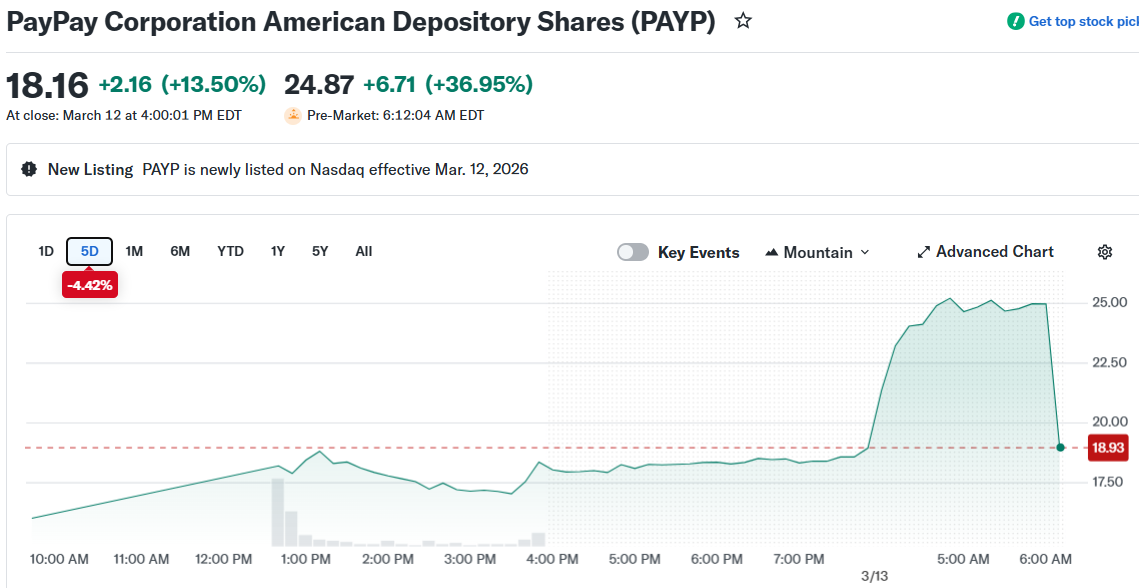 PayPay Corporation American Depository Shares (PAYP)
Market capitalization on the debut day landed somewhere between $12.7 billion and $14.7 billion, varying based on the reference price. By midday Thursday trading, shares had moderated slightly to approximately $18.03, showing typical first-day price fluctuation.
This marks the first time a SoftBank majority-owned company has listed in the United States since semiconductor designer Arm’s public debut in 2023.
The initial timeline called for a December listing, but regulatory approval delays stemming from last fall’s federal government shutdown pushed the date forward several months.
Dominant Position in Japan
PayPay emerged from a joint venture between SoftBank and Yahoo Japan in 2018. The startup gained rapid traction by eliminating transaction fees for small and medium-sized businesses for as long as three years, accelerating merchant adoption.
The aggressive growth strategy delivered results. Today, PayPay boasts roughly 72 million active users across Japan and has processed more than $100 billion in total merchandise volume.
Despite PayPay’s success, Japan continues to trail other developed nations in cashless payment adoption, suggesting significant growth potential remains in its home market.
PayPay CEO Ichiro Nakayama participated in the traditional opening bell ceremony at Nasdaq’s Market Site in New York on Thursday. Speaking with Reuters, he outlined the company’s post-IPO strategy to expand beyond payment processing into a comprehensive financial services ecosystem.
The platform has already diversified into lending, banking services, investment products, and insurance offerings.
U.S. Market Ambitions
In February 2026, PayPay revealed a strategic alliance with Visa aimed at evaluating entry into the American market. Specific launch timelines and operational details have not been disclosed.
Visa stock declined approximately 0.55% to $307.25 on Thursday, while PayPal shares dropped roughly 1.60% to $44.84.
Wall Street analysts who underwrote the IPO are anticipated to release formal coverage and price targets in early April, following the mandatory quiet period.
PayPay’s public offering served as an important barometer for the broader IPO market, which has experienced inconsistent performance in recent weeks. Geopolitical tensions in the Middle East have created market volatility, causing several companies to postpone their listing plans.
The post PayPay (PAYP) Stock Soars Nearly 20% in Nasdaq Trading Debut appeared first on Blockonomi.


You May Also Like

Europe concedes more ground to US, Big Tech on AI rules

The Chemistry of UV Resistance: How Titanium Dioxide Protects Against the California Sun