

Crypto Tools for Refugees: Former Coinbase CTO Urges Critical Development of Blockchain Humanitarian Solutions
BitcoinWorld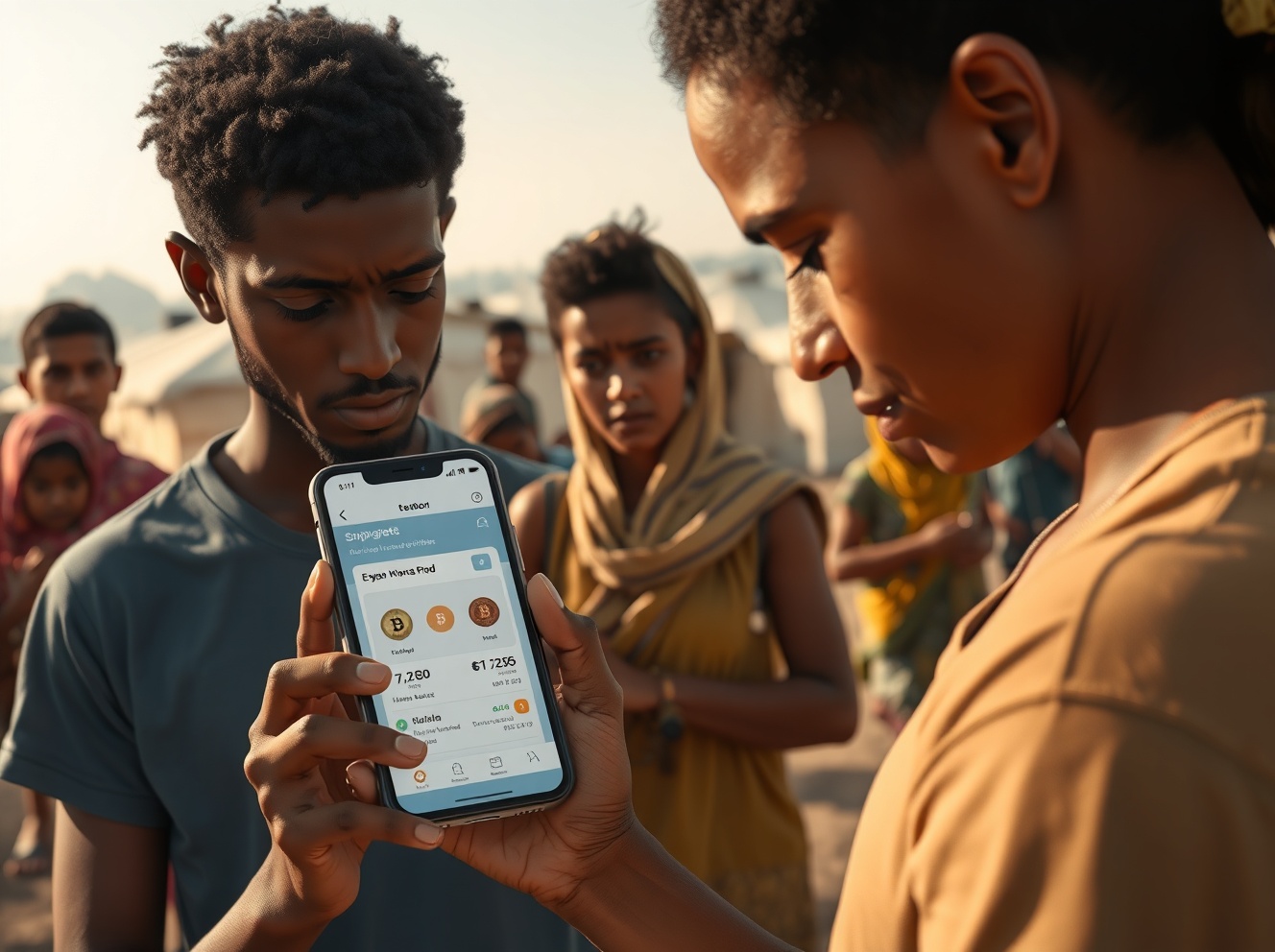
Crypto Tools for Refugees: Former Coinbase CTO Urges Critical Development of Blockchain Humanitarian Solutions
Former Coinbase Chief Technology Officer Balaji Srinivasan has issued a compelling call for accelerated development of cryptocurrency tools specifically designed for refugee populations and stateless individuals. Speaking from a global perspective on March 15, 2025, Srinivasan emphasized that blockchain technology’s inherent properties make it uniquely suited for humanitarian crises where traditional financial systems often fail vulnerable populations. His advocacy comes amid increasing global displacement figures and growing recognition of digital assets’ potential for social impact.
Crypto Tools for Refugees Address Growing Global Need
Balaji Srinivasan’s public statement on X, formerly Twitter, highlights a pressing humanitarian challenge. The United Nations High Commissioner for Refugees reports that forced displacement has reached unprecedented levels, affecting over 117 million people globally. Consequently, traditional financial infrastructure frequently collapses in conflict zones and displacement settings. Srinivasan specifically notes that cryptocurrency offers distinct advantages in these environments. Public blockchains operate on decentralized networks that resist data center attacks, hacking attempts, and government-imposed network shutdowns.
Furthermore, blockchain transactions can occur without intermediaries like banks or payment processors. This characteristic proves particularly valuable when banking systems become inaccessible or unreliable. For instance, refugees crossing borders often lose access to their savings and financial identities. Cryptocurrency wallets, however, can store value digitally on devices as simple as basic smartphones. The technology enables peer-to-peer transfers across borders without requiring traditional banking relationships.
Stablecoins Achieve Critical Mass in Humanitarian Contexts
Srinivasan’s analysis identifies stablecoins as particularly transformative within refugee assistance frameworks. These digital assets maintain price stability by pegging their value to reserve assets like the US dollar or gold. Notably, stablecoin adoption has surged in regions experiencing economic instability and currency devaluation. Organizations like the World Food Programme have already experimented with blockchain-based aid distribution in Jordanian refugee camps.
The emergence of gold-backed stablecoins adds another dimension to this ecosystem. These assets combine gold’s historical value preservation with blockchain’s transferability. For populations fleeing hyperinflation or currency collapse, such instruments can provide more stable stores of value than volatile local currencies. Several humanitarian organizations now explore stablecoin distributions because they reduce transaction costs and increase transparency compared to cash-based aid.
Technical Resilience Meets Humanitarian Imperative
Blockchain networks demonstrate remarkable resilience in crisis scenarios. Unlike centralized databases, distributed ledger technology maintains functionality even when individual nodes fail or face attacks. This robustness becomes crucial during natural disasters, conflicts, or political instability when traditional systems collapse. Humanitarian technologists increasingly recognize that cryptocurrency tools can operate through mesh networks and satellite internet when conventional connectivity fails.
Several real-world implementations already demonstrate this potential. In Ukraine, cryptocurrency donations exceeded $225 million following Russia’s invasion, providing vital resources when banking channels faced disruption. Similarly, Venezuelan refugees have used cryptocurrency to preserve wealth amid hyperinflation exceeding 1,000,000%. These cases illustrate how digital assets can serve populations excluded from traditional finance.
Implementation Challenges and Practical Considerations
Despite promising applications, significant barriers hinder widespread cryptocurrency adoption among refugee populations. Key challenges include:
- Digital literacy requirements: Using cryptocurrency tools demands basic technological understanding
- Device and connectivity access: Smartphones and internet connectivity remain limited in many displacement settings
- Regulatory uncertainty: Host countries often lack clear cryptocurrency regulations for humanitarian use
- Volatility concerns: While stablecoins address this, education about different asset types remains necessary
- Security considerations: Protecting private keys and avoiding scams requires proper training programs
Humanitarian organizations address these challenges through simplified interfaces and educational initiatives. Some developers create cryptocurrency wallets with minimalistic designs requiring fewer technical steps. Other projects integrate blockchain technology with existing mobile money platforms popular in developing regions. These hybrid approaches may accelerate adoption by building on familiar systems.
Expert Perspectives on Financial Inclusion Solutions
Financial technology researchers echo Srinivasan’s observations about cryptocurrency’s potential. Dr. Sarah Johnson, a humanitarian technology specialist at Oxford University, notes that blockchain-based systems can create “portable financial identities” for displaced populations. Her research indicates that refugees who maintain access to digital assets recover economically faster than those dependent solely on traditional aid. Johnson emphasizes that cryptocurrency tools complement rather than replace existing humanitarian efforts.
Meanwhile, the International Rescue Committee has piloted several blockchain projects in Syrian refugee communities. Their findings suggest that cryptocurrency distributions reduce administrative costs by approximately 30% compared to cash-based systems. However, they caution that technological solutions must prioritize user experience and accessibility. Successful implementations typically involve community training and ongoing technical support.
Future Development Pathways for Humanitarian Cryptocurrency
The cryptocurrency ecosystem continues evolving to better serve vulnerable populations. Several development areas show particular promise:
| Development Area | Current Status | Potential Impact |
|---|---|---|
| Offline Transaction Capabilities | Experimental protocols enable blockchain transactions without continuous internet | Critical for areas with limited or intermittent connectivity |
| Biometric Wallet Recovery | Early-stage development using secure biometric data for key recovery | Reduces risk of fund loss if devices are lost or stolen |
| Multilingual Simplified Interfaces | Several humanitarian-focused wallets support multiple languages | Increases accessibility across diverse refugee populations |
| Integration with Aid Distribution Systems | Pilot programs with major humanitarian organizations | Streamlines aid delivery while maintaining accountability |
These technological advancements align with Srinivasan’s vision for more robust cryptocurrency tools. Additionally, regulatory developments may facilitate broader adoption. The European Union’s Markets in Crypto-Assets Regulation establishes clearer guidelines for stablecoin issuers, potentially increasing institutional confidence in humanitarian applications. Similar regulatory frameworks in other jurisdictions could accelerate development of refugee-focused solutions.
Conclusion
Balaji Srinivasan’s advocacy for cryptocurrency tools for refugees highlights blockchain technology’s growing relevance in humanitarian contexts. As global displacement reaches record levels, innovative financial solutions become increasingly urgent. Stablecoins and resilient blockchain networks offer practical advantages over traditional systems in crisis environments. However, successful implementation requires addressing digital literacy gaps, ensuring accessibility, and developing appropriate regulatory frameworks. The continued evolution of cryptocurrency tools for vulnerable populations represents a significant opportunity to enhance financial inclusion and crisis response capabilities worldwide.
FAQs
Q1: Why are cryptocurrency tools particularly useful for refugee populations?
Cryptocurrency tools operate on decentralized networks that function during banking collapses, government restrictions, or infrastructure damage. They enable borderless transactions without traditional banking relationships, which refugees often lose during displacement.
Q2: What specific advantages do stablecoins offer in humanitarian contexts?
Stablecoins maintain consistent value by pegging to assets like the US dollar or gold, avoiding the volatility of other cryptocurrencies. This stability makes them suitable for storing value and making payments in unstable economic environments common in displacement scenarios.
Q3: How do refugees access cryptocurrency without reliable internet or smartphones?
Developers are creating solutions for limited connectivity, including offline transaction capabilities and integration with basic mobile phones. Humanitarian organizations often provide devices and connectivity as part of broader assistance programs when implementing cryptocurrency tools.
Q4: What are the main risks associated with cryptocurrency use among vulnerable populations?
Key risks include technical complexity, potential for scams, volatility of non-stablecoin assets, and loss of funds if private keys are compromised. These challenges require comprehensive education programs and user-friendly interface design.
Q5: Are humanitarian organizations actively using cryptocurrency tools currently?
Yes, several organizations including the World Food Programme, International Rescue Committee, and Red Cross have conducted pilot programs distributing aid via blockchain-based systems. These experiments demonstrate both potential benefits and implementation challenges that inform ongoing development.
This post Crypto Tools for Refugees: Former Coinbase CTO Urges Critical Development of Blockchain Humanitarian Solutions first appeared on BitcoinWorld.


You May Also Like

Trump unhappy with latest peace proposal, says Iran ‘figuring out its leadership’

Australian Dollar underperforms as revived Mideast risks drag risker assets




