Nepal recorded 48,781 Bitchat downloads on September 8 as youth-led protests against government corruption and social media bans escalated nationwide. Jack Dorsey’s decentralized messaging app experienced massive adoption during civil unrest that left 22 dead and forced Prime Minister KP Sharma Oli’s resignation. Citizens Run to Offline Peer-to-peer Messaging The peer-to-peer application operates entirely without internet infrastructure using Bluetooth Low Energy mesh networks. Users communicate through encrypted messages that hop between devices within 30-meter ranges, creating censorship-resistant communication channels during network shutdowns. According to Bitcoin open-source developer “callebtc”, global downloads reached 125,486 users, with Nepal accounting for 39% of total adoption. Indonesia previously recorded 12,581 downloads during August protests over parliamentary allowance increases and police brutality that killed delivery driver Affan Kurniawan. Russia contributed 8,749 downloads while the United States registered 8,211 users. Bitchat launched in beta on July 7, 2025, filling TestFlight’s 10,000 capacity within hours. The application requires no phone numbers, email addresses, or account registration while providing end-to-end encryption through X25519 key exchange and AES-256-GCM protocols. When Democracy Burns: Nepal’s Youth Uprising Nepal’s protests began on September 1, targeting a ban on 26 social media platforms, including Facebook, Instagram, and YouTube. The restrictions aimed to enforce new regulations but triggered widespread outrage among Gen-Z activists relying on digital platforms for communication and commerce. The government lifted social media bans after intense pushback, but protests evolved into broader anti-corruption movements targeting political elite nepotism. Demonstrators attacked Parliament, the Supreme Court, and former Prime Ministers’ residences while forcing PM KP Sharma Oli’s resignation on September 9. Nepal Army deployment restored order in Kathmandu as curfews were imposed citywide. The crisis represents Nepal’s worst political unrest in decades, with 22 deaths and systematic demands for accountability transcending immediate social media concerns. Political instability has plagued Nepal since monarchy abolition in 2008, producing 13 different governments in 17 years. Youth unemployment and corruption fueled generational frustration, and the “Nepo Kids” phenomenon was highlighted as wealth inequality between political families and ordinary citizens. Pro-monarchy protests throughout 2025 had already created tensions as royalist sentiment capitalized on republican system failures. Large crowds advocating monarchy restoration clashed with police in separate demonstrations demanding political stability through constitutional monarchy return. Regional neighbor India heightened border security due to Nepal’s strategic importance and spillover violence concerns. Gen Z protesters rejected traditional political figures while demanding fundamental governmental reforms addressing corruption, nepotism, and economic mismanagement through interim leadership. However, Indonesia’s August protests involved parliamentary allowance controversies amid economic crisis and youth unemployment. President Prabowo Subianto replaced ministers following nationwide demonstrations, arson, and looting incidents that killed at least 10 protesters. Decentralized Messaging Revolution Goes Global Bitchat operates through store-and-forward systems, caching messages for offline users up to 12 hours. Each device functions as both client and server, creating self-organizing mesh networks resilient to single points of failure or centralized attacks. Messages fragment into 500-byte chunks, enabling transmission across multiple device hops with up to seven relay points. Bitchat architecture overview. Source: Github Random peer IDs are generated for each session, protecting user privacy while eliminating persistent identifiers like phone numbers. The application features emergency wipe capabilities through triple-tap commands, instantly clearing local data. IRC-style command interfaces provide familiar chat room experiences for users accessing topic-based channels without internet connectivity. Dorsey developed the weekend project addressing disaster coordination, event overflow communication, checkpoint synchronization, and cross-community bridges. Previous adoption spikes occurred during Hong Kong protests when a similar app, Bridgefy, saw 4,000% usage increases. Mesh networking technology adoption indicates growing demand for censorship-resistant communication tools during political instability.Source: Cointelegraph Major tech companies, including Google and Starlink, have invested in mesh solutions, creating decentralized infrastructure alternatives. Earlier this year, Elon Musk also announced XChat development featuring Bitcoin-style encryption and Rust programming language architecture. The X platform messaging system promises cross-platform audio/video calling without phone number requirements. However, despite a clear need, regulatory challenges persist as completely encrypted mesh networks complicate law enforcement tracing capabilities. Decentralized systems resist shutdown attempts while providing anonymous communication channels during internet blackouts or government censorship campaignsNepal recorded 48,781 Bitchat downloads on September 8 as youth-led protests against government corruption and social media bans escalated nationwide. Jack Dorsey’s decentralized messaging app experienced massive adoption during civil unrest that left 22 dead and forced Prime Minister KP Sharma Oli’s resignation. Citizens Run to Offline Peer-to-peer Messaging The peer-to-peer application operates entirely without internet infrastructure using Bluetooth Low Energy mesh networks. Users communicate through encrypted messages that hop between devices within 30-meter ranges, creating censorship-resistant communication channels during network shutdowns. According to Bitcoin open-source developer “callebtc”, global downloads reached 125,486 users, with Nepal accounting for 39% of total adoption. Indonesia previously recorded 12,581 downloads during August protests over parliamentary allowance increases and police brutality that killed delivery driver Affan Kurniawan. Russia contributed 8,749 downloads while the United States registered 8,211 users. Bitchat launched in beta on July 7, 2025, filling TestFlight’s 10,000 capacity within hours. The application requires no phone numbers, email addresses, or account registration while providing end-to-end encryption through X25519 key exchange and AES-256-GCM protocols. When Democracy Burns: Nepal’s Youth Uprising Nepal’s protests began on September 1, targeting a ban on 26 social media platforms, including Facebook, Instagram, and YouTube. The restrictions aimed to enforce new regulations but triggered widespread outrage among Gen-Z activists relying on digital platforms for communication and commerce. The government lifted social media bans after intense pushback, but protests evolved into broader anti-corruption movements targeting political elite nepotism. Demonstrators attacked Parliament, the Supreme Court, and former Prime Ministers’ residences while forcing PM KP Sharma Oli’s resignation on September 9. Nepal Army deployment restored order in Kathmandu as curfews were imposed citywide. The crisis represents Nepal’s worst political unrest in decades, with 22 deaths and systematic demands for accountability transcending immediate social media concerns. Political instability has plagued Nepal since monarchy abolition in 2008, producing 13 different governments in 17 years. Youth unemployment and corruption fueled generational frustration, and the “Nepo Kids” phenomenon was highlighted as wealth inequality between political families and ordinary citizens. Pro-monarchy protests throughout 2025 had already created tensions as royalist sentiment capitalized on republican system failures. Large crowds advocating monarchy restoration clashed with police in separate demonstrations demanding political stability through constitutional monarchy return. Regional neighbor India heightened border security due to Nepal’s strategic importance and spillover violence concerns. Gen Z protesters rejected traditional political figures while demanding fundamental governmental reforms addressing corruption, nepotism, and economic mismanagement through interim leadership. However, Indonesia’s August protests involved parliamentary allowance controversies amid economic crisis and youth unemployment. President Prabowo Subianto replaced ministers following nationwide demonstrations, arson, and looting incidents that killed at least 10 protesters. Decentralized Messaging Revolution Goes Global Bitchat operates through store-and-forward systems, caching messages for offline users up to 12 hours. Each device functions as both client and server, creating self-organizing mesh networks resilient to single points of failure or centralized attacks. Messages fragment into 500-byte chunks, enabling transmission across multiple device hops with up to seven relay points. Bitchat architecture overview. Source: Github Random peer IDs are generated for each session, protecting user privacy while eliminating persistent identifiers like phone numbers. The application features emergency wipe capabilities through triple-tap commands, instantly clearing local data. IRC-style command interfaces provide familiar chat room experiences for users accessing topic-based channels without internet connectivity. Dorsey developed the weekend project addressing disaster coordination, event overflow communication, checkpoint synchronization, and cross-community bridges. Previous adoption spikes occurred during Hong Kong protests when a similar app, Bridgefy, saw 4,000% usage increases. Mesh networking technology adoption indicates growing demand for censorship-resistant communication tools during political instability.Source: Cointelegraph Major tech companies, including Google and Starlink, have invested in mesh solutions, creating decentralized infrastructure alternatives. Earlier this year, Elon Musk also announced XChat development featuring Bitcoin-style encryption and Rust programming language architecture. The X platform messaging system promises cross-platform audio/video calling without phone number requirements. However, despite a clear need, regulatory challenges persist as completely encrypted mesh networks complicate law enforcement tracing capabilities. Decentralized systems resist shutdown attempts while providing anonymous communication channels during internet blackouts or government censorship campaigns

Nepal Protesters Turn to Jack Dorsey’s Peer-to-Peer Messaging App to Circumvent Social Media Ban

2025/09/11 16:34
4 min read
For feedback or concerns regarding this content, please contact us at crypto.news@mexc.com

Nepal recorded 48,781 Bitchat downloads on September 8 as youth-led protests against government corruption and social media bans escalated nationwide.

Jack Dorsey’s decentralized messaging app experienced massive adoption during civil unrest that left 22 dead and forced Prime Minister KP Sharma Oli’s resignation.

Citizens Run to Offline Peer-to-peer Messaging

The peer-to-peer application operates entirely without internet infrastructure using Bluetooth Low Energy mesh networks.

Users communicate through encrypted messages that hop between devices within 30-meter ranges, creating censorship-resistant communication channels during network shutdowns.

According to Bitcoin open-source developer “callebtc”, global downloads reached 125,486 users, with Nepal accounting for 39% of total adoption.

Indonesia previously recorded 12,581 downloads during August protests over parliamentary allowance increases and police brutality that killed delivery driver Affan Kurniawan.

Russia contributed 8,749 downloads while the United States registered 8,211 users.

Bitchat launched in beta on July 7, 2025, filling TestFlight’s 10,000 capacity within hours.

The application requires no phone numbers, email addresses, or account registration while providing end-to-end encryption through X25519 key exchange and AES-256-GCM protocols.

When Democracy Burns: Nepal’s Youth Uprising

Nepal’s protests began on September 1, targeting a ban on 26 social media platforms, including Facebook, Instagram, and YouTube.

The restrictions aimed to enforce new regulations but triggered widespread outrage among Gen-Z activists relying on digital platforms for communication and commerce.

The government lifted social media bans after intense pushback, but protests evolved into broader anti-corruption movements targeting political elite nepotism.

Demonstrators attacked Parliament, the Supreme Court, and former Prime Ministers’ residences while forcing PM KP Sharma Oli’s resignation on September 9.

Nepal Army deployment restored order in Kathmandu as curfews were imposed citywide.

The crisis represents Nepal’s worst political unrest in decades, with 22 deaths and systematic demands for accountability transcending immediate social media concerns.

Political instability has plagued Nepal since monarchy abolition in 2008, producing 13 different governments in 17 years.

Youth unemployment and corruption fueled generational frustration, and the “Nepo Kids” phenomenon was highlighted as wealth inequality between political families and ordinary citizens.

Pro-monarchy protests throughout 2025 had already created tensions as royalist sentiment capitalized on republican system failures.

Large crowds advocating monarchy restoration clashed with police in separate demonstrations demanding political stability through constitutional monarchy return.

Regional neighbor India heightened border security due to Nepal’s strategic importance and spillover violence concerns.

Gen Z protesters rejected traditional political figures while demanding fundamental governmental reforms addressing corruption, nepotism, and economic mismanagement through interim leadership.

However, Indonesia’s August protests involved parliamentary allowance controversies amid economic crisis and youth unemployment.

President Prabowo Subianto replaced ministers following nationwide demonstrations, arson, and looting incidents that killed at least 10 protesters.

Decentralized Messaging Revolution Goes Global

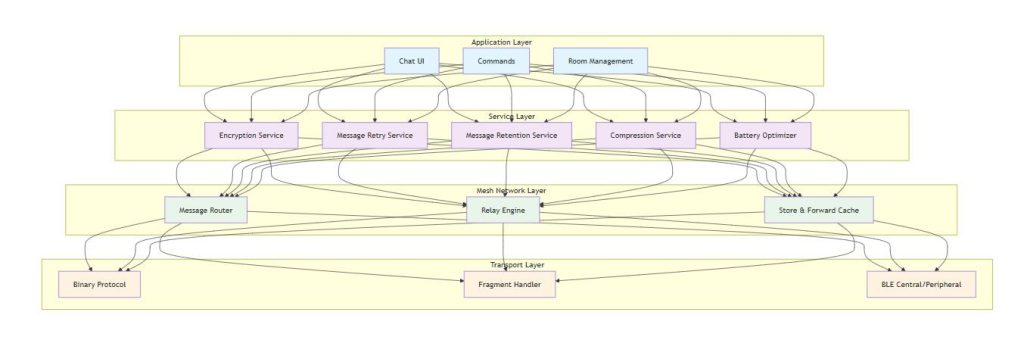
Bitchat operates through store-and-forward systems, caching messages for offline users up to 12 hours.

Each device functions as both client and server, creating self-organizing mesh networks resilient to single points of failure or centralized attacks.

Messages fragment into 500-byte chunks, enabling transmission across multiple device hops with up to seven relay points.
48,000 Nepalis Download Jack Dorsey's Peer-to-Peer Messaging App Amid Protests and Social Media Ban

Bitchat architecture overview. Source: Github

Random peer IDs are generated for each session, protecting user privacy while eliminating persistent identifiers like phone numbers.

The application features emergency wipe capabilities through triple-tap commands, instantly clearing local data.

IRC-style command interfaces provide familiar chat room experiences for users accessing topic-based channels without internet connectivity.

Dorsey developed the weekend project addressing disaster coordination, event overflow communication, checkpoint synchronization, and cross-community bridges.

Previous adoption spikes occurred during Hong Kong protests when a similar app, Bridgefy, saw 4,000% usage increases.

Mesh networking technology adoption indicates growing demand for censorship-resistant communication tools during political instability.

48,000 Nepalis Download Jack Dorsey's Peer-to-Peer Messaging App Amid Protests and Social Media BanSource: Cointelegraph

Major tech companies, including Google and Starlink, have invested in mesh solutions, creating decentralized infrastructure alternatives.

Earlier this year, Elon Musk also announced XChat development featuring Bitcoin-style encryption and Rust programming language architecture.

The X platform messaging system promises cross-platform audio/video calling without phone number requirements.

However, despite a clear need, regulatory challenges persist as completely encrypted mesh networks complicate law enforcement tracing capabilities.

Decentralized systems resist shutdown attempts while providing anonymous communication channels during internet blackouts or government censorship campaigns.


Market Opportunity
Comedian Logo
Comedian Price(BAN)
$0.05797
$0.05797$0.05797
+0.32%
USD
Comedian (BAN) Live Price Chart
Disclaimer: The articles reposted on this site are sourced from public platforms and are provided for informational purposes only. They do not necessarily reflect the views of MEXC. All rights remain with the original authors. If you believe any content infringes on third-party rights, please contact crypto.news@mexc.com for removal. MEXC makes no guarantees regarding the accuracy, completeness, or timeliness of the content and is not responsible for any actions taken based on the information provided. The content does not constitute financial, legal, or other professional advice, nor should it be considered a recommendation or endorsement by MEXC.
Tags:

You May Also Like

Olivia Moore: Media narratives distort public perception of AI, companies must adopt AI to stay competitive, and the future workforce will focus on AI-augmented roles

Olivia Moore: Media narratives distort public perception of AI, companies must adopt AI to stay competitive, and the future workforce will focus on AI-augmented roles

The post Olivia Moore: Media narratives distort public perception of AI, companies must adopt AI to stay competitive, and the future workforce will focus on AI-
Share
BitcoinEthereumNews2026/04/11 10:57
Franklin Templeton CEO Dismisses 50bps Rate Cut Ahead FOMC
Franklin Templeton CEO Dismisses 50bps Rate Cut Ahead FOMC

The post Franklin Templeton CEO Dismisses 50bps Rate Cut Ahead FOMC appeared on BitcoinEthereumNews.com. Franklin Templeton CEO Jenny Johnson has weighed in on whether the Federal Reserve should make a 25 basis points (bps) Fed rate cut or 50 bps cut. This comes ahead of the Fed decision today at today’s FOMC meeting, with the market pricing in a 25 bps cut. Bitcoin and the broader crypto market are currently trading flat ahead of the rate cut decision. Franklin Templeton CEO Weighs In On Potential FOMC Decision In a CNBC interview, Jenny Johnson said that she expects the Fed to make a 25 bps cut today instead of a 50 bps cut. She acknowledged the jobs data, which suggested that the labor market is weakening. However, she noted that this data is backward-looking, indicating that it doesn’t show the current state of the economy. She alluded to the wage growth, which she remarked is an indication of a robust labor market. She added that retail sales are up and that consumers are still spending, despite inflation being sticky at 3%, which makes a case for why the FOMC should opt against a 50-basis-point Fed rate cut. In line with this, the Franklin Templeton CEO said that she would go with a 25 bps rate cut if she were Jerome Powell. She remarked that the Fed still has the October and December FOMC meetings to make further cuts if the incoming data warrants it. Johnson also asserted that the data show a robust economy. However, she noted that there can’t be an argument for no Fed rate cut since Powell already signaled at Jackson Hole that they were likely to lower interest rates at this meeting due to concerns over a weakening labor market. Notably, her comment comes as experts argue for both sides on why the Fed should make a 25 bps cut or…

Share
BitcoinEthereumNews2025/09/18 00:36
Swalwell denies assault claims: ‘They did not happen, they have never happened’

Swalwell denies assault claims: ‘They did not happen, they have never happened’

Rep. Eric Swalwell (D-CA) on Friday night forcefully denied allegations of sexual misconduct and assault, calling the claims that have rocked his gubernatorial
Share
Rawstory2026/04/11 11:53

USD1 Genesis: 0 Fees + 12% APR

USD1 Genesis: 0 Fees + 12% APRUSD1 Genesis: 0 Fees + 12% APR

New users: stake for up to 600% APR. Limited time!

