Tier-III and Tier-IV Cities: India’s Next Billion Customers
India’s Next Billion Customers: Why Tier-III and Tier-IV Cities Are the New Frontier for Customer Experience
For decades, the story of India’s economic rise has largely been told through the lens of its great metropolitan centers—Delhi, Mumbai, Bengaluru, Chennai, and Hyderabad. These cities have been the hubs of technology, finance, innovation, and consumption.
But beneath the skyline of these urban giants, another story has been quietly unfolding.
Across the country, hundreds of smaller cities—often categorized as Tier-III and Tier-IV cities—are experiencing a transformation that could reshape India’s economic future. These cities are witnessing rising aspirations, improving infrastructure, expanding digital connectivity, and a new generation of entrepreneurs and consumers.
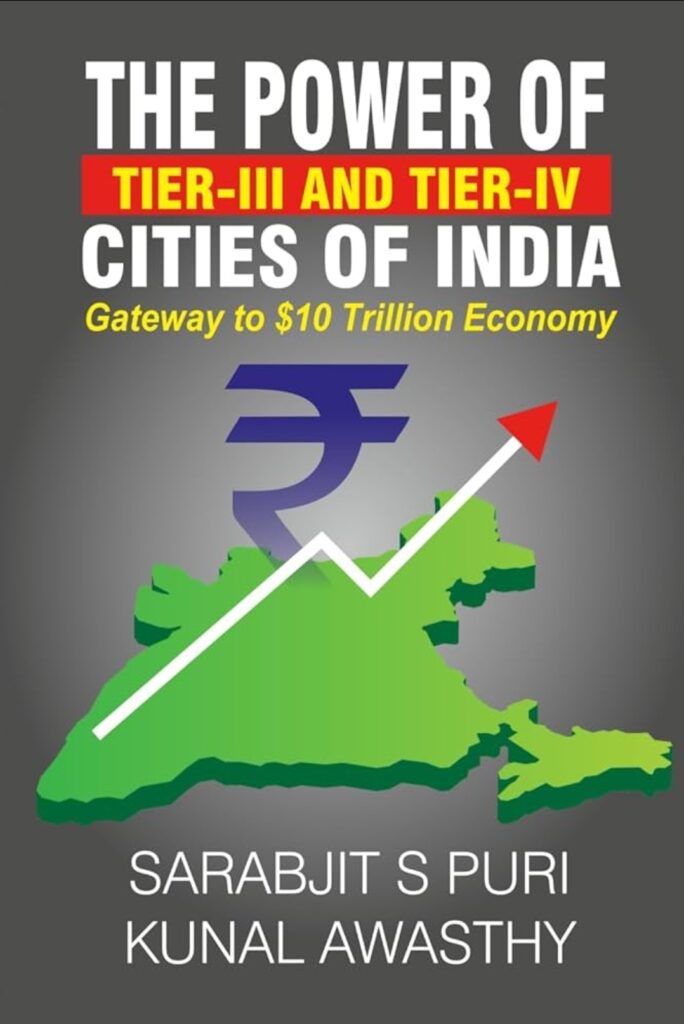
This shift is thoughtfully explored in the book The Power of Tier-III and Tier-IV Cities of India: Gateway to $10 Trillion Economy by Sarabjit S. Puri and Kunal Awasthy.
While the book focuses on economic development and the strategic importance of smaller cities in India’s growth story, it also raises a critical question for businesses:
What happens to customer experience when the next wave of consumers comes from beyond the metros?
For CX leaders, this question may define the next decade of growth.
The Quiet Rise of Small-City India
India’s Tier-III and Tier-IV cities are no longer peripheral markets. They are increasingly becoming centers of economic activity, education, entrepreneurship, and consumption.
Digital connectivity has played a transformative role in this shift. Affordable smartphones, inexpensive data plans, and the rapid spread of digital platforms have dramatically lowered the barriers to participation in the digital economy.
A young entrepreneur in a small town can now launch an online store, access digital payments, and reach customers across the country. A student in a Tier-IV city can enroll in online courses from global institutions. Families can shop on e-commerce platforms and use fintech services that were once limited to metropolitan consumers.
In many ways, the digital revolution has compressed geography, bringing smaller cities into the national economic conversation.
For businesses, this means that the next major wave of customers may not come from traditional urban markets, but from emerging urban centers scattered across the country.
The Next Billion Customers
India’s growth trajectory suggests that the future consumer base will increasingly emerge from non-metro regions.
These customers are often younger, digitally connected, and aspirational. They are eager participants in the evolving digital economy, but their expectations, behaviors, and challenges differ significantly from those of metro consumers.
For customer experience leaders, this presents both an opportunity and a challenge.
Serving these markets requires more than simply extending existing urban strategies. It requires rethinking how products, services, and experiences are designed.
The “next billion customers” are not simply new users—they represent a different context of consumption.
Designing CX for Emerging Markets
Customer experience in Tier-III and Tier-IV cities must address realities that are often invisible in metropolitan markets.
Language and Cultural Context
India’s linguistic diversity becomes especially significant outside major cities. Digital experiences that rely heavily on English may struggle to engage large segments of the population.
Companies expanding into these markets increasingly need:
- multilingual interfaces
- vernacular content
- culturally contextual communication
Localization is no longer a marketing tactic—it is a core CX strategy.
Assisted Digital Journeys
Many consumers in smaller cities are first-generation digital users.
They may be comfortable using messaging apps and social media but may still need assistance navigating financial services, e-commerce platforms, or government portals.
This creates demand for assisted digital experiences, where technology and human support work together.
Examples include:
- assisted onboarding for fintech services
- hybrid online-offline retail models
- customer support integrated with local service networks
These hybrid journeys represent a new frontier in customer experience design.
Building Trust in New Markets
Trust plays an especially important role in emerging markets.
Consumers encountering new digital platforms may have concerns about:
- payment security
- product authenticity
- delivery reliability
Customer experience strategies must therefore emphasize transparency, reassurance, and reliability.
Clear communication, responsive customer support, and consistent service delivery can significantly influence brand trust in these markets.
Logistics and the Last-Mile Experience
Another key CX challenge in smaller cities lies in logistics.
Delivery infrastructure in Tier-III and Tier-IV cities can vary widely. Road networks, warehousing capacity, and last-mile delivery systems may not always match metropolitan standards.
For companies operating in these regions, the customer experience often hinges on how effectively they solve the last-mile challenge.
This has driven innovation in areas such as:
- hyperlocal delivery networks
- decentralized warehousing
- partnerships with local entrepreneurs
In many ways, logistics itself becomes a critical component of the customer experience.
The Rise of the Small-City Entrepreneur
The transformation of smaller cities is not limited to consumers. It is also giving rise to a new generation of entrepreneurs.
Startups and small businesses are emerging from cities that were once considered economically peripheral. These businesses are leveraging digital platforms to reach customers far beyond their geographic boundaries.
This trend reinforces one of the central ideas explored in the work of Sarabjit S. Puri and Kunal Awasthy: that the economic future of India will be shaped not just by its largest cities, but by the distributed energy of hundreds of smaller urban centers.
For CX leaders, this also means that the business ecosystem itself is becoming more decentralized.
Suppliers, partners, and customers are increasingly located outside traditional metropolitan clusters.
Rethinking Growth Strategies
For companies seeking growth in India, the implications are profound.
The traditional playbook—focusing primarily on metro markets—may no longer be sufficient.
Future growth may depend on the ability to understand and serve customers in cities that are often overlooked in conventional market strategies.
This requires:
- deeper regional insights
- flexible service models
- adaptive digital experiences
It also requires a shift in mindset: recognizing that innovation can emerge from smaller markets, not just from global technology hubs.
A New Map of Opportunity
India’s economic map is changing.
The rise of Tier-III and Tier-IV cities represents not merely a demographic shift but a transformation in how opportunity is distributed across the country.
As explored in The Power of Tier-III and Tier-IV Cities of India: Gateway to $10 Trillion Economy, the potential of these cities lies not only in their population but in their aspirations.
They are places where education is expanding, digital connectivity is deepening, and entrepreneurship is beginning to flourish.
For customer experience leaders, this transformation signals something important:
The future of CX in India may be written not just in the metros—but in the smaller cities that are quietly redefining the country’s economic landscape.
Understanding these markets, designing for their realities, and earning the trust of their customers could become one of the most significant strategic opportunities of the coming decade.
The post Tier-III and Tier-IV Cities: India’s Next Billion Customers appeared first on CX Quest.


You May Also Like

Solana price confirms bearish crossover following Drift exploit, will it crash?
ServiceNow (NOW) Stock Faces Pressure as Federal Spending Concerns Mount