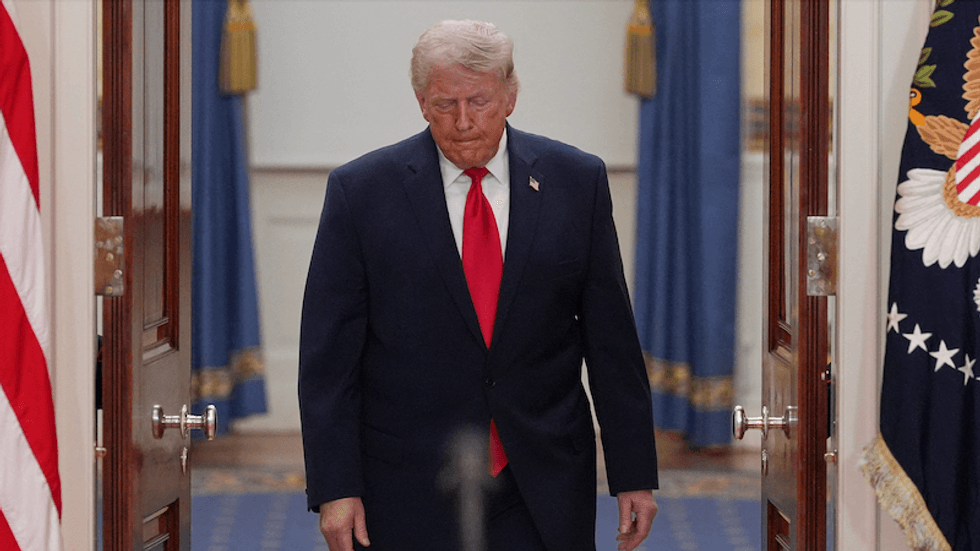
Fed Rate Cuts Face War Uncertainty Ahead of Key FOMC Decision
Global Markets Await Federal Reserve Decision as Rate Cut Debate Intensifies
Financial markets around the world are closely watching the Federal Reserve as policymakers conclude their latest Federal Open Market Committee meeting scheduled for March 17–18, 2026.
The meeting comes at a time when investors are grappling with mixed economic signals and growing geopolitical tensions that could reshape expectations for interest rate cuts later this year.
Although most analysts expect the central bank to leave interest rates unchanged in the immediate term, the broader debate centers on what the Federal Reserve may signal about future monetary policy.
For traders, investors, and economists alike, the key question is not what the Fed will do tomorrow, but what it plans to do in the months ahead.
Why the Federal Reserve Decision Matters for Global Markets
Interest rates set by the Federal Reserve play a critical role in shaping global financial conditions.
Higher interest rates generally slow borrowing and spending, which helps control inflation but may weaken economic growth.
Lower rates, on the other hand, encourage investment and consumer spending but can also push inflation higher.
Because the United States dollar remains the dominant reserve currency, decisions made by the Federal Reserve influence markets far beyond U.S. borders.
Stock markets, bond yields, commodities, and cryptocurrencies often react within minutes of any signals from the central bank.
As the March policy meeting concludes, markets appear almost certain that the Fed will maintain its current benchmark interest rate range of 3.50 percent to 3.75 percent.
However, the forward guidance from policymakers could trigger volatility across multiple asset classes.
Geopolitical Tensions Push Oil Prices Higher
One of the major factors influencing the Federal Reserve’s policy outlook is the recent surge in oil prices.
Rising geopolitical tensions in the Middle East have raised concerns about disruptions to global energy supply.
The Strait of Hormuz, a critical shipping route for crude oil, has become a focal point for these concerns.
Any disruption in this region can significantly reduce global supply and drive energy prices upward.
When oil prices rise sharply, the effects ripple through the broader economy.
Transportation costs increase, manufacturing expenses rise, and businesses often pass those costs on to consumers.
This process can push inflation higher, complicating the Federal Reserve’s efforts to bring price growth closer to its long-term target of 2 percent.
Inflation Remains Above Target
Despite aggressive monetary tightening in previous years, inflation in the United States remains slightly above the Federal Reserve’s preferred level.
Recent economic data shows that the Consumer Price Index stands at approximately 2.4 percent on an annual basis.
Meanwhile, the Fed’s preferred inflation measure, the core Personal Consumption Expenditures index, remains closer to 3.06 percent.
These figures suggest that inflation pressures have eased compared with earlier peaks but have not fully returned to the central bank’s comfort zone.
For policymakers, this creates a delicate balancing act.
Cutting interest rates too soon could reignite inflation.
Maintaining high rates for too long could slow economic growth and increase unemployment.
Mixed Signals from the U.S. Economy
Recent economic data paints a complex picture of the U.S. economy.
Gross domestic product growth has slowed to approximately 0.7 percent, suggesting a cooling expansion.
At the same time, the unemployment rate has risen to about 4.4 percent, reflecting some weakening in the labor market.
While these indicators may normally support the case for lowering interest rates, persistent inflation complicates the decision.
Federal Reserve officials must weigh the risks of tightening financial conditions against the dangers of allowing inflation to remain elevated.
Because of this uncertainty, many analysts believe the central bank will take a cautious approach and wait for additional data before adjusting policy.
Market Expectations Point to a Pause
Financial markets currently show overwhelming confidence that the Federal Reserve will leave interest rates unchanged at this meeting.
Data from the CME FedWatch tool suggests that traders assign a 99.1 percent probability to the central bank maintaining the current rate range.
The same data indicates only a 0.9 percent probability of a rate cut and virtually no chance of an interest rate increase.This strong consensus highlights the degree to which the upcoming decision has already been priced into financial markets.
However, what investors will analyze most carefully is the tone of the Federal Reserve’s statement and press conference.
Any hints about future policy could quickly shift expectations for the rest of the year.
Stock Markets React with Cautious Optimism
U.S. stock markets have shown modest gains ahead of the Federal Reserve’s announcement.
Major indices such as the S&P 500 and the Nasdaq have risen between 0.3 percent and 1.1 percent in recent trading sessions.
 |
| Source: Trading View |
Technology companies and growth-oriented sectors tend to benefit most from lower interest rates because cheaper borrowing can support expansion and innovation.
However, if policymakers signal that rates will remain elevated for an extended period, these sectors could face renewed pressure.
Cryptocurrency Markets Mirror Equity Trends
Cryptocurrency markets are also reacting to the broader macroeconomic environment.
Bitcoin has remained above the 70,000 dollar level for more than a week, signaling strong investor interest despite uncertainty surrounding monetary policy.
During the same period, the total cryptocurrency market capitalization has increased by roughly 180 billion dollars.
However, volatility remains high across alternative cryptocurrencies.
Some altcoins have experienced intraday price swings of between 5 percent and 10 percent as traders position themselves ahead of the Federal Reserve decision.
Because digital assets are often viewed as risk-sensitive investments, changes in liquidity conditions can have a significant impact on their prices.
Possible Scenarios After the Fed Announcement
The immediate reaction of financial markets will depend largely on the tone of the Federal Reserve’s forward guidance.
If policymakers signal that interest rates may remain higher for longer, stocks could face short-term pressure.
Higher borrowing costs tend to reduce corporate earnings expectations and can lead investors to shift funds toward safer assets.
Cryptocurrency markets may also lose momentum under such conditions.
Reduced liquidity and tighter financial conditions typically limit risk appetite.
Potential for a Relief Rally
Another possible outcome would occur if the Federal Reserve hints at potential rate cuts later in 2026.
Even without an immediate policy change, such guidance could trigger a relief rally across multiple asset classes.
Stocks may extend their recent gains as investors anticipate lower borrowing costs and stronger economic activity.
Cryptocurrencies could benefit even more from improved liquidity conditions.
Historically, digital assets have tended to perform well during periods of monetary easing.
Risk of Further Inflation Pressures
A less likely but still possible scenario involves a renewed surge in inflation.
If energy prices continue to climb and consumer price growth accelerates, the Federal Reserve could face pressure to tighten policy further.
Under such circumstances, both equity and cryptocurrency markets could experience sharper declines.
Investors often react negatively to the prospect of higher interest rates because tighter monetary policy reduces liquidity in financial markets.
The Next Federal Reserve Meeting
While the March meeting may not produce an immediate rate change, attention will quickly shift to the Federal Reserve’s next policy gathering scheduled for April 28–29, 2026.
By that time, policymakers will have additional data on inflation, employment, and economic growth.
These indicators will play a key role in determining whether the central bank begins signaling a shift toward easing later in the year.
For now, investors remain focused on interpreting the central bank’s latest message.
Conclusion
The Federal Reserve’s March 2026 policy meeting highlights the delicate balance facing central bankers in the current economic environment.
While markets are almost certain that interest rates will remain unchanged in the immediate term, uncertainty surrounding inflation, geopolitical risks, and economic growth continues to influence expectations.
For investors, the most important takeaway may not be the current rate decision but the signals about what comes next.
As the global economy navigates rising energy prices and mixed economic data, the path toward potential rate cuts in 2026 remains uncertain.
Financial markets will continue to react to every hint from policymakers as they attempt to anticipate the next phase of U.S. monetary policy.
hokanews.com – Not Just Crypto News. It’s Crypto Culture.
Writer @Erlin
Erlin is an experienced crypto writer who loves to explore the intersection of blockchain technology and financial markets. She regularly provides insights into the latest trends and innovations in the digital currency space.
Check out other news and articles on Google News
Disclaimer:
The articles published on hokanews are intended to provide up-to-date information on various topics, including cryptocurrency and technology news. The content on our site is not intended as an invitation to buy, sell, or invest in any assets. We encourage readers to conduct their own research and evaluation before making any investment or financial decisions.
hokanews is not responsible for any losses or damages that may arise from the use of information provided on this site. Investment decisions should be based on thorough research and advice from qualified financial advisors. Information on HokaNews may change without notice, and we do not guarantee the accuracy or completeness of the content published.


You May Also Like

2026 World Cup Prediction Markets: Round of 32 Risk for Messi, Ronaldo, Argentina and Portugal
Kevin Warsh and the June Rate Cut: Why the Shadow FOMC Is Predicting a Pivot Before the New Chair Takes the Oath