AI Training Data Compensation: Patreon CEO Blasts ‘Bogus’ Fair Use Claims at SXSW
BitcoinWorld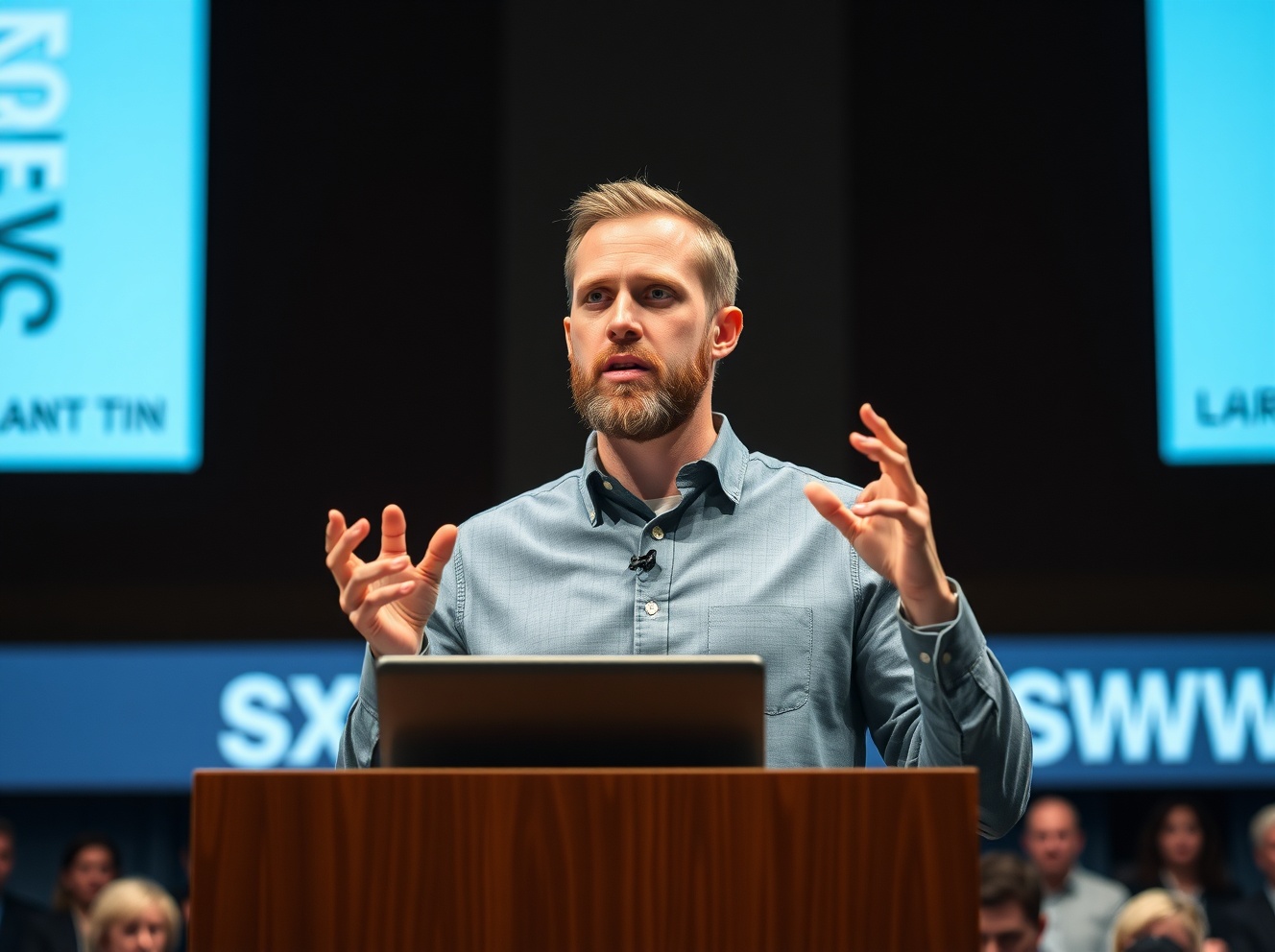
AI Training Data Compensation: Patreon CEO Blasts ‘Bogus’ Fair Use Claims at SXSW
At the SXSW conference in Austin this week, Patreon CEO Jack Conte delivered a forceful critique of artificial intelligence companies, directly challenging the legal and ethical foundation of how they train their models. While affirming his position as a technology leader, Conte labeled the industry’s widespread ‘fair use’ argument for using creators’ work without payment as fundamentally ‘bogus,’ igniting a crucial debate about value and compensation in the AI era.
Patreon CEO Challenges AI’s Fair Use Doctrine
Jack Conte, founder of the platform supporting over 250,000 creators, clarified his stance is not anti-technology. “I run a frickin’ tech company,” he stated, acknowledging AI’s inevitability. However, he draws a firm line at uncompensated data scraping. Conte’s core argument hinges on a perceived hypocrisy: while AI firms claim training on publicly available content is legal ‘fair use,’ they simultaneously engage in multi-million dollar licensing deals with major rights holders like Disney, Condé Nast, and Warner Music Group.
“If it’s legal to just use it, why pay?” Conte asked the audience rhetorically. This contradiction, he argues, reveals the fair use defense as a selective strategy. It protects corporations with legal teams while leaving individual illustrators, musicians, and writers without recourse. The economic scale is staggering; Conte pointed out that these models have consumed creators’ work to build “hundreds of billions of dollars of value” for AI companies.
The Historical Cycle of Creative Disruption
Conte positioned the rise of generative AI not as an unprecedented catastrophe, but as the latest disruptive wave in a familiar cycle for digital creators. He drew parallels to previous industry-shifting transitions:
- The Music Industry Shift: The move from purchasing albums on iTunes to the subscription-based streaming model of Spotify and Apple Music.
- The Video Format Revolution: The pivot from horizontal, YouTube-style video to the vertical, short-form format dominated by TikTok and Instagram Reels.
Each of these changes, Conte noted, broke existing business models and required adaptation. “I learned a very important thing as an artist, which is that change does not mean death. You can get back up, and you can fucking go again,” he said, referencing his own experience as a musician before founding Patreon.
A Manifesto for Compensated Innovation
Reading from what he termed a ‘manifesto,’ Conte’s speech transcended simple criticism. He framed the issue as a foundational choice for society’s future. “The AI companies should pay creators for our work, not because the tech is bad — but because a lot of it is good, or it will be soon — and it’s going to be the future,” he asserted.
His argument extends beyond fairness to a broader societal benefit. “When we plan for humanity’s future, we should plan for society’s artists, too, not just for their sake, but for the sake of all of us. Societies that value and incentivize creativity are better for it.” This perspective positions creator compensation as an investment in sustained cultural innovation, not merely a transactional dispute.
The Legal and Economic Landscape of Training Data
Conte’s comments arrive amid a global surge in litigation and regulatory scrutiny. The ‘fair use’ doctrine under U.S. copyright law (Section 107) is currently being tested in multiple high-profile lawsuits against AI companies. Legal experts remain divided on its application to machine learning. Proponents argue that transforming copyrighted works into training data for a new, non-infringing purpose qualifies as fair use. Opponents, like Conte, contend that the commercial scale and direct competitive threat tip the scales.
The emerging market practice further complicates the picture. The following table outlines the current dichotomy in data sourcing strategies:
| Data Sourcing Method | Example | Industry Argument |
|---|---|---|
| Scraping Public Web Data | Using publicly posted images, text, and code. | Fair Use / Publicly Available |
| Licensing from Major Rights Holders | Deals with news publishers, stock photo archives, and music labels. | Partnership & Quality Assurance |
This two-tiered approach creates what many creators call an unfair system. It systematically values the archives of large corporations while treating the output of independent creators as a free resource.
The Path Forward for Creators and Platforms
For Conte and Patreon, the end goal is clear: establishing a mechanism for AI companies to pay creators at scale. Patreon’s community represents a potentially massive, organized bloc of rights holders. The platform could theoretically negotiate collective licensing agreements or develop technological solutions, like metadata tagging, to facilitate micropayments for training data use.
Conte ended his talk on a note of defiant optimism for human creativity. He distinguished the predictive nature of Large Language Models (LLMs) from true artistic innovation. “Great artists don’t play back what already exists,” he said. “They stand on the shoulders of giants. They push culture forward.” His belief is that audiences will continue to seek and value human connection and originality, regardless of AI’s technical prowess. The challenge, and the opportunity, is ensuring the economic model supports that future.
Conclusion
Jack Conte’s SXSW address marks a significant escalation in the debate over AI training data compensation. By moving the conversation from abstract legal theory to tangible economic hypocrisy and societal value, he frames the issue as a critical juncture for the creator economy. The coming years will determine whether a sustainable model for compensated innovation emerges or if the ‘bogus’ fair use argument, as Conte calls it, becomes the entrenched standard. The outcome will fundamentally shape how value is distributed in the next era of the internet.
FAQs
Q1: What is the ‘fair use’ argument that AI companies use?
The ‘fair use’ doctrine in U.S. copyright law allows limited use of copyrighted material without permission for purposes like criticism, news reporting, or research. AI companies argue that ingesting copyrighted works to train a model, which then produces new, original outputs, qualifies as a ‘transformative’ fair use.
Q2: Why does Jack Conte say this argument is ‘bogus’?
Conte points to the contradiction between AI companies claiming they can freely use data under fair use while simultaneously paying large sums to license content from major corporations like Disney and Warner Music. He argues this selective payment undermines the legal strength of a blanket fair use claim.
Q3: How does this issue affect individual creators versus large companies?
Individual creators often lack the legal resources to challenge AI companies, whereas large media conglomerates can negotiate lucrative licensing deals. This creates a two-tiered system where corporate content is valued and paid for, while individual creator content is often used without direct compensation.
Q4: What potential solutions exist for compensating creators?
Potential solutions include collective licensing pools (where AI companies pay into a fund distributed to creators), mandatory opt-out or opt-in systems for web scraping, metadata tagging to track content usage, and direct licensing platforms facilitated by companies like Patreon.
Q5: Is this issue only about money, or are there other concerns?
Beyond compensation, core concerns include attribution, consent, and the potential for AI to directly compete with and dilute the market for human-created work. There are also ethical questions about using personal or artistic expression as an industrial input without the creator’s knowledge.
This post AI Training Data Compensation: Patreon CEO Blasts ‘Bogus’ Fair Use Claims at SXSW first appeared on BitcoinWorld.


You May Also Like

Bitcoin, Gold, and U.S. Stocks Dive as Trump Pledges to Hit Iran ‘Extremely Hard’
One Kash Patel comment 'made the hair on the back of my neck stand up': ex-FBI deputy