US Dollar Index Grips 100.00 as Scorching PPI Data and Pivotal Fed Decision Loom
BitcoinWorld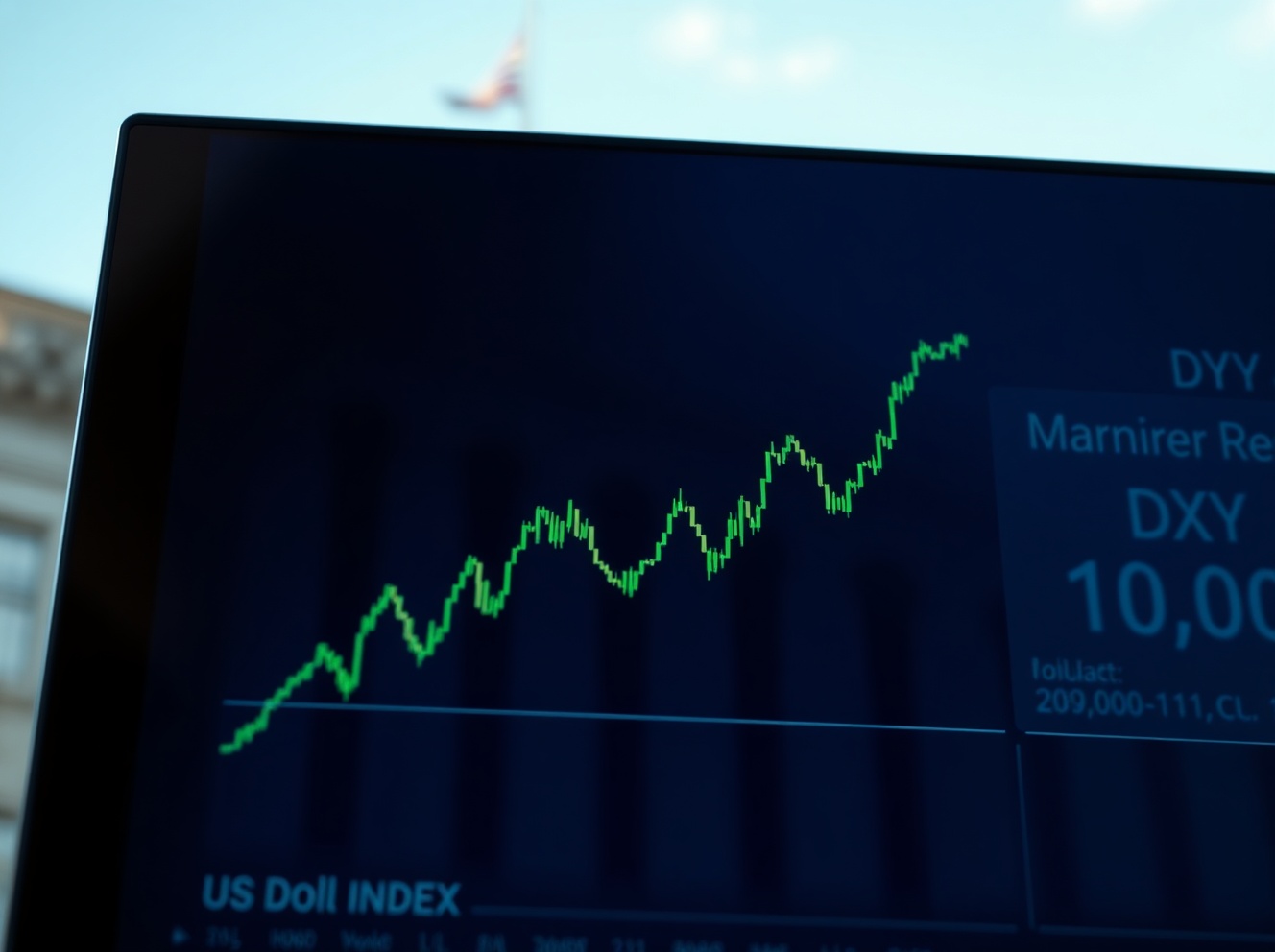
US Dollar Index Grips 100.00 as Scorching PPI Data and Pivotal Fed Decision Loom
The US Dollar Index (DXY), a critical benchmark for the greenback’s strength against a basket of major currencies, is clinging to the psychologically significant 100.00 level this week. This pivotal moment arrives as financial markets worldwide grapple with unexpectedly hot Producer Price Index (PPI) data and brace for a landmark monetary policy announcement from the Federal Reserve. Consequently, traders and analysts are scrutinizing every data point for clues about the future path of interest rates and inflation.
US Dollar Index Stability Amid Economic Crosscurrents
The DXY’s resilience near the 100.00 mark demonstrates a complex market equilibrium. On one hand, robust economic indicators traditionally support a stronger dollar. On the other hand, the Federal Reserve’s impending decision creates profound uncertainty. Market participants are therefore balancing short-term data surprises with longer-term policy expectations. This delicate balance explains the index’s current range-bound behavior, as it absorbs conflicting signals from the global economic landscape.
Historically, the 100.00 level has acted as both a technical and psychological barrier for the dollar index. A sustained break above or below this threshold often signals a broader trend shift in currency markets. For instance, the index spent much of the previous year trading well above 100, reflecting aggressive Fed tightening. Recently, however, moderating inflation expectations have pulled it back toward this central pivot point, making the current consolidation a critical juncture.
Deciphering the Hot PPI Inflation Report
The latest Producer Price Index data delivered a significant surprise to economists, showing persistent inflationary pressures at the wholesale level. The PPI measures the average change over time in selling prices received by domestic producers for their output. It serves as a leading indicator for consumer inflation, as businesses often pass higher production costs onto consumers. The report’s key components revealed notable increases:
- Final Demand Goods: Prices rose, driven by energy and certain food categories.
- Final Demand Services: Costs continued to climb, particularly in transportation and warehousing.
- Core PPI (excluding food and energy): This measure also exceeded forecasts, suggesting broad-based price pressures.
This data immediately influenced market sentiment, as it complicates the Federal Reserve’s task. The central bank’s primary mandate is price stability, and stubborn wholesale inflation can delay or alter plans for monetary policy easing. Market-implied probabilities for rate cuts subsequently adjusted, providing underlying support for the US dollar as higher-for-longer rate expectations took root.
Expert Analysis on Inflation Persistence
Financial institutions and independent analysts have quickly incorporated the PPI surprise into their models. Many note that while Consumer Price Index (CPI) growth has moderated, upstream pressures captured by the PPI suggest the “last mile” of inflation reduction may be challenging. This scenario increases the likelihood of a cautious, data-dependent Federal Reserve. Consequently, the dollar’s role as a high-yield currency in a world of divergent central bank policies is reinforced, anchoring the DXY near its current level.
The Federal Reserve’s Monumental Decision
All eyes now turn to the Federal Open Market Committee (FOMC) meeting. The committee’s statement, updated economic projections, and the Chair’s press conference will provide the definitive guidepost for currency markets. Key elements markets will dissect include:
| Fed Component | Market Focus | Potential DXY Impact |
|---|---|---|
| Policy Rate | Hold vs. Change | Direct and immediate |
| Dot Plot | 2025-2026 rate projections | Medium-term trend direction |
| Press Conference | Tone on inflation & growth | Volatility and sentiment shift |
| Balance Sheet | Quantitative Tightening pace | Liquidity and longer-term yields |
A hawkish hold—where rates remain unchanged but the language emphasizes ongoing inflation concerns—would likely bolster the dollar. Conversely, any suggestion that rate cuts are imminent, despite the hot PPI, could trigger a swift sell-off in the DXY. The Fed must therefore communicate its strategy with exceptional clarity to avoid destabilizing market volatility.
Global Currency Impacts and Market Reactions
The DXY’s stance near 100.00 has direct implications for major currency pairs. A firm dollar typically pressures euro, yen, and pound sterling exchange rates. For example, EUR/USD often moves inversely to the dollar index. Emerging market currencies also feel the effect, as a strong dollar increases the debt servicing burden for countries with dollar-denominated obligations. Furthermore, commodity prices, which are frequently priced in dollars, can become more expensive for foreign buyers when the dollar appreciates, potentially dampening global demand.
Market reaction functions have evolved. Initially, traders priced in a series of aggressive rate cuts for 2025. However, the recent inflation data and cautious Fed rhetoric have forced a recalibration. This repricing is the primary force keeping the dollar index supported. Volatility indicators in the forex market have risen accordingly, reflecting the heightened uncertainty surrounding this week’s twin catalysts: the data and the decision.
The Technical Perspective on DXY Price Action
From a charting standpoint, the 100.00 area represents a confluence of technical factors. It aligns with a prior support/resistance zone and key moving averages that many algorithmic trading systems monitor. A sustained break below could target support near 99.50, while a rebound above 100.50 might open a path toward 101.00. Trading volume and order flow data around this level will provide critical short-term signals once the Fed news is fully absorbed by the marketplace.
Conclusion
The US Dollar Index’s tight grip on the 100.00 level underscores a market in suspense. The unexpectedly hot PPI report reaffirmed inflation’s persistence, while the upcoming Federal Reserve decision holds the key to the dollar’s next major trend. Ultimately, the interplay between robust economic data and central bank policy will determine whether the DXY breaks out or consolidates further. For global investors and businesses, understanding these dynamics is essential for navigating currency risk in the weeks ahead.
FAQs
Q1: What is the US Dollar Index (DXY)?
The US Dollar Index is a geometrically weighted index that measures the value of the United States dollar relative to a basket of six major world currencies: the Euro, Japanese Yen, British Pound, Canadian Dollar, Swedish Krona, and Swiss Franc. It provides a broad benchmark for the dollar’s international strength.
Q2: Why is the 100.00 level significant for the DXY?
The 100.00 level is a major psychological and technical benchmark. It often acts as a pivot point where market sentiment shifts. Historically, trading above 100 indicates broad dollar strength, while trading below can signal dollar weakness or a shift in global capital flows.
Q3: How does hot PPI data affect the Federal Reserve’s decision?
Producer Price Index data measures wholesale inflation. Hot PPI data suggests businesses face rising input costs, which they may pass to consumers, potentially leading to future consumer inflation (CPI). This can make the Fed more cautious about cutting interest rates, favoring a “higher for longer” policy stance to ensure price stability.
Q4: What is the most important thing to watch in the Fed announcement?
Beyond the rate decision itself, the updated “dot plot” of interest rate projections and the tone of the Chair’s press conference are critical. The dot plot shows FOMC members’ rate forecasts, and the press conference language reveals the committee’s bias regarding inflation risks and economic growth.
Q5: How does a strong US Dollar Index impact global markets?
A strong DXY can pressure emerging market currencies and economies by making dollar-denominated debt more expensive to service. It can also lower commodity prices (like oil and gold) in dollar terms and affect the earnings of US multinational companies by making their exports more expensive overseas.
This post US Dollar Index Grips 100.00 as Scorching PPI Data and Pivotal Fed Decision Loom first appeared on BitcoinWorld.


You May Also Like

Trump treating DC like 'personal property' to abuse when he gets bored: analysis

Markets, AI Rally Rattled as Trump Calls Iran Ceasefire “On Life Support”