WTI Oil Plummets from $100 Peak: Venezuela Sanctions Ease Offers Relief, But Middle East Risks Loom
BitcoinWorld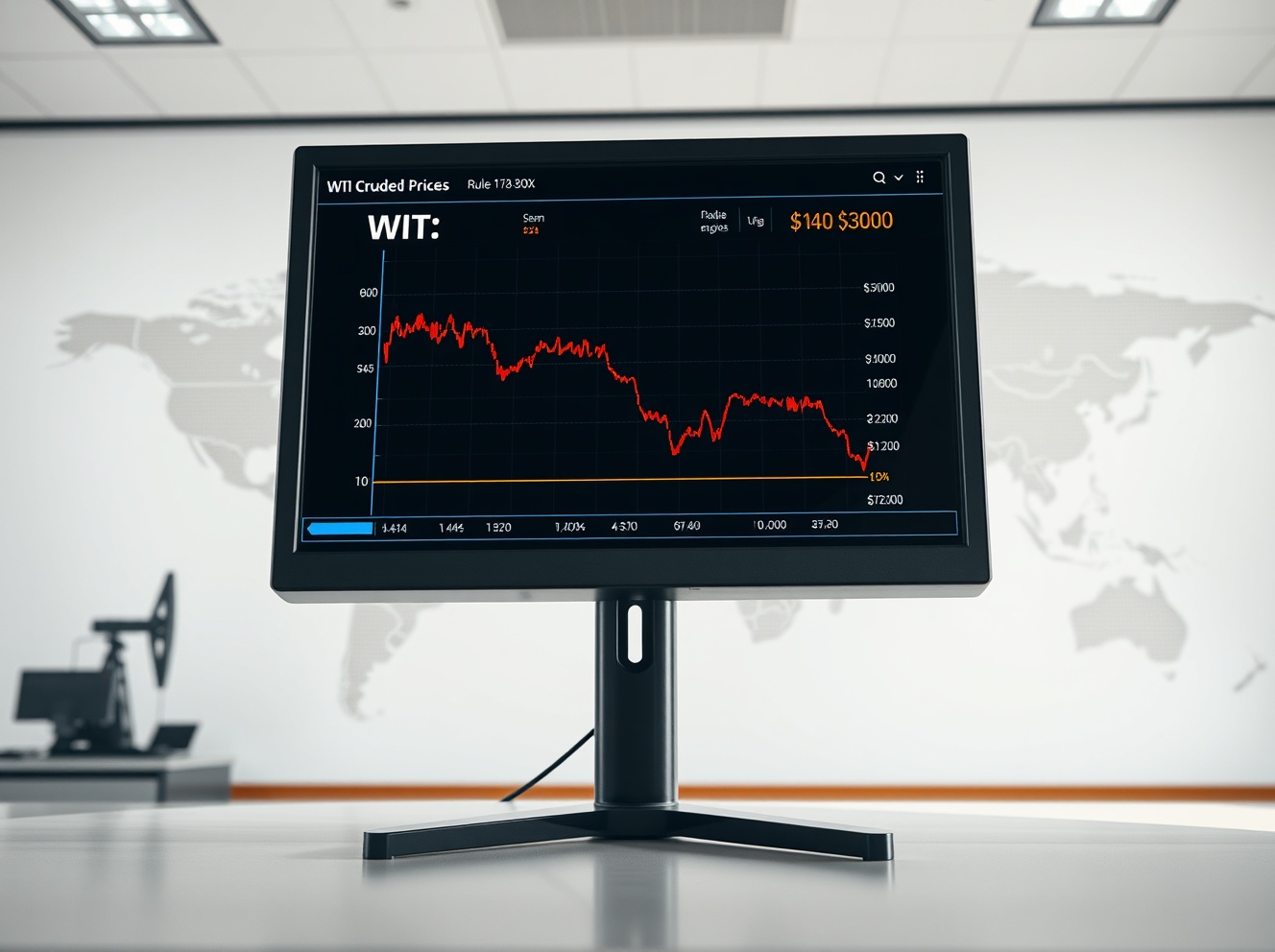
WTI Oil Plummets from $100 Peak: Venezuela Sanctions Ease Offers Relief, But Middle East Risks Loom
Global oil markets experienced a significant shift this week as West Texas Intermediate crude retreated from the psychologically critical $100 per barrel threshold. This pivotal move, observed in trading hubs from New York to Singapore, reflects a complex interplay between geopolitical developments and fundamental supply dynamics. The easing of U.S. sanctions on Venezuela’s oil sector provided immediate downward pressure. However, analysts caution that persistent risks in the Middle East continue to inject volatility into the market, creating an uncertain outlook for the remainder of 2025.
WTI Oil Price Retreats from Critical $100 Level
Benchmark WTI crude futures for December delivery fell sharply, settling near $96.50 per barrel after briefly touching $100.78 earlier in the week. This represents a decline of approximately 3.5% over a five-day period. The $100 level serves as a major technical and psychological barrier for traders and analysts. Consequently, breaching this barrier triggered automated selling and profit-taking across major exchanges. Market data from the CME Group shows a notable increase in trading volume during the retreat, indicating broad participation in the sell-off.
Several key factors contributed to this price movement. First, the U.S. Treasury Department’s announcement regarding Venezuela sanctions altered supply expectations. Second, weekly inventory data from the Energy Information Administration showed a larger-than-expected build in crude stocks. Finally, concerns about global demand resilience, particularly from China, added to the bearish sentiment. The price action demonstrates how quickly sentiment can shift in the oil complex.
Technical and Fundamental Analysis Converge
Chart analysis reveals that the $100 level had acted as strong resistance throughout the previous month. The failure to sustain prices above this level triggered a classic reversal pattern. Fundamentally, the market was arguably overbought given the rapid ascent from the mid-$80s in late 2024. The Relative Strength Index, a key momentum oscillator, had entered overbought territory above 70, signaling a potential correction was due. This convergence of technical signals and fundamental news created the conditions for the retreat.
Venezuela Sanctions Ease Alters Global Supply Calculus
The Biden administration’s decision to significantly ease oil sanctions on Venezuela marks a major policy shift. Specifically, the Treasury’s Office of Foreign Assets Control issued General License 44A, allowing transactions involving Venezuela’s oil and gas sector for a six-month period. This license renewal followed credible progress in Venezuela’s electoral roadmap. The immediate market impact was a reassessment of global heavy crude supply.
Venezuela possesses the world’s largest proven oil reserves, estimated at over 300 billion barrels. However, years of underinvestment and sanctions have crippled its production capacity. Prior to the sanctions relief, output hovered around 700,000 barrels per day. Industry analysts from Rystad Energy and S&P Global Commodity Insights project a potential increase of 200,000 to 400,000 barrels per day over the next 12-18 months. This additional supply, primarily heavy sour crude, helps fill a gap left by ongoing OPEC+ production cuts and provides refiners, particularly on the U.S. Gulf Coast, with a familiar feedstock.
- Supply Increase: Initial production boosts are expected within 90 days as dormant wells are reactivated.
- Market Impact: The incremental barrels are likely to pressure the price differentials for similar grades like Mexico’s Maya and Canadian heavy crude.
- Logistical Hurdles: Venezuela’s infrastructure requires substantial investment to reach pre-sanction production levels above 2 million bpd.
This development also carries diplomatic weight, potentially reducing global reliance on other sanctioned producers. The move is partly seen as an effort to stabilize global energy markets amid broader geopolitical tensions.
Persistent Middle East Risks Underpin Market Volatility
Despite the bearish impetus from Venezuela, the oil market’s risk premium remains elevated due to ongoing instability in the Middle East. The region accounts for nearly one-third of global seaborne oil trade, with critical chokepoints like the Strait of Hormuz and the Bab el-Mandeb strait. Recent incidents, including renewed Houthi attacks on commercial shipping in the Red Sea and heightened tensions along the Israel-Lebanon border, continue to threaten supply routes.
The geopolitical risk premium, often estimated by analysts at $5 to $10 per barrel, has not dissipated. Insurance costs for tankers transiting the Red Sea have quadrupled since the start of the year, according to Lloyd’s of London. Furthermore, the potential for a broader regional conflict involving major producers remains a tail risk that keeps traders on edge. Contingency plans by major consumers, including the U.S. Strategic Petroleum Reserve and IEA member country stocks, provide a buffer but not infinite insulation.
| Chokepoint | Daily Oil Flow (Million Barrels) | Primary Risk Factor | Current Status (2025) |
|---|---|---|---|
| Strait of Hormuz | 20.7 | Iran-U.S. Tensions | Heightened Naval Patrols |
| Bab el-Mandeb | 6.2 | Houthi Attacks | Significant Diversions |
| Suez Canal | 5.5 | Regional Spillover | Operational but Costly |
Energy security analysts note that the market has grown accustomed to a baseline level of Middle East tension. However, any escalation that physically disrupts flows from Saudi Arabia, Iraq, or the United Arab Emirates would trigger an immediate and severe price spike. This underlying tension creates a price floor, limiting the downside for benchmarks like WTI and Brent.
OPEC+ Policy Remains a Central Pillar
The Organization of the Petroleum Exporting Countries and its allies, known as OPEC+, continue to manage supply through voluntary production cuts. The group’s stated goal is to maintain market stability and balance. The gradual return of Venezuelan barrels complicates this calculus, potentially influencing OPEC+’s decision on whether to extend or taper its cuts into the second half of 2025. Saudi Arabia, the de facto leader, has emphasized its willingness to act preemptively to avoid a supply glut, a stance that provides underlying support to prices.
Global Demand Outlook and Inventory Trends
The demand side of the equation presents a mixed picture. The International Energy Agency, in its latest monthly report, revised its 2025 global oil demand growth forecast downward by 100,000 barrels per day to 1.1 million bpd. This revision reflects slower-than-expected economic activity in Europe and a measured recovery in China’s industrial sector. However, demand from emerging economies in Asia and resilient consumption in the United States, particularly during the summer driving season, provide offsets.
Inventory levels in OECD countries, a key metric for market balance, have shown volatility. Recent data indicates a build in commercial stocks, contributing to the price retreat. The market structure, known as the futures curve, has also flattened. The premium for immediate delivery over later months, called backwardation, has narrowed. This suggests near-term supply tightness is easing. Traders will closely monitor weekly U.S. inventory reports and refining activity for clearer demand signals.
Conclusion
The retreat of WTI oil from the $100 peak illustrates the dynamic and interconnected nature of the global crude market. The easing of Venezuela sanctions provided a tangible bearish catalyst, increasing expectations for future supply. Nevertheless, the persistent and potentially explosive risks in the Middle East maintain a solid floor under prices, preventing a more dramatic collapse. The market now balances these competing forces, with traders weighing incremental Venezuelan barrels against the ever-present threat of supply disruption in a critical producing region. The path for WTI oil prices in 2025 will likely hinge on the evolution of these geopolitical factors, OPEC+ policy decisions, and the strength of the global economic engine.
FAQs
Q1: Why did WTI oil prices fall from $100?
The primary driver was the easing of U.S. sanctions on Venezuela’s oil sector, which increased expectations for future global supply. This was combined with a larger-than-expected build in U.S. crude inventories and technical selling after prices failed to hold above the key $100 resistance level.
Q2: How much oil can Venezuela add to the market?
Analysts estimate Venezuela could increase production by 200,000 to 400,000 barrels per day over the next 12-18 months from a current base of about 700,000 bpd. Significant investment is required to restore output to its pre-sanction levels above 2 million bpd.
Q3: Do Middle East risks still matter for oil prices?
Yes, absolutely. Persistent tensions, particularly around key shipping chokepoints like the Strait of Hormuz and the Bab el-Mandeb strait, maintain a geopolitical risk premium estimated at $5-$10 per barrel. Any physical disruption to flows from major producers would cause a sharp price spike.
Q4: What is OPEC+’s role in this situation?
OPEC+, led by Saudi Arabia, continues to manage supply through voluntary production cuts. The group’s future decisions on whether to maintain, extend, or taper these cuts will be crucial in balancing the potential new supply from Venezuela and maintaining market stability.
Q5: What is the outlook for WTI oil prices for the rest of 2025?
The outlook is for continued volatility within a range. Prices are likely to find support from Middle East risks and OPEC+ supply management but face resistance from increased non-OPEC supply and uncertain demand growth. Most bank forecasts suggest a range between $85 and $105 per barrel for WTI in 2025.
This post WTI Oil Plummets from $100 Peak: Venezuela Sanctions Ease Offers Relief, But Middle East Risks Loom first appeared on BitcoinWorld.


You May Also Like

SHIB and Pi Move Sideways, BlockDAG Takes the Market Lead With a Live Casino and Utility Stack! Is It the Best Crypto to Buy Now?

Sui (SUI) Jumps 50% on Staking Surge and Stablecoin Plans