He built Lara.ng so Lagosians could navigate chaos with a chat. From the US, Samuel Odeloye is now using that data to wire Nigeria’s last‑mile delivery infrastructureHe built Lara.ng so Lagosians could navigate chaos with a chat. From the US, Samuel Odeloye is now using that data to wire Nigeria’s last‑mile delivery infrastructure
Digital Nomads: Samuel Odeloye left Lagos. He never stopped building for it.
For feedback or concerns regarding this content, please contact us at crypto.news@mexc.com
For eight years, Lara.ng, the WhatsApp-style chatbot that told you which bus to take, what the fare should be, and which backroad to avoid, was Lagos’s unofficial transit oracle.
Samuel Odeloye, the founder behind that chatbot, now lives in the United States. But the data Lara.ng has collected never left Lagos. From an office thousands of kilometres away, he is working on something harder than giving bus directions: building the invisible pipes to make last-mile delivery in Nigeria reliable and effective.
That tension, building deeply local infrastructure from abroad with local data, is what defines this chapter of his life as a digital nomad.
Get The Best African Tech Newsletters In Your Inbox
Select your country Nigeria Ghana Kenya South Africa Egypt Morocco Tunisia Algeria Libya Sudan Ethiopia Somalia Djibouti Eritrea Uganda Tanzania Rwanda Burundi Democratic Republic of the Congo Republic of the Congo Central African Republic Chad Cameroon Gabon Equatorial Guinea São Tomé and Príncipe Angola Zambia Zimbabwe Botswana Namibia Lesotho Eswatini Mozambique Madagascar Mauritius Seychelles Comoros Cape Verde Guinea-Bissau Senegal The Gambia Guinea Sierra Leone Liberia Côte d'Ivoire Burkina Faso Mali Niger Benin Togo Other
Select your gender Male Female Others
Subscribe
Act I: Leaving home to build for home
Odeloye left Nigeria in 2011 for what he describes as ‘a better life’: access to an environment that inspired his entrepreneurial drive. There was better access to United States banking, corporate structures, and a dollar‑denominated fundraising environment that was almost impossible to replicate from Lagos.
It was on a flight from the US that he conceived the idea for Lara.ng.
“I like to introduce myself as an engineer, sometimes an entrepreneur, but in most cases, a problem solver,” Odeloye said. “I’ve refused to wait for someone else to build infrastructures in cities where I see things being needed.”
Fresh out of the University of Lagos with a mechanical engineering degree, he was more obsessed with design thinking than oil‑and‑gas paychecks. A flight in 2012 made the problem he wanted to solve feel painfully obvious.
On a New York–London leg en route to Lagos, he found himself seated next to an American who had never left the US and was panicking about getting around London. Odeloye talked him through Transport for London’s (TfL) system, which his cousin had shown him once.
With TfL, you typed in a postcode and got step‑by‑step directions. On that flight, they laughed about how “Nigeria can never have something like that.” But the joke landed with a sting.
“I had this strong call in my heart that this is something I could do,” he recalled.
The question that refused to leave him was: What happens when it’s the American flying into Lagos with no cousin and no TfL?
The obsession followed him into business school. In 2014, he joined Stanford Graduate School of Business for an executive master of business administration (EMBA) in innovation and entrepreneurship, hoping to add structure to his instincts.
That same year, with partners Opeoluwa Bada and Nnamdi Nwanze, he started RoadPreppers (RP), a localised public transit intelligence system for Nigeria that worked like Google Maps but tried to keep up with Lagos’s ever‑shifting bus routes and fares.
RoadPreppers attracted about 10,000 registered users and then grew. It was a culture misalignment, said Odeloye, as he noticed that Nigerians found it difficult to do away with inborn navigation instincts.
“I was building for the Nigerian user with a Western understanding,” he said. Nigerians might appreciate a map, but they grew up asking conductors, shopkeepers, and strangers for directions. “[Nigerians] reach out to have conversations. And if [they] don’t know how to get somewhere, [they] will ask on the road.”
He stopped fighting the culture and leaned into it.
Act II: The chatbot that thought like Lagos
In 2017, Odeloye launched Lara.ng after sunsetting his previous city navigation-based attempt, RoadPreppers. This time, he wasn’t trying to teach Nigerians how to use or love maps, he said.
He taught a chatbot to talk like a Lagosian: a simple digital friend that answered navigation questions, for the shy users who weren’t bold enough to walk up to strangers on the street.
He and his co‑founders took the routing intelligence they had built and wrapped it in a WhatsApp‑style interface. Users could type “from Oshodi to Ikeja” the way they would text a friend. Lara.ng would respond with the exact danfo to take, where to drop off, and how much to pay.
Lara.ng sharing directions. Image Source: Bolu Abiodun via X
According to Odeloye, the growing user traffic told them they were onto something: the app pulled in 10,000 users within days of going live. Just before the COVID‑19 pandemic, Lara.ng had more than 250,000 users navigating Lagos and Abuja’s transport networks.
Before ChatGPT and the current wave of AI hype, a bot built by a Nigerian founder in the diaspora had become a daily companion for people trying not to get lost—or extorted—on their commute
Yet, popularity didn’t translate into profit. Keeping Lara updated meant constant fieldwork, hitting the streets to map new routes, track fare hikes, and keep pace with transport unions. The business model never fully clicked, even though the need was clear.
COVID‑19 exposed that fragility. As lockdowns and remote work shrank mobility, Lara’s usage dipped, and the economics stopped making sense.
“For most of 2020, it was hard,” he admitted. Teammates left, and all that was left was a messy roadmap and a mountain of hard‑won data.
Odeloye at the RP office in 2020. Image Source: Samuel Odeloye
Eight years into the experiment, Lara.ng was taking a break. But the information it had collected—on how people move, where they get stuck, and how much they pay—was too valuable to abandon.
Get The Best African Tech Newsletters In Your Inbox
Select your country Nigeria Ghana Kenya South Africa Egypt Morocco Tunisia Algeria Libya Sudan Ethiopia Somalia Djibouti Eritrea Uganda Tanzania Rwanda Burundi Democratic Republic of the Congo Republic of the Congo Central African Republic Chad Cameroon Gabon Equatorial Guinea São Tomé and Príncipe Angola Zambia Zimbabwe Botswana Namibia Lesotho Eswatini Mozambique Madagascar Mauritius Seychelles Comoros Cape Verde Guinea-Bissau Senegal The Gambia Guinea Sierra Leone Liberia Côte d'Ivoire Burkina Faso Mali Niger Benin Togo Other
Select your gender Male Female Others
Subscribe
Act III: Pivoting the data to last-mile logistics
If Lara.ng was about getting people from point A to B, Motions Space technologies, Odeloye’s new last-mile delivery startup, is about getting packages there, on time, without drama.
He spent the first eight months of 2022 in deep research and development on logistics. After talking to business owners, he found a pattern: order volume spikes always left a long trail of long, sometimes aggressive WhatsApp chats between businesses and delivery riders, and often, frantic calls.
Odeloye said he saw many infrastructure gaps in the last-mile delivery space, where trust is the core currency and almost everything still runs by hand. He wanted to change that.
He built a system that automates trust so completely that it becomes a non-risk and simply fades into the background. The point was not to make trust unnecessary, but to make the service so reliable that it just works.
“Sometimes you don’t need to innovate outside of where things are already happening,” said Odeloye. “You want to stay in the realm of where things already happen.”
In Nigeria, what “already happens” is small businesses sharing the number of their dispatch guy and juggling orders over the phone.
Motions inserts a software layer between that chaos and the customer. The platform allows businesses that currently rely on WhatsApp and calls to hand off order acceptance, customer communication, and rider coordination to an agent‑like system that automates the boring stuff.
It manages order prioritisation, assigns jobs to the right rider, and shows exactly where each package is. Under the hood, it leans on the routing intelligence originally built for Lara.ng to parse addresses and assign deliveries more intelligently.
But software alone can’t fix the last mile in a city where addresses are fluid, and riders get blamed for everything from traffic to theft. So Odeloye decided to build hardware too.
The Motions lockers—called Nest Pods—are physical kiosks where dispatch riders can drop off packages, and customers can pick them up at their convenience. They are constructed locally, not imported, to keep costs in check and make scaling across Nigerian cities more realistic.
A typical delivery might look like this: a customer places an order; the merchant dispatches via Motions; a rider is assigned; instead of fighting to locate a specific compound, the rider drops the package in the nearest Nest Pod. The customer receives a code, walks up to the locker, and opens it using a PIN, QR code, wristband, or Bluetooth from the app. Inside, their item is waiting.
Every interaction is recorded. Cameras capture arrivals and drop‑offs; app logs show who opened which locker when. If a rider opens a compartment and tries to close it without leaving a package, internal sensors flag it. The system simply refuses to close the transaction until an item is detected inside, baking accountability into the metal.
“Trust is the real product,” Odeloye said.
In a market where “he said, she said” is the default when deliveries go wrong, having video, sensor data, and an indisputable audit trail changes the conversation.
Early tests of Motions’ software and locker combo have reportedly cut delivery times by about half and reduced costs by about a third for some partners, thanks to more efficient routing and clustered drop-offs, Odeloye said.
The startup is still bootstrapped, with support from family-and-friends investors, including his wife, preferring to prove the model before taking institutional capital.
Odeloye said a rollout of pods is planned for Lagos, to turn these lockers into fixed delivery nodes across dense neighbourhoods.
Nest Pods by Motions Space Technologies. Image Source: Samuel Odeloye
Dual context as a superpower
From the outside, it can look contradictory: a founder who lives in the US but is building logistics infrastructure for Nigeria.
“It’s really hard building two very deep critical infrastructures, especially when you’re bootstrapped,” Odeloye said. “It’s hard to manage both concurrently.”
While the US gives him much-needed access to entrepreneurial and social capital, he says the product and the target market are squarely Nigerian. The assets for Motions, including the lockers, electronics, and most of the production-grade tinkering, are built locally.
Jesimiel Williams, who joined Lara.ng in 2019 and later worked with Motions as the product designer, remembers walking into Odeloye’s home in 2024 and seeing “metal panes, wired panels and all of that at the house.”
The running joke between Williams and his brother was that it felt like being in Tony Stark’s home: the big machines were elsewhere, but the first-principle experiments were happening right there.
From the US, Odeloye spends his days and nights straddling time zones: talking to Nigerian merchants and logistics partners, debugging hardware designs with teams on the ground, and pitching global partners who understand the infrastructure thesis but would never build it themselves.
“What Nigeria needs is not just more apps,” he told me. “We need infrastructures—physical and software infrastructures—things that global companies will not build because the unit economics don’t justify it yet. That’s the gap we’re trying to occupy at this moment.”
Distance hasn’t made him less Nigerian; it has made his convictions more precise. Living in the US lets him benchmark against global logistics and locker systems, study how cloud-like “locker as a node” models scale, and then come back to Nigeria’s realities with better questions. The challenge is not to let that vantage point dilute his sensitivity to how people move, pay, and complain in Lagos.
Building with data is the one thread Odeloye sees running from the earliest RoadPreppers days to whatever Motions becomes next. The third version of Lara.ng, rebuilt in December 2025 with what he calls “better routing intelligence,” is still being upgraded.
The transit bot may be a shell now, but its ghosts live in Motions’ address parser and routing engine.
Yet, the test for Odeloye and his Motions idea is whether customers will prefer to walk to a pod or demand door delivery during the rainy season.
Odeloye lives in the US, but his work is firmly anchored in Nigerian streets and the realities on the ground; its junctions and tensions of running a business in a place where infrastructure gaps are the rule, not the exception.
Disclaimer: The articles reposted on this site are sourced from public platforms and are provided for informational purposes only. They do not necessarily reflect the views of MEXC. All rights remain with the original authors. If you believe any content infringes on third-party rights, please contact crypto.news@mexc.com for removal. MEXC makes no guarantees regarding the accuracy, completeness, or timeliness of the content and is not responsible for any actions taken based on the information provided. The content does not constitute financial, legal, or other professional advice, nor should it be considered a recommendation or endorsement by MEXC.


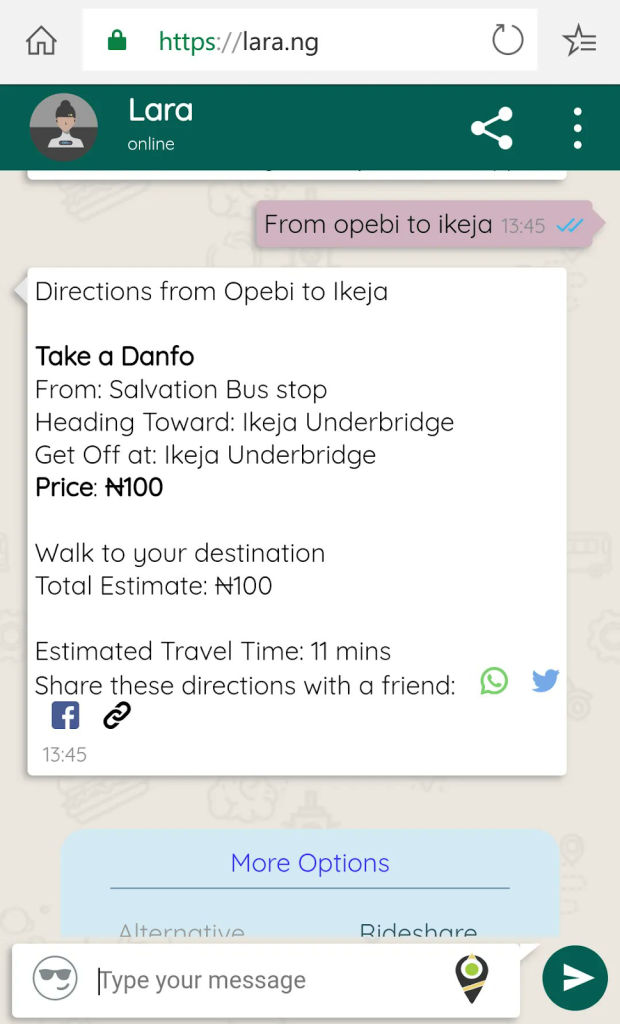 Lara.ng sharing directions. Image Source: Bolu Abiodun via X
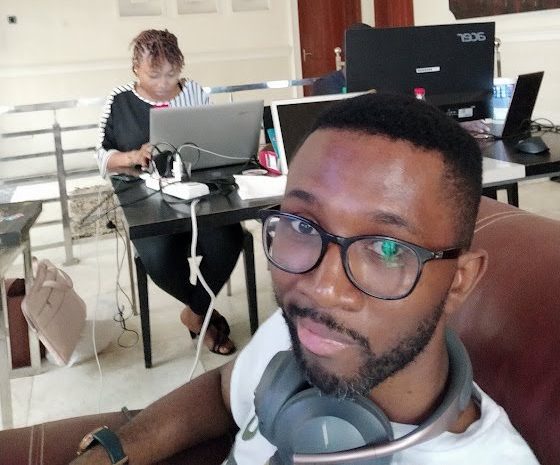 Odeloye at the RP office in 2020. Image Source: Samuel Odeloye
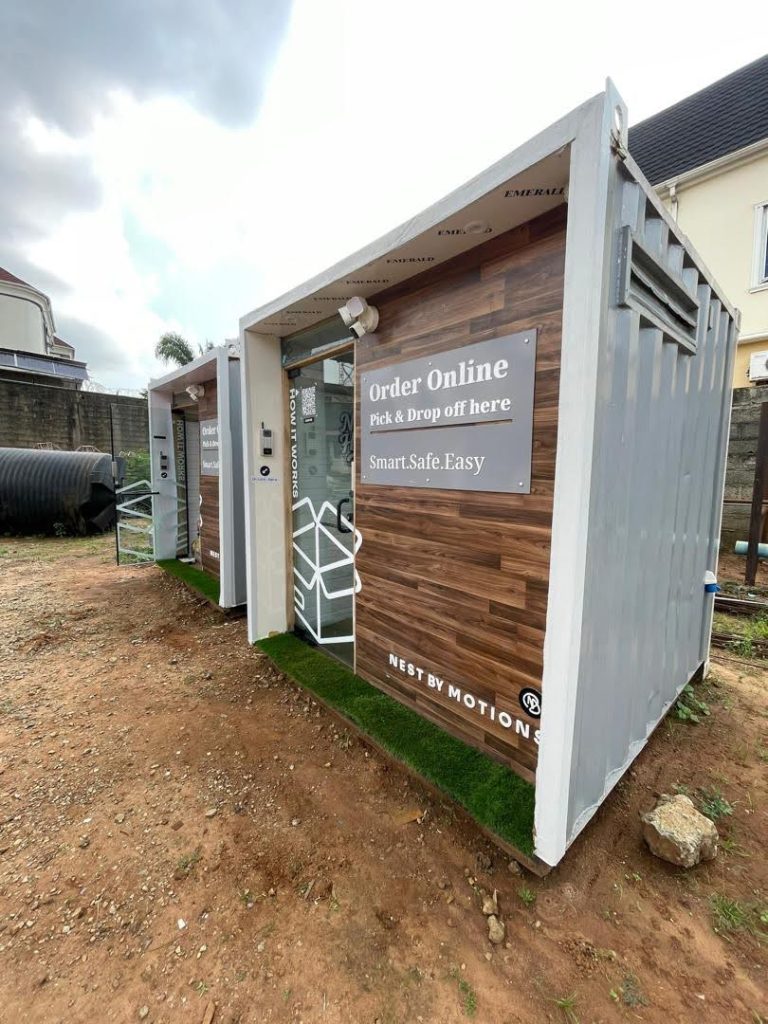 Nest Pods by Motions Space Technologies. Image Source: Samuel Odeloye