Hackers are using fake Google Play Store pages to spread an Android malware campaign in Brazil.Hackers are using fake Google Play Store pages to spread an Android malware campaign in Brazil.

Hackers mimic Google Play to spread crypto mining malware

2026/03/22 18:32
4 min read
For feedback or concerns regarding this content, please contact us at crypto.news@mexc.com

Hackers are targeting victims via a new phishing scheme. According to a post from SecureList, hackers are using fake Google Play Store pages to spread an Android malware campaign in Brazil.

The harmful app appears to be a legitimate download, but once installed, it converts infected phones into crypto mining machines. Moreover, it is used to install banking malware and grant remote access to threat actors.

Hackers turn Brazilian smartphones into crypto mining machines

The campaign starts on a phishing website that looks almost identical to Google Play. One of the pages offers a fake app called INSS Reembolso, which claims to be linked to Brazil’s social security service. The UX/UI design copies a trusted government service and the Play Store layout to make the download appear safe.

After installing the fake app, the malware unpacks hidden code in multiple stages. It uses encrypted components and loads the main malicious code directly into memory. There are no visible files on the device, making it hard for users to detect any suspicious activity.

The malware also evades analysis by security researchers. It checks whether the phone is running in an emulated environment. If it detects one, it stops working.

After successful installation, the malware continues to pull down more malicious files. It shows another fake Google Play-style screen, then displays a false update prompt and pushes the user to tap the update button.

One of those files is a crypto miner, which is a version of XMRig compiled for ARM devices. The malware fetches the mining payload from attacker-controlled infrastructure. Then it decrypts it and runs it on the phone. The payload connects infected devices to mining servers controlled by the attackers to mine crypto silently in the background.

The malware is sophisticated and does not mine crypto blindly. According to SecureList’s analysis, the malware monitors the battery charge percentage, temperature, installation age, and whether the phone is being actively used. Mining starts or stops based on the monitored data. The goal is to stay hidden and reduce any chance of detection.

Android kills background apps to save battery, but the malware evades this by looping an almost silent audio file. It fakes active use to avoid Android’s auto-deactivation.

To continue sending commands, the malware uses Firebase Cloud Messaging, which is a legitimate Google service. This makes it easy for attackers to send new instructions and manage activity on the infected device.

Banking Trojan targets USDT transfers

The malware does more than mine coins. Some versions also install a banking Trojan that targets Binance and Trust Wallet, especially during USDT transfers. It overlays fake screens on top of the real apps, then it quietly replaces the wallet address with one controlled by the attacker.

The banking module also monitors browsers like Chrome and Brave and supports a wide range of remote commands. These include recording audio, capturing screens, sending SMS messages, locking the device, wiping data, and logging keystrokes.
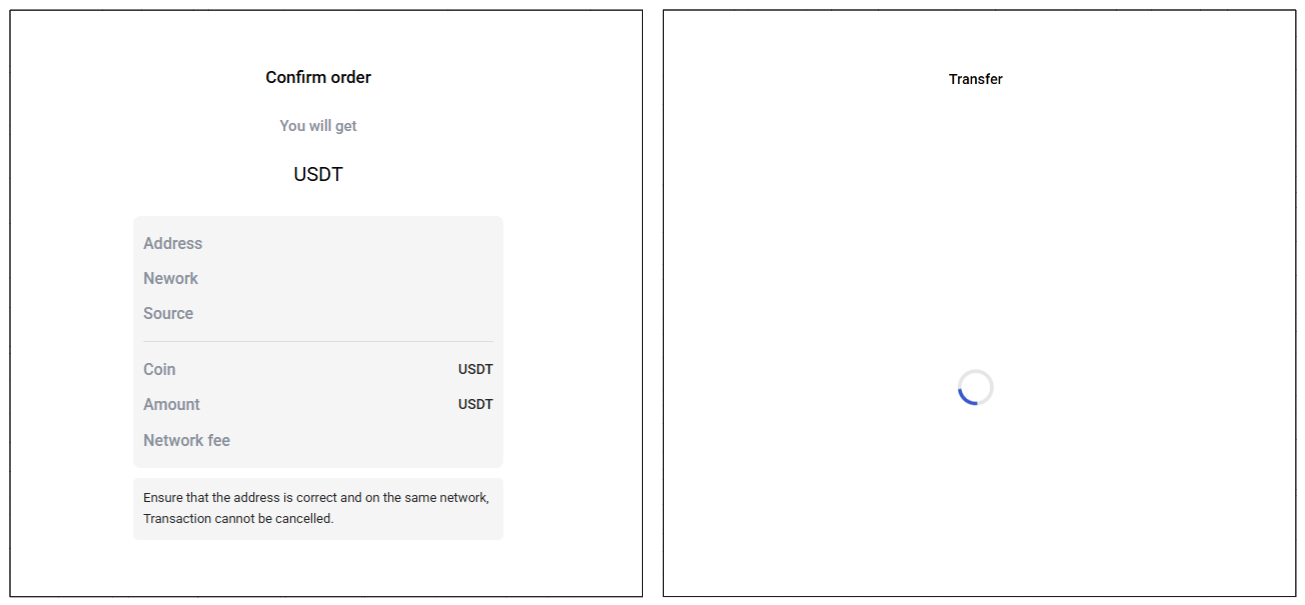
Hackers spoof Google Play Store pages to mine crypto.Fake overlay pages from Binance (left) and Trust Wallet (right). Source: SecureList.

Other recent samples keep the same fake app delivery method but switch to a different payload. They install BTMOB RAT, a remote access tool sold in underground markets.

BTMOB is part of a malware-as-a-Service (MaaS) ecosystem. Attackers can buy or rent it, which lowers the barrier to hacking and theft. The tool gives attackers deeper access, including screen recording, camera access, GPS tracking, and credential theft.

BTMOB is actively promoted online. A threat actor shared demos of the malware on YouTube, showing how to control infected devices. Sales and support are handled through a Telegram account.

SecureList stated that all known victims are in Brazil. Some newer variants are also spreading through WhatsApp and other phishing pages.

Sophisticated hacking campaigns like this are reminders to verify everything and trust nothing.

Don’t just read crypto news. Understand it. Subscribe to our newsletter. It's free.

Disclaimer: The articles reposted on this site are sourced from public platforms and are provided for informational purposes only. They do not necessarily reflect the views of MEXC. All rights remain with the original authors. If you believe any content infringes on third-party rights, please contact crypto.news@mexc.com for removal. MEXC makes no guarantees regarding the accuracy, completeness, or timeliness of the content and is not responsible for any actions taken based on the information provided. The content does not constitute financial, legal, or other professional advice, nor should it be considered a recommendation or endorsement by MEXC.

You May Also Like

Coinbase Vs. State Regulators: Crypto Exchange Fights Legal Fragmentation

Coinbase Vs. State Regulators: Crypto Exchange Fights Legal Fragmentation

US-based crypto exchange Coinbase has made a significant appeal to the Department of Justice (DOJ) regarding a wave of lawsuits aimed at its operations. The company is urging federal action to address what it describes as an “increasingly fragmented and hostile” regulatory landscape for the crypto market. Coinbase Urges Federal Action  In a recent letter, Coinbase highlighted the steps taken by the current Administration to create a more equitable framework for digital asset regulation. This includes the introduction of stablecoin legislation and two pending bipartisan market-structure bills aimed at fostering uniformity in the oversight of cryptocurrencies.  Coinbase argues that these initiatives have begun to mitigate the adverse effects of the previous Administration’s enforcement-driven regulatory approach.  However, the company warns that certain states are perpetuating this problematic trend by adopting “expansive and flawed” interpretations of securities laws and implementing new licensing requirements that undermine the federal government’s pro-innovation stance. Related Reading: REX Shares Claims Its DOGE And XRP Spot ETFs Will Be Approved By US SEC Tomorrow They make an example with the Oregon Attorney General, who has filed a lawsuit against Coinbase, claiming that many digital assets traded on its platform qualify as alleged unregistered securities.  The letter affirms that the suit not only targets Coinbase but also encourages other states to address what the Attorney General perceives as a regulatory gap left by federal authorities.  Similarly, the New York Attorney General has initiated legal action to regulate transactions involving digital assets based on decentralized protocols as securities, further complicating the regulatory environment. Coinbase has faced cease-and-desist orders from four states, which demand the company halt its retail staking services. These orders are deemed by Coinbase as “legally unfounded and inconsistent.” Unified Framework For Digital Assets In light of these challenges, the letter to the DOJ calls for urgent federal intervention to establish broad preemption provisions. The crypto exchange argues that preemption has historically been an effective tool for addressing state interference in national markets, referencing past Congressional actions. Coinbase contends that the current patchwork of state regulations not only disrupts market efficiency but also leads to unequal access to cryptocurrency services based on geographic location. Related Reading: Citi’s Ethereum Forecast: No New All-Time High Expected, Year-End Target At $4,300 To remedy these issues, Coinbase advocates for Congress to adopt legislation that would exempt federally regulated digital assets from state blue-sky laws and clarify that state licensing requirements do not apply to crypto intermediaries.  Additionally, the company urges the SEC to expedite rulemaking and provide clearer guidance on why digital asset transactions and services, including staking, should not be classified as securities. Such clarity would help prevent states from imposing conflicting regulations based on their interpretations of securities laws. Featured image from Shutterstock, chart from TradingView.com
Share
NewsBTC2025/09/18 15:00
XRP price dips to $1.40: What’s behind the latest decline?

XRP price dips to $1.40: What’s behind the latest decline?

XRP struggles at $1.40, with retail demand driving its growth despite institutional caution and broader market uncertainty.
Share
Crypto.news2026/03/22 21:44
VP Sara: Sustain insurgency drive

VP Sara: Sustain insurgency drive

VICE-PRESIDENT (VP) Sara Duterte-Carpio on Sunday urged the Philippine Army to sustain its campaign against insurgency and terrorism while upholding institutional
Share
Bworldonline2026/03/22 19:08




