Ethereum Faces 50K Hourly Address-Poisoning Attacks; $160K Lost
Ethereum withstands 50000 address-poisoning attempts per hour. A crypto user lost $160K USDC in an accidental transfer of tokens to the wrong address. Learn to avoid this.
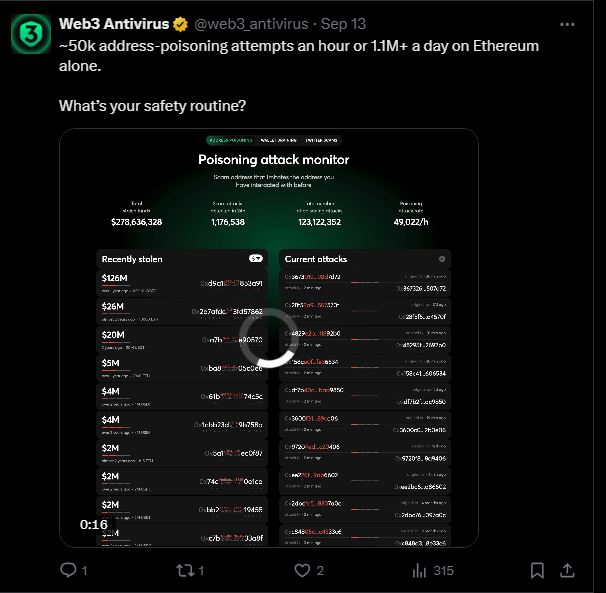
The number of address-poisoning attacks on Ethereum has become alarming. Web3 Antivirus reports that there are approximately 50,000 of such attempts every hour.
This is more than 1.1 million attacks on Ethereum users each day. Even experienced crypto stakeholders have a high risk.
Source – X
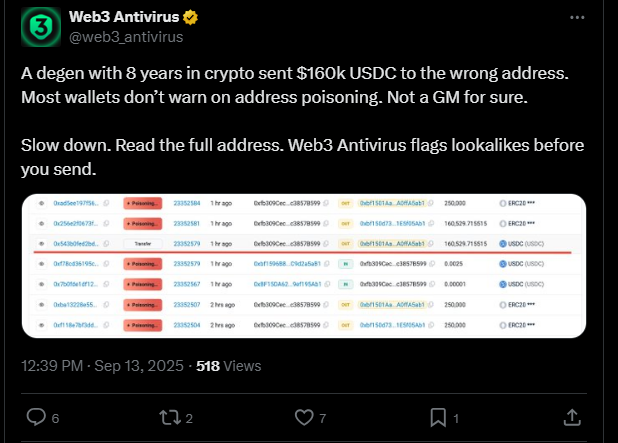
The danger was noted in a recent high-profile case. An eight-year-old crypto trader sent an incorrect address with a sum of 160,000 USDC and regretted it.
The cause of this loss is due to the majority of wallets do not notify the user of address-poisoning. The error committed by the trader demonstrates that there is no one who is safe.
These facts were published by Web3 Antivirus, a company that works on web3 security, on X (once Twitter). They stressed that users should take their time and ensure that they check addresses thoroughly before sending.
Address-poisoning is the unlawful use of wallet addresses by malicious actors. They generate almost similar characters or symbols in order to disorient senders.
One misplaced personality can divert money to sham wallets. This malicious attack takes advantage of human factors and technical vulnerabilities of wallet interfaces.
This increase in attacks has been associated with the high transaction volume and value of Ethereum.
Source – X
Attackers take advantage where users are in a hurry to make a transaction or disregard warnings. The issue is that with more than 50,000 attempts per hour, both users and developers should pay attention to it.
Why Address-Poisoning Is a Growing Threat
The decentralization of Ethereum and open access appeal to bad actors. They take advantage of the credibility and impatience of users.
Address-poisoning involves minor character substitutions that are difficult to recognize on sight. These attacks multiply with the rise of crypto.
Most wallets fail to underline suspicious and altered addresses. Those users who have been using the copy-pasting or trust method alone are susceptible. This may cause permanent losses, and blockchain transactions cannot be undone.
These risks can be illustrated by the recent $160K blunder. Due diligence is still used by experienced crypto users.
But in the absence of proactive defenses in wallets, human errors are translated into expensive errors.
Web3 Antivirus has also come up with proactive checks. Their X posts caution users that they should scrutinize addresses each time they are sending tokens. Before transfer, it is important to flag lookalikes to avoid these scams.
Practical Ways to Avoid Losing Crypto to Address-Poisoning
There are certain steps that users may employ to safeguard themselves. The initial one is to take time and check all characters in an address.Do not trust links or QRs that are not trusted by the source.
Software solutions also contain wallets to warn about suspicious addresses. Web3 Antivirus suggests that to be more secure, they should use their detection services.
The process of multi-factor validation may provide an extra security level prior to the approval of transactions.
It is important to check two or three times before sending high-value tokens. Hardware wallets with address-verification screens decrease risk. Use shortcuts like auto-fill or address saving only after checking.


You May Also Like
XRP Price: One Analyst Says 530% Rally Is Coming — Here’s the Chart Behind It

What Are Malicious LLM Routers and How Can They Steal Your Crypto?