

Zeeve Launches Privacy Layer for Institutional Blockchain
Financial institutions are accelerating their transition from experimental blockchain pilots to fully operational tokenization and settlement systems. Despite this progress, a critical issue remains unresolved: the lack of enforceable confidentiality across on-chain activities. Existing permissioned networks primarily secure access at the network level but fail to adequately protect sensitive data within transactions. As a result, key details such as transaction values and identity-related metadata often remain exposed.
Zeeve has introduced a new solution aimed at addressing this structural limitation. The company has developed the Zeeve Privacy Layer, a modular and Ethereum Virtual Machine-compatible privacy framework designed to enhance confidentiality while maintaining compliance and transparency requirements.
A Multi-Layered Approach to Data Protection
According to Ravi Chamria, organizations operating on shared ledger systems encounter inherent confidentiality challenges that cannot be resolved solely through permission-based access controls. He indicated that the Zeeve Privacy Layer offers a composable architecture that allows institutions to enforce high levels of confidentiality while preserving governance standards, audit capabilities, and regulatory compliance.
The framework is built on the premise that confidentiality must be integrated across all layers of the blockchain stack rather than addressed at a single point. To achieve this, Zeeve has designed the solution to secure multiple stages of data generation, storage, and access.
Six Core Components of the Privacy Layer
The Zeeve Privacy Layer introduces six distinct modules, each targeting a specific vulnerability in institutional blockchain deployments. The confidential asset transfer module uses advanced cryptographic techniques, including commitments, nullifiers, and zero-knowledge validation, to prevent transaction traceability and analysis.
Another key component focuses on private smart contract execution, enabling sensitive workflow data such as request-for-quote terms, settlement instructions, and collateral logic to remain hidden. Only authorized participants can access this information, while the public ledger records encrypted proofs instead of raw data.
The system also incorporates notary-governed tokens, embedding compliance checks directly into asset transfers. Each transaction requires verification against predefined allowlists and approval from multiple authorized parties.
For identity verification, the platform employs credential-based proofs that allow users to confirm their eligibility or jurisdiction without exposing personally identifiable information on-chain. Additionally, the framework enhances security at the remote procedure call layer by introducing policy enforcement and audit trails, addressing a commonly overlooked vulnerability.
Finally, Zeeve has developed institution-specific observability tools that replace public blockchain explorers with private operational dashboards. These tools enable secure balance tracking and maintain strict separation between different organizational environments.
Flexible Integration and Use Cases
Zeeve has emphasized that institutions can adopt the Privacy Layer either as a complete solution or by integrating individual components based on specific operational needs. The system is designed to support a wide range of financial applications, including delivery-versus-payment settlements, tokenized deposit issuance, bond allocation, interbank payments, repurchase agreements, and trade finance operations.
The platform’s infrastructure-agnostic design allows it to function across various blockchain environments, including permissioned consortium networks, private Layer 1 systems, enterprise rollups, and public chains supported by zero-knowledge rollups.
Enabling Regulatory Compliance Through Selective Disclosure
To address regulatory requirements, the Zeeve Privacy Layer incorporates selective disclosure mechanisms. These rely on viewing-key models that enable controlled access to transaction data based on predefined parameters such as time, role, and transaction scope. Regulators and auditors can access precise information when required, with all disclosures governed by explicit policies rather than unrestricted overrides.
Ghan Vashistha indicated that each component of the architecture was developed to address specific weaknesses observed in institutional blockchain implementations. He explained that the unified framework consolidates these solutions into a cohesive system, enabling organizations to conduct confidential financial operations on-chain while maintaining governance standards comparable to traditional infrastructure.
Phased Rollout Strategy
Zeeve plans to deploy the Privacy Layer in three stages. The initial phase will focus on confidential asset management and access control mechanisms. Subsequent phases will expand functionality to include private workflows, enhanced observability, identity management, and advanced disclosure governance.
Overall, the introduction of the Zeeve Privacy Layer reflects a growing emphasis on balancing transparency with confidentiality in blockchain systems, particularly as institutional adoption continues to scale.
The post Zeeve Launches Privacy Layer for Institutional Blockchain appeared first on CoinTrust.


You May Also Like

EUR/GBP Exchange Rate Surges as Bank of England Rate Hike Expectations Intensify – Market Analysis
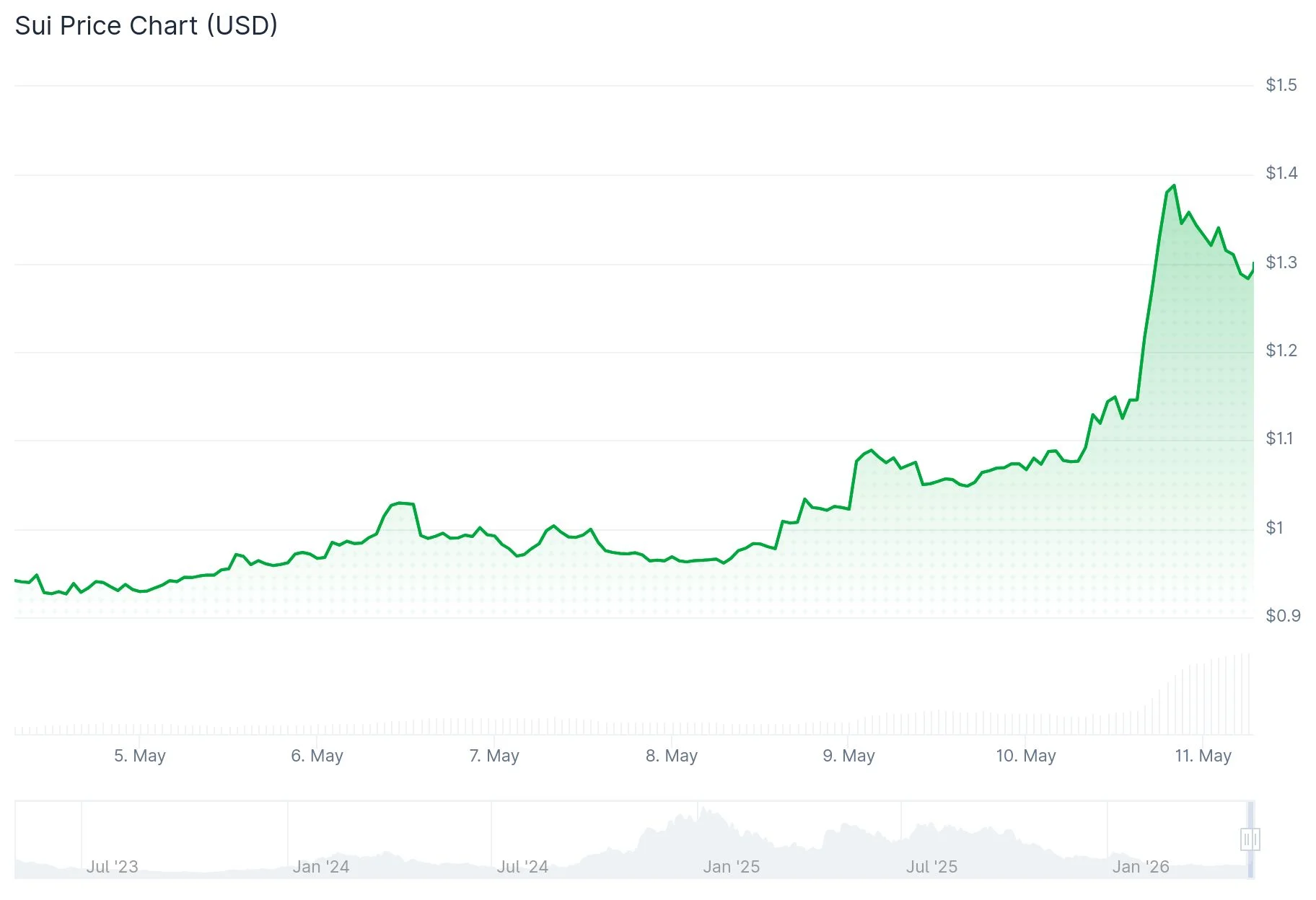
Sui (SUI) Token Rockets 50% Weekly on Institutional Staking and Privacy Tech Rollout




