

BitGo and ZKsync Build Tokenized Bank Deposit Rails
BitGo, a digital asset custody provider, and ZKsync, an Ethereum Layer 2 scaling solution, have entered into a strategic collaboration to develop infrastructure that enables banks to issue tokenized deposits. The initiative is designed to allow financial institutions to move funds onto blockchain systems while continuing to comply with existing regulatory standards.
The joint solution integrates BitGo’s institutional-grade custody and wallet services with ZKsync’s Prividium network. Prividium has been developed as a permissioned blockchain that prioritizes privacy and is specifically tailored to meet the requirements of regulated entities. By combining these technologies, the two companies are offering a comprehensive system that enables banks to issue, transfer, and settle tokenized deposits without the need to construct their own blockchain frameworks.
Simplifying Adoption for Financial Institutions
The collaboration addresses a key challenge faced by banks seeking to adopt blockchain technology. While financial institutions are increasingly interested in the speed and efficiency offered by decentralized systems, regulatory obligations have limited their ability to operate on public blockchain networks. The newly developed infrastructure provides a controlled environment that aligns with compliance requirements while still delivering the advantages of blockchain.
Tokenized deposits differ significantly from stablecoins, which typically operate outside the traditional banking ecosystem. In contrast, tokenized deposits remain within the regulated banking system, making them more compatible with current financial regulations. This distinction is expected to make adoption easier for institutions that must adhere to strict compliance standards.
Matter Labs, the organization behind ZKsync, has positioned its Prividium network as a bridge connecting public blockchain innovation with institutional use cases. Its leadership has indicated that tokenized deposits represent a mechanism through which banks can transition funds onto blockchain infrastructure while maintaining adherence to regulatory frameworks.
Enhancing Efficiency and Security
The integrated platform has been designed to deliver continuous availability, enabling financial transactions to occur at any time. It also supports near-instant settlement capabilities, which could significantly reduce delays associated with traditional banking processes. In addition, the system incorporates enhanced security measures and introduces the potential for programmable payments, allowing transactions to be executed automatically based on predefined conditions.
BitGo brings extensive experience to the partnership, having operated in the digital asset sector since 2013. The firm is widely recognized for its development of multi-signature wallet technology, which has played a critical role in improving security and encouraging institutional participation in cryptocurrency markets.
A notable aspect of this initiative is that it does not rely on stablecoins. This differentiates it from other blockchain-based payment systems, including those associated with companies like Ripple Labs, which often utilize proprietary digital assets as part of their infrastructure.
Testing Phase and Market Opportunity
The platform is currently undergoing testing with regulated financial institutions, indicating that it is still in a developmental stage. However, a broader rollout is expected later in the year, suggesting that both companies are preparing for wider adoption once testing is complete.
The timing of this partnership is particularly significant given the ongoing debate surrounding stablecoins. Banks have expressed concerns that stablecoin yields could divert deposits away from traditional banking systems. Legislative efforts, such as the Clarity Act, have attempted to address these concerns, but discussions within the industry remain unresolved. Meanwhile, major crypto platforms like Coinbase have resisted certain regulatory proposals, further highlighting the divide.
Although the BitGo-ZKsync initiative does not directly resolve the broader stablecoin debate, it introduces an alternative pathway for banks to leverage blockchain technology without depending on stablecoins. This approach could appeal to institutions seeking to modernize their operations while preserving their existing business models.
With the traditional financial market estimated to be worth approximately $450 trillion, the opportunity for tokenized deposits is substantial. The collaboration between BitGo and ZKsync positions both companies to play a meaningful role in enabling banks to participate in the evolving blockchain ecosystem while remaining firmly within regulatory boundaries.
The post BitGo and ZKsync Build Tokenized Bank Deposit Rails appeared first on CoinTrust.


You May Also Like
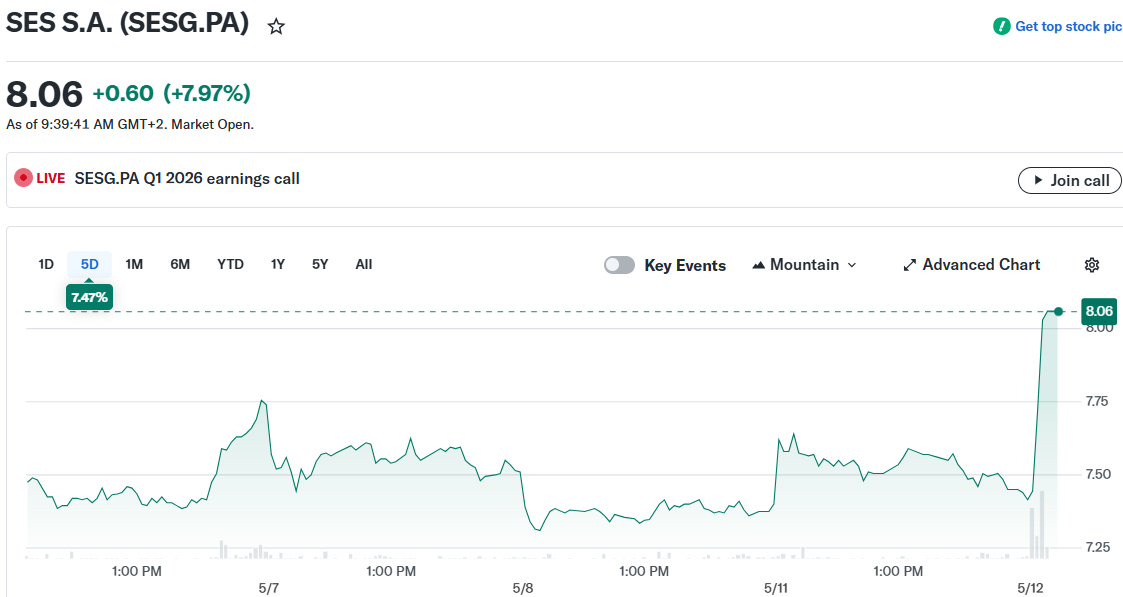
SES Reports 80% Revenue Jump as Aviation Connectivity and Intelsat Merger Drive Q1 Growth

Shai Gilgeous-Alexander, Thunder still perfect in playoffs after sweep of Lakers




