Sleep diagnostics have historically been built around a single assumption: that the patient will cooperate. They will lie still. They will tolerate the electrodes, the wires, the monitoring leads attached to their scalp, chest, and legs. They will sleep, somehow, in an unfamiliar lab environment with a stranger watching through a window. And in the morning, they will hand back the equipment intact.
For most of the population, that assumption holds well enough. For the millions of Americans living with Alzheimer’s disease and related dementias, it does not hold at all.

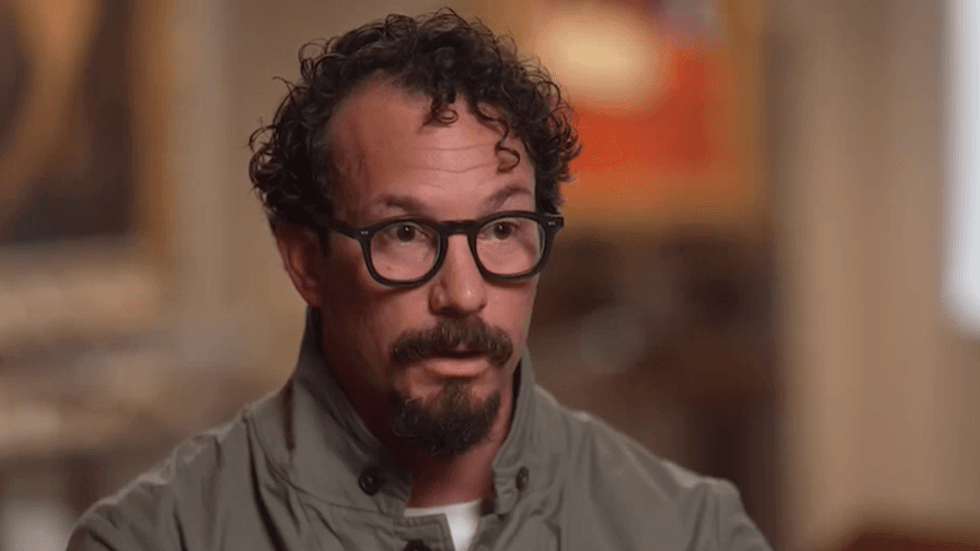
“Polysomnography is the gold standard for diagnosing obstructive sleep apnea,” says tech entrepreneur Steve Waddell. “But the gold standard only works if the patient can comply with it. For someone with dementia, compliance is exactly what the disease takes away.”
With a background in complex systems engineering, risk management, and healthcare innovation, Waddell is leading a push to move sleep diagnostics out of the lab and into the home — passively, continuously, and without asking anything of the patient. Through his company Index HealthTech, he is advancing a new approach to OSA detection enabled by its Sense™ platform, designed specifically for the populations that current diagnostic pathways cannot reach.
The Hidden Epidemic Inside the Dementia Population
Obstructive sleep apnea is already dramatically underdiagnosed across the general population. An estimated 80 million Americans live with OSA, and up to 80 percent of moderate-to-severe cases go undetected. But within the Alzheimer’s and dementia population, the problem is compounded in ways that make it clinically urgent and practically invisible.
Research consistently shows that OSA prevalence among people with Alzheimer’s disease is significantly higher than in the general aging population — with some studies suggesting rates exceeding 50 percent. The relationship is not coincidental. Sleep-disordered breathing disrupts the clearance of amyloid beta, the protein that accumulates in the brains of Alzheimer’s patients. Untreated OSA accelerates cognitive decline, worsens behavioral symptoms, increases fall risk, and drives the kind of rapid functional deterioration that families describe as a sudden cliff — a sharp, irreversible drop that often ends in memory care placement or hospitalization.
“We know the connection between sleep apnea and cognitive decline is real and significant,” Waddell says. “What we don’t know, in most cases, is whether any given patient actually has OSA. Because we have no way to test them.”
Why the Gold Standard Fails This Population
Polysomnography — the overnight, in-lab sleep study that remains the clinical gold standard for OSA diagnosis — requires a patient to sleep connected to dozens of sensors monitoring brain activity, eye movement, muscle activity, heart rhythm, blood oxygen, and respiratory effort. The process is uncomfortable for healthy adults. For someone living with dementia, it is frequently impossible.
Patients with Alzheimer’s and related dementias often experience agitation, confusion, and disrupted sleep architecture as direct symptoms of their disease. The unfamiliar environment of a sleep lab — the strange room, the attached wires, the nighttime monitoring — amplifies that agitation significantly. Many patients remove their sensors within the first hour. Others cannot be persuaded to complete the study at all.
Home sleep apnea testing, the less intensive alternative, presents similar challenges. Wearable devices still require the patient to correctly apply equipment, leave it in place through the night, and return it undamaged. That sequence of tasks, straightforward for a cognitively intact adult, is precisely what dementia disrupts.
“The system fails silently,” Waddell says. “Clinicians suspect OSA. Families report poor sleep and worsening behavior. But there is no test that actually works for this patient. So nothing gets diagnosed, nothing gets treated, and the decline continues.”
The result is a diagnostic gap with serious clinical consequences. Patients who would benefit from CPAP therapy — which has shown promise in slowing cognitive decline when OSA is treated — never receive it because the diagnosis is never made.
A New Approach Built Around the Patient
Sense™ by Index HealthTech is designed to close that gap. A small, unobtrusive device that sits on a nightstand or bedside table, Sense™ uses passive millimeter wave radar to monitor respiratory patterns during sleep. No sensors touch the patient. No wires are attached. No equipment needs to be applied, worn, or returned. The patient does nothing, because nothing is asked of them.
The system monitors chest-wall movement, breathing rate, and respiratory irregularities through the night — continuously, passively, and in the patient’s own home. Proprietary signal processing identifies patterns consistent with sleep-disordered breathing and flags respiratory instability for clinical review.
“We are not replacing polysomnography for patients who can complete it,” Waddell is careful to note. “We are providing a viable pathway for the patients who cannot — the patients who currently receive no assessment at all.”
The same passive sensing approach extends beyond sleep, enabling continuous monitoring of mobility, routine, and behavior—turning daily life into a measurable health signal.
The initial clinical focus is on programs serving the most medically complex aging adults in the country — including a significant proportion with Alzheimer’s and dementia — where organizations carry full clinical and financial responsibility for their enrollees and have powerful incentives to identify and treat conditions that accelerate decline and drive costly acute events. Undiagnosed OSA is exactly that kind of condition.
Sleep is the entry point—but the broader goal is continuous measurement of functional decline across daily living.
The Economic and Clinical Case for Acting Now
The implications of untreated OSA in the dementia population extend well beyond the individual patient. Accelerated cognitive decline increases caregiver burden, drives earlier memory care placement, and generates the kind of acute hospitalization costs — falls, cardiovascular events, behavioral crises — that dominate the expense profile of this population.
Identifying and treating OSA does not require a cure. It requires a diagnosis. CPAP therapy is inexpensive, widely available, and clinically proven. The barrier has never been treatment. It has been detection.
“We have a condition that accelerates the disease, a treatment that works, and a diagnostic pathway that excludes the patients who need it most,” Waddell says. “That is a solvable problem. We are building the solution.”
For Waddell, the significance is personal as well as clinical. His father, a decorated Army combat veteran, lost his independence, moved into assisted living, and passed away within six months. The experience shaped his conviction that functional decline is not inevitable — it is measurable, and measurement creates the opportunity to intervene.
“When you can see what is happening inside someone’s home, at night, without disturbing them or asking anything of them, you can act before the damage is done,” he says. “That is what passive sensing makes possible. And for this population, it may be the only thing that does.”
Follow Steve Waddell on LinkedIn or visit indexhealthtech.com.