Being a digital nomad, not simply in name only, can feel like a dream. Barring the cost and effort it takes to plan, prepare, and travel on short notice, frequentBeing a digital nomad, not simply in name only, can feel like a dream. Barring the cost and effort it takes to plan, prepare, and travel on short notice, frequent
Travelling is the easy part, finding shelter is where hell breaks loose. Coliving hubs are fixing this.
For feedback or concerns regarding this content, please contact us at crypto.news@mexc.com
Being a digital nomad, not simply in name only, can feel like a dream. Barring the cost and effort it takes to plan, prepare, and travel on short notice, frequent trips offer plenty of chance encounters, but they also test your tolerance for misadventures.
Shelter is where fantasy usually collides with reality.
According to three digital nomads and frequent travellers I spoke to, accommodation regularly eats between 40 to 50% of a travel budget. Beyond the cost, Yinka Oke, a Nigerian nomad, said the hardest part of planning for housing in a country where you know nobody is how unpredictable it is. Unlike flights, there is no single accommodation fare you can lock in and forget.
Amaka Amaku, a nomad who has now travelled to 30 countries, said when she goes somewhere she has friends, accommodation might take up to 20% of her travelling budget. When she lands in a city where she knows no one, that share can quickly climb to 50%.
“I don’t think about accommodation as a percentage of the budget,” said Oghenerukevwe Odjugo, an equity analyst at Schroders Australia and a nomadic traveller. “I think about what is a reasonable dollar amount I can pay for the quality of accommodation I am comfortable with. The cost of shelter is a major factor when travelling, so I rent whatever makes the most sense.”
For most nomads, that decision often narrows to three options: a hotel room, a short‑term rental on platforms like Airbnb, or a third path, coliving hubs. Many long‑term travellers I spoke with preferred Airbnbs or coliving for multi‑week stays and kept hotels for quick stopovers.
This piece is about that third option. What are coliving hubs in Africa actually selling, how do they work as a business, and are they really worth swapping for a one‑bed in Nairobi or Cape Town?
Get The Best African Tech Newsletters In Your Inbox
Select your country Nigeria Ghana Kenya South Africa Egypt Morocco Tunisia Algeria Libya Sudan Ethiopia Somalia Djibouti Eritrea Uganda Tanzania Rwanda Burundi Democratic Republic of the Congo Republic of the Congo Central African Republic Chad Cameroon Gabon Equatorial Guinea São Tomé and Príncipe Angola Zambia Zimbabwe Botswana Namibia Lesotho Eswatini Mozambique Madagascar Mauritius Seychelles Comoros Cape Verde Guinea-Bissau Senegal The Gambia Guinea Sierra Leone Liberia Côte d'Ivoire Burkina Faso Mali Niger Benin Togo Other
Select your gender Male Female Others
Subscribe
What coliving hubs are, and how they make money
Coliving, at its simplest, is shared housing with services built around people who work remotely. Instead of renting an entire flat, you take a room in a larger home or compound and pay for a package that usually combines accommodation, utilities, cleaning, internet, and a measure of community programming.
Globally, the coliving market was worth nearly $8 billion in 2024, according to Grand View Research, a research firm, and is projected to at least double over the coming decade, helped by rising urban housing costs and the growth of remote work. In South Africa’s advanced coliving market, that figure sits around $79 million.
In Africa, coliving is still young but spreading. Nairobi, Kenya, appears in many guides as one of the continent’s emerging hubs for remote workers, with neighbourhoods like Kilimani, Lavington, Karen, and Kileleshwa now home to a mix of coworking spaces, serviced apartments, and shared houses that market themselves directly to nomads. Cape Town, Windhoek, and parts of Morocco host similar experiments, from beachside houses for surfers in Blouberg to retreat‑style compounds in Namibia’s capital.
Alejandra Wolf, co‑founder of AfricaNomads, a community-based coliving hub for digital nomads, has spent the past few years building coliving stays across East and Southern Africa. She describes coliving as “the difference between just having a place to stay and having a place to belong.”
For guests, the idea is that you land in a home that is already ready for work, with a built‑in community and a curated experience of the destination. Planning, discovery, and the trial‑and‑error of figuring out where to live, who to trust, and what is worth your time are outsourced to the operator.
Structurally, many African coliving outfits run a hybrid model. Wolf says her company both operates its own homes and partners with local hosts, boutique properties, and families, but keeps tight control over the experience. That control covers how the space is set up, the daily rhythm of the stay, the rules of the house, and the programming that brings people together.
In some locations, the founders actually live in the houses alongside guests. Rather than acting as an open marketplace like Airbnb, they see themselves as curators and hosts.
The non‑negotiables are predictable but demanding: reliable Internet with backups, comfortable workspaces, power solutions where public supply is unstable, and locations that feel plugged into daily life rather than sealed off in high‑rise blocks. Many operators avoid anonymous tower blocks and look instead for compounds or houses with greenery, shared kitchens, and layouts that make it easy to bump into people to truly lean into the philosophy of experiencing a new place.
How the numbers compare in Nairobi
The cost picture between short-term rentals, like Airbnb, and coliving arrangements is less obvious than it looks at the booking stage.
Take Nairobi, which has become one of the most comfortable cities in sub‑Saharan Africa for expatriates and remote workers, thanks to solid infrastructure, strong schools and hospitals, and a growing startup ecosystem around what many call the Silicon Savannah.
In upscale residential areas such as Lavington, a one‑bedroom Airbnb for a single guest typically ranges between $34 and $72 per night, depending on the season. In Karen, another lush city in Nairobi, prices start from $23 and climb to around $131. Kileleshwa tends to sit between $37 and $58, while Kilimani often ranges from $37 to $50 a night. In Kitsuru, where United Nations (UN) staff and other international officials often prefer to live because of its security, greenery, and easy access to international schools, similar one‑bedroom listings can cost around $79 per night.
By comparison, Wolf says that coliving hubs in Westlands, Nairobi’s commercial and nightlife district, run between $58 and $82 per night, depending on room type and length of stay. At first glance, that does not look cheaper than many Airbnbs. Yet, the economic trade-off, she says, lies in what that nightly rate bundles together.
In a typical coliving house of the kind AfricaNomads operates, the fee covers accommodation, power, high‑speed internet with multiple backup connections, coworking setups, regular housekeeping, and access to amenities, such as a pool, small gym or yoga studio.
An AfricaNomads coliving in Westlands, Nairobi. Image Source: AfricaNomads
In some Nairobi houses, guests receive a local SIM card with unlimited data and a portable Wi‑Fi router on arrival, along with coffee, tea, and drinking water. Programming such as weekly communal dinners, language classes, and curated outings into the city are folded into the price. There is usually a concierge or local host on call, and partnerships that give residents discounted access to nearby coworking spaces or restaurants.
Communal dinners at AfricaNomads. Image Source: AfricaNomads
Short‑term rentals can work out cheaper on paper. But nomads often end up layering on their own costs: daily or weekly coworking passes, regular taxis to move between their flat and the city’s work and social cores, data top‑ups, cleaning, and the time and friction of discovering reliable services by trial. In practice, Wolf argues that the all‑in price for coliving hubs ends up roughly on par with what a nomad would pay to recreate the same environment through separate bookings, with the difference that the guest does far less coordination.
The trade‑offs: Safety, community, and loss of control
Coliving spaces are designed to solve some of the pain points that come up repeatedly when digital nomads describe being on the road in Africa. Many of Wolf’s early guests, she says, complained about four things when they tried to navigate the continent alone: patchy or unknown internet setups, feeling isolated on arrival, struggling to find trustworthy long‑stay housing, and the absence of a ready‑made community.
Digital nomads from the AfricaNomads community canoeing in Watamu with Captain Hassan. Image Source: AfricaNomads
Several research studies note that once you factor in bundled services and community, total costs for coliving often sit close to comparable rental accommodation, with the difference that guests do far less coordination themselves.
On the safety front, established operators choose neighbourhoods where they or their partners already live and test everything from the local power grid to after‑dark foot traffic. In Nairobi, that usually means areas like Westlands, Lavington, Kilimani or Karen, which combine access to cafés, offices, and nightlife with relatively better security and infrastructure.
Houses are normally inside gated compounds with guards, and guests are offered informal briefings on how to move through the city, who to call in an emergency, and which routes to avoid at night, according to Wolf, who described AfricaNomads’ operations.
Vetting hosts is a mix of hospitality know‑how and constant presence. Wolf says she and her co‑founder work only with hosts and properties they know well, often living in the spaces themselves, and intervene quickly if infrastructure or service slips.
Behind the scenes, there are lease negotiations, staff training, tax filings, and local regulations to satisfy, along with a long list of things that can go wrong: power failures, internet outages, last‑minute accommodation cancellations, broken fixtures. She recalled one instance where a property pulled out two weeks before guests were due, and the team had to find and set up a replacement in three days.
“That kind of situation could easily disrupt the entire experience,” said Wolf. “But for us, it becomes a moment to step in, move fast, and solve. We managed to secure a new place in three days and actually upgraded the experience in the process. And this happens more often than people would think. Guests don’t see this because they shouldn’t have to. Our role is to absorb that complexity so that what they experience feels stable, comfortable, and effortless.”
From the guest’s perspective, the most obvious trade‑off is privacy and control. In a coliving house, you share kitchens, lounges, and often, bathrooms with strangers, which can be a delight or a drain, depending on how introverted you are and who else is in the group.
Two of AfricaNomads co-founders, Alejandra Wolf and Steve. Image Source: AfricaNomads
Most operators try to screen for basic compatibility, said Wolf, but they cannot guarantee chemistry. Community cannot be forced, so much of the work happens through light routines: weekly dinners, shared workdays, small trips, and opportunities to opt in without pressure.
There is also the question of fit for African nomads. Wolf says more Africans are joining her stays, often because they have travelled widely outside the continent and want to slow down and explore neighbouring countries more intentionally. Some coliving operators offer discounts for African passport holders or long‑stay guests, but budget expectations can be very different from those of visitors flying in from Europe or North America, especially where incomes are in local currencies.
For all the upsides, coliving is not a cure‑all. Wolf admits that in some cities, particularly those with limited infrastructure or difficult regulations, the effort it takes to keep things running can be exhausting.
Guests who value anonymity, strict personal routines, or complete flexibility might find the soft structure and social expectations of coliving claustrophobic.
And in places where the underlying housing market is under pressure, there is a risk that coliving pushes up rents the way short‑term rentals have in parts of Europe and North America, although there is little data yet on its effect in African cities.
Get The Best African Tech Newsletters In Your Inbox
Select your country Nigeria Ghana Kenya South Africa Egypt Morocco Tunisia Algeria Libya Sudan Ethiopia Somalia Djibouti Eritrea Uganda Tanzania Rwanda Burundi Democratic Republic of the Congo Republic of the Congo Central African Republic Chad Cameroon Gabon Equatorial Guinea São Tomé and Príncipe Angola Zambia Zimbabwe Botswana Namibia Lesotho Eswatini Mozambique Madagascar Mauritius Seychelles Comoros Cape Verde Guinea-Bissau Senegal The Gambia Guinea Sierra Leone Liberia Côte d'Ivoire Burkina Faso Mali Niger Benin Togo Other
Select your gender Male Female Others
Subscribe
Are coliving hubs worth it?
Whether coliving is worth it depends on what a digital nomad is optimising for.
Globally, the rise of long‑stay travel and remote work is not slowing. An MBO Partners data estimated the number of digital nomads in the United States alone at over 18 million in 2024, almost double the 2019 figure, with forecasts that the global population of people living and working this way could reach hundreds of millions over the next decade.
Operators see that as a long runway for niche housing products that bundle work and life under the same roof.
In Africa, cities like Nairobi offer a rare combination of temperate weather, relatively good healthcare and schooling, strong internet connectivity, and an ecosystem of tech companies, non-governmental organisations (NGOs), and international organisations that already employ or host foreigners.
Many multinationals see Nairobi, Cape Town—though it is more expensive—or Casablanca as their safest bets in sub‑Saharan Africa, which means a steady flow of remote workers, consultants, and founders passing through. Coliving spaces give them plug‑and‑play housing that sits somewhere between a serviced apartment and a hostel for adults.
On the cost side, the gap between a well‑located one‑bed Airbnb and a coliving room is often narrower than it looks, once you add coworking, transport, housekeeping, and the premium many nomads are willing to pay for stable internet and reliable power.
Yet, if price is your only lens, an ordinary short‑term rental will almost always win, especially further from city centres or in cheaper districts. Coliving’s selling point is convenience and connection rather than raw cost. If you are comfortable doing all your own research, setting up SIM cards and routers, negotiating with landlords, and finding your own community once you land, then a well-chosen Airbnb can be the more economical choice.
The AfricaNomads community sailing in Lamu Island, Kenya. Image Source: AfricaNomads
“If you want independence and anonymity, choose an Airbnb,” said Wolf. “If you are happy figuring everything out on your own, organising your days, building your own routine, and navigating a place from the outside, then it can work well. But if you want something more complete, then coliving becomes a very different experience. It is about how you live while you are there. You don’t spend your first week trying to figure out where to work from, how to meet people, or what is actually worth doing. You step straight into it.”
The value of coliving is easier to see in the things nomads rarely price in: the loneliness of a first week in a new city, the workdays lost to chasing Wi‑Fi and backup power, the hours that quietly drain away in endless scrolling, reviews, and second‑guessed bookings. When those costs begin to matter as much as nightly rates, coliving becomes easier to justify.
Digital nomads in the AfricaNomads community. Image Source: AfricaNomads
The honest conclusion is that coliving hubs in Africa are not a universal answer to the shelter problem. They are one more tool, sitting somewhere between a serviced apartment, a hostel, and a lightly programmed residency.
For some nomads, especially those landing on the continent for the first time or those who want to trade a bit of privacy for instant footing and community, they will feel like an expensive luxury that pays for itself. For others, particularly veterans who already have friends on the ground or who enjoy stitching together their own version of a “home,” they will be an occasional treat rather than a base.
Either way, as more remote workers drift between Cape Town, Nairobi, the Moroccan coast and beyond, the question will move from “what does it cost to stay here per night?” to “how do I want to live while I am here?”
Coliving is simply betting that more digital nomads will decide they would rather not figure that out alone.
What did you think of this edition, and what would you love to read next on Digital Nomads? Share your thoughts and ideas with us here.
Disclaimer: The articles reposted on this site are sourced from public platforms and are provided for informational purposes only. They do not necessarily reflect the views of MEXC. All rights remain with the original authors. If you believe any content infringes on third-party rights, please contact crypto.news@mexc.com for removal. MEXC makes no guarantees regarding the accuracy, completeness, or timeliness of the content and is not responsible for any actions taken based on the information provided. The content does not constitute financial, legal, or other professional advice, nor should it be considered a recommendation or endorsement by MEXC.


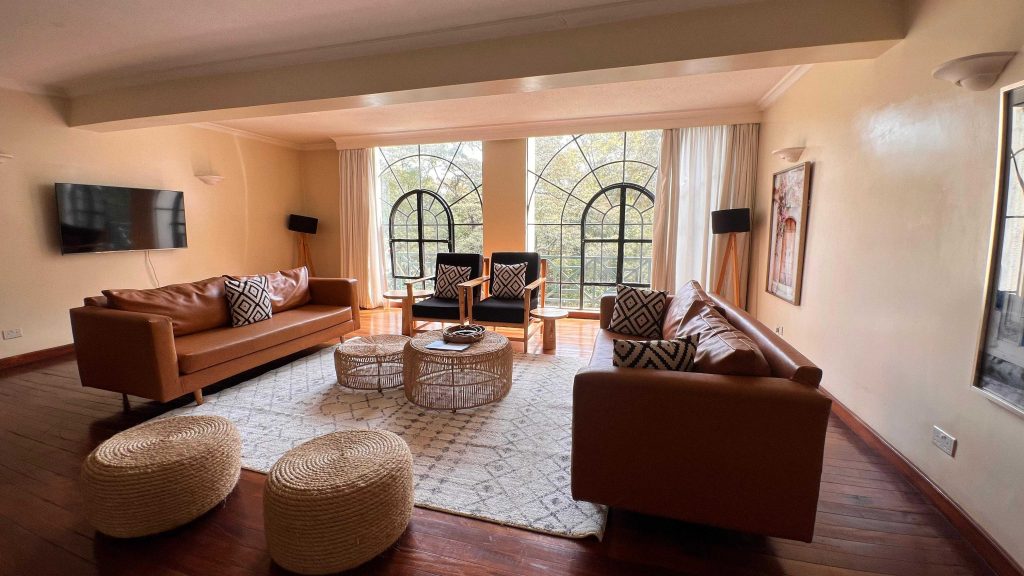 An AfricaNomads coliving in Westlands, Nairobi. Image Source: AfricaNomads
 Communal dinners at AfricaNomads. Image Source: AfricaNomads
 Digital nomads from the AfricaNomads community canoeing in Watamu with Captain Hassan. Image Source: AfricaNomads
 Two of AfricaNomads co-founders, Alejandra Wolf and Steve. Image Source: AfricaNomads
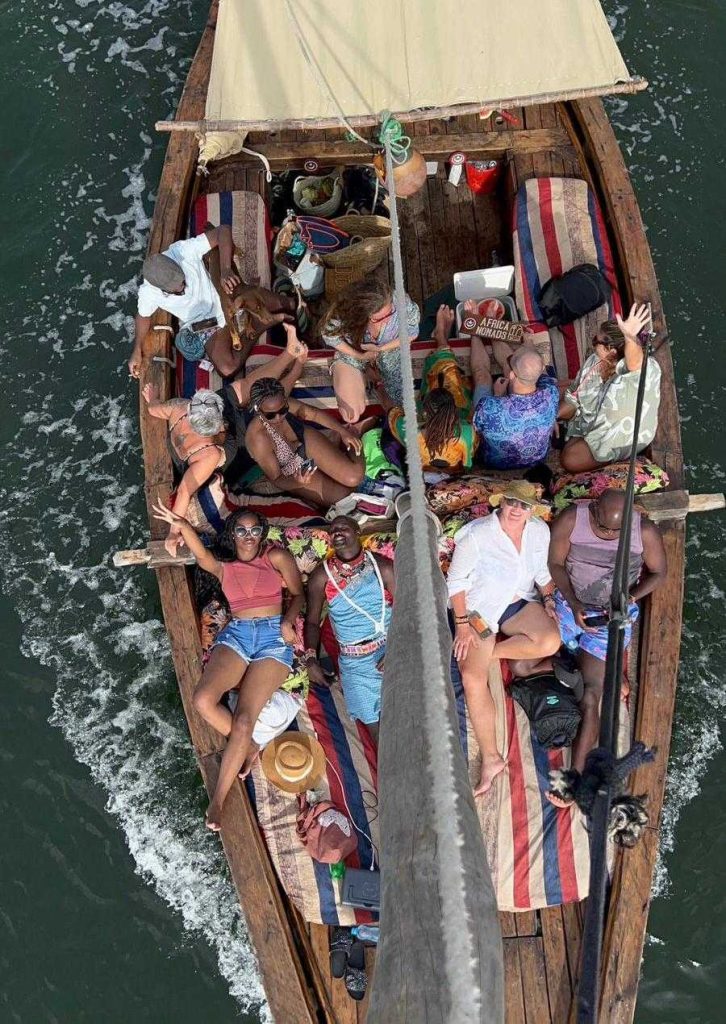 The AfricaNomads community sailing in Lamu Island, Kenya. Image Source: AfricaNomads
 Digital nomads in the AfricaNomads community. Image Source: AfricaNomads